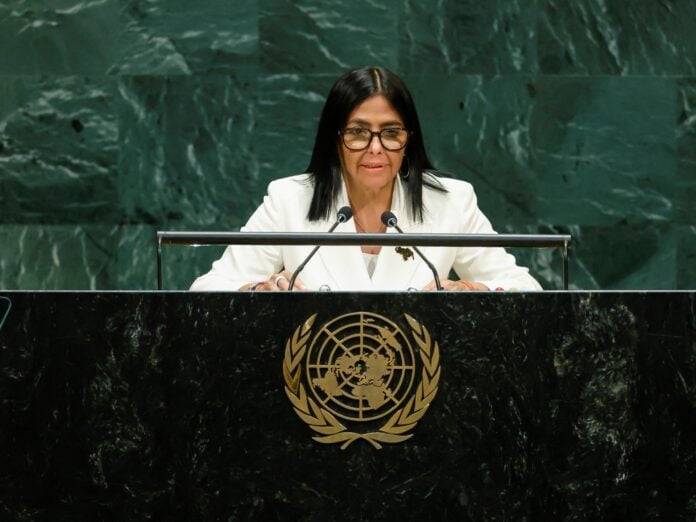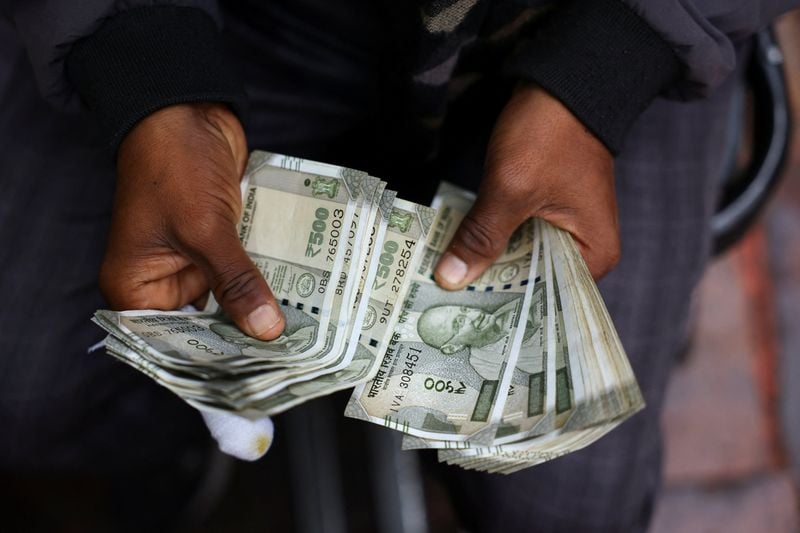

NEW DELHI – India imported 427,000 barrels of Venezuelan crude every day last month. That number, second only to the United States, is the quiet subtext of everything that will be said when Delcy Rodriguez sits down with Prime Minister Narendra Modi this week.
Rodriguez, Venezuela’s acting president since the US military intervention that removed Nicolas Maduro in January, arrives in New Delhi on June 3 for a five-day working visit – her sixth trip to India. The Indian Ministry of External Affairs announced the visit on Tuesday, confirming that the two leaders would discuss what it called the “full spectrum” of bilateral relations.
The itinerary is notably industry-heavy. Rodriguez travels with a delegation spanning foreign affairs, economy and finance, science and technology, communications and transport – a lineup that reads less like a ceremonial exchange and more like a procurement mission. Indian state-owned enterprises have already invested substantially in Venezuelan energy infrastructure, and New Delhi’s appetite for expanded engagement has only grown as crude markets remain volatile.
India’s Reliance Industries has quietly become one of the three largest buyers of Venezuelan crude in recent months, according to Reuters, navigating the US sanctions architecture that still technically governs trade with Caracas. New Delhi’s approach has been characteristically transactional: maintain energy supply lines, expand pharmaceutical exports, and avoid direct confrontation with Washington over the politics of Venezuela’s transitional government.
The visit was originally pegged to the International Big Cat Alliance Summit, scheduled for June 1. That summit was deferred – the MEA did not offer a reason – but Rodriguez’s trip continued, upgraded to a working visit in its own right. The pivot says something about the underlying value New Delhi places on the relationship, independent of multilateral occasions.
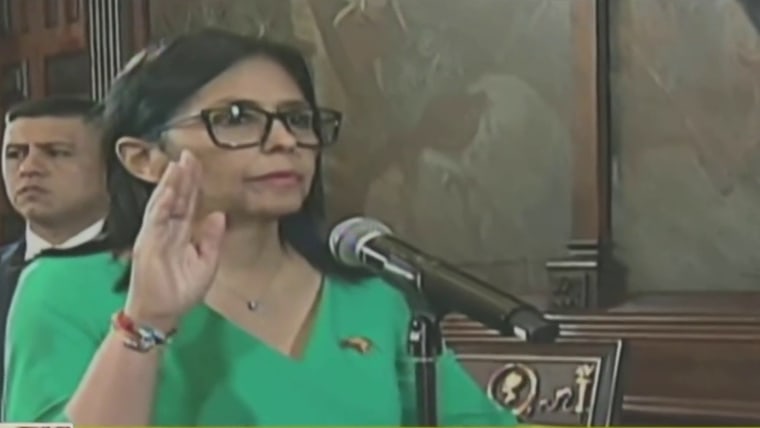
The meeting extends a relationship that has deepened in ways that would have seemed unlikely a decade ago. Modi and Rodriguez held a phone call on January 30 this year – weeks after she assumed the presidency – and agreed to “further expand and deepen” the India-Venezuela partnership across trade, investment, energy, digital technology, health and agriculture. Both sides emphasized their common identity as major economies of the Global South, a framing that has become increasingly useful for states navigating Washington’s shifting geopolitical alignments.
Rodriguez’s previous trips to India – as foreign minister in 2015, and as vice president in 2019, 2023, 2024 and 2025 – trace the sustained diplomatic investment Caracas has made in New Delhi even as Venezuela’s relationship with the West deteriorated sharply. Each visit produced commitments; what remains contested is how much of that cooperative architecture survives Venezuela’s leadership transition and the US sanctions that still shadow the country’s oil sector.
India has not recognized Rodriguez’s government formally in the way that Venezuela’s Latin American neighbors have positioned themselves, but it has not condemned it either. New Delhi’s calibrated non-alignment – practical engagement without political endorsement – is a posture it has refined across several relationships in recent years, from its navigation of US pressure over ties with Russia to its deepening energy partnerships across the Middle East.
The delegation’s planned visits to Indian industrial and pharmaceutical facilities are the detail worth watching. Venezuela’s public health infrastructure deteriorated severely under years of economic contraction and sanctions. Indian generic manufacturers, which have supplied drugs to Caracas in the past, appear positioned to expand that role. Whether this week’s discussions produce enforceable commitments or remain at the level of joint statements is the question Rodriguez’s six-minister delegation was presumably assembled to answer.
What the MEA statement did not address is the question that hangs over every investment discussion involving Venezuela: the legal exposure that comes with it. Indian PSUs with energy assets in Venezuela have faced quiet uncertainty for months about the enforceability of their contracts under a transitional government whose international legal standing is still contested. That conversation will almost certainly happen in New Delhi this week. Whether it surfaces in any official readout is another matter entirely.
Rodriguez is scheduled to depart June 7. No summit-level communiqué has been announced – only “working visit” – which leaves the ambitions of the trip, and its limits, appropriately unresolved.
— Input From Sputnik.