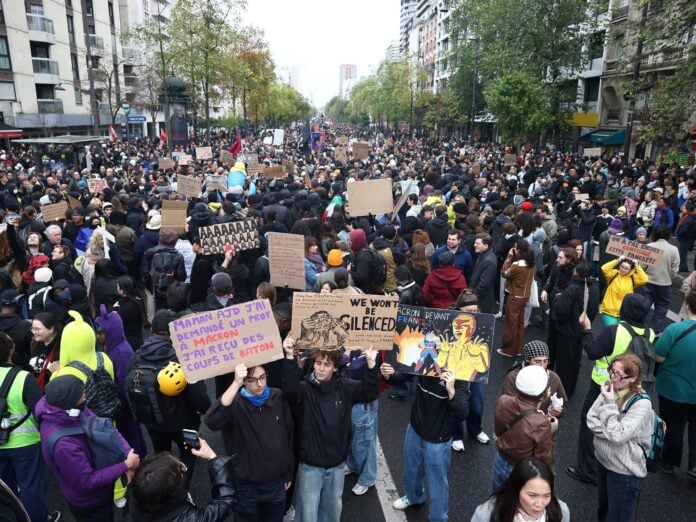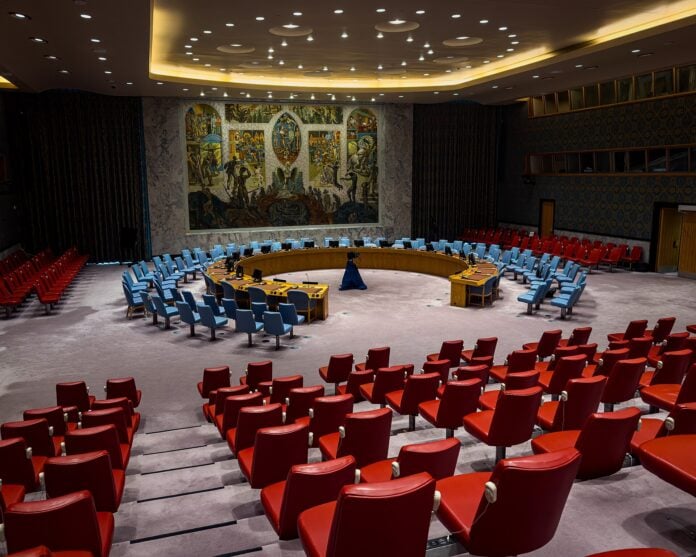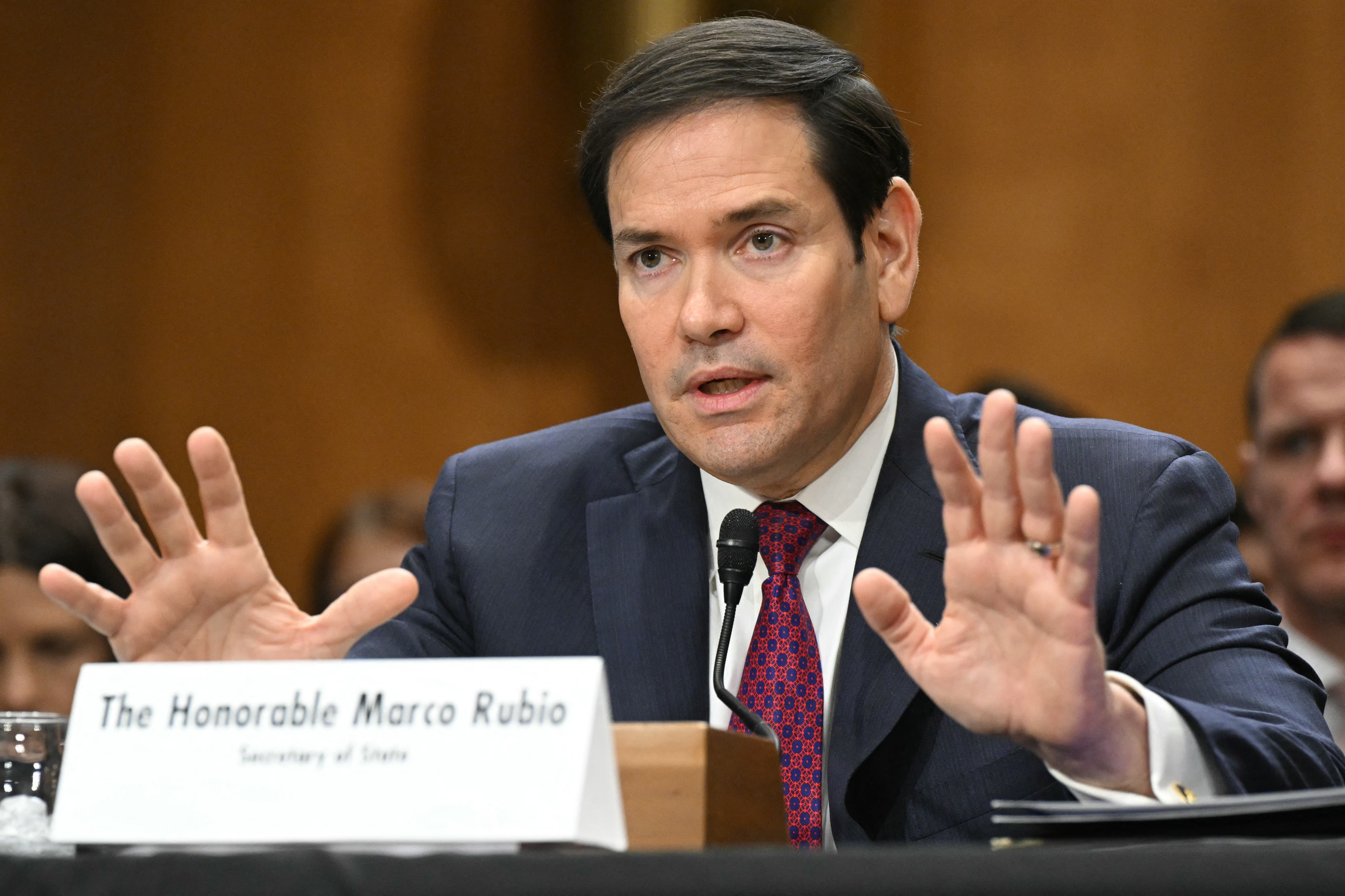

WASHINGTON — Protesters were still being hauled out of the room when Marco Rubio sat down to testify. They had chanted “Stop killing Cubans” and “Let Cuba live” as he walked in, and Capitol Police moved quickly. By the time the Senate Foreign Relations Committee came to order on Tuesday morning, the room was quiet. What followed was not.
For the first time since the Trump administration launched its war in Iran, the Secretary of State appeared before Congress to answer for American foreign policy across two continents. Rubio had come, by his own framing, to deliver a doctrine. The Western Hemisphere, he told senators, is not a region where the United States negotiates its position. Cooperation, he said, is not optional. “But cooperation with the United States on questions that concern our interests is not optional,” Rubio told the committee, his voice carrying the flat certainty he typically reserves for adversaries rather than nominal partners.
The prepared remarks he had submitted went further. “The U.S. government is not a charity. We are not here to play social worker,” they read. And then, the sentence that most clearly defined what the administration now believes its relationship with hemisphere nations actually is: “We have made it clear to every government in this hemisphere that America can either be their greatest friend or their most feared enemy — the choice is theirs.”
The written statement focused almost entirely on the Western Hemisphere, with no mention of the sprawling, costly, and domestically contested American military operations currently underway against Iran — a deliberate omission that Democratic senators immediately pressed him on. The ranking Democrat, Sen. Jeanne Shaheen of New Hampshire, said Rubio’s office had refused to provide information about the administration’s changing troop posture in Europe, U.S. operations against Iran, and American support for Ukraine. “When you do notify Congress,” she said, “it’s to inform us of decisions you have already made.”
Rubio did not appear particularly troubled by that characterization. What he offered instead was a retrospective on Venezuela — or rather, a victory lap. The Trump administration’s January operation to capture then-President Nicolás Maduro, Rubio’s prepared remarks called “one of the most extraordinary feats of lethal precision in military history.” Rubio has been the architect of Washington’s Caribbean and Latin American strategy for years, pressing for an aggressive posture toward Caracas since his earliest days in the Senate, when he called Venezuela “governed by a clown.” The Maduro capture was, for Rubio, the culmination of a decade and a half of argument.
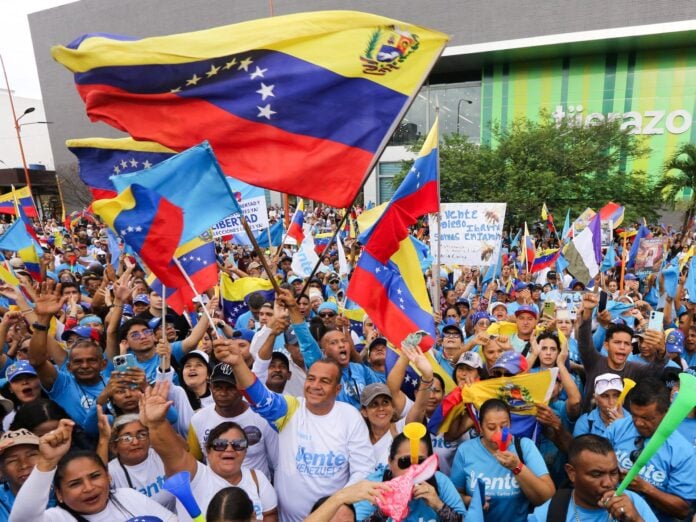
What he told senators Tuesday was that Venezuela had been, in his view, not merely a failed state but a hub for every adversary Washington fears. Iran, Russia, and China had all been operating from Venezuelan territory, Rubio has argued — Iran running operations, Russia anchoring its Western Hemisphere presence alongside Cuba and Nicaragua, and China receiving Venezuelan oil at deep discounts as debt repayment. The operation, he said, dismantled that configuration. “We will not allow the Western Hemisphere to be a base of operation for adversaries, competitors and rivals of the United States,” he added.
It is a posture that has alarmed several countries, including some nominally allied with Washington. Spain’s foreign minister has already publicly rejected U.S. military intervention in Cuba, calling Latin America a “brotherhood” rather than a sphere of American dominion. That friction was visible inside the hearing room as well, where Democratic senators who had once voted unanimously to confirm Rubio registered their own alarm.
Sen. Chris Van Hollen of Maryland said directly that he regretted his vote. “I have to tell you directly and personally that I regret voting for you for Secretary of State,” he told Rubio. Rubio’s retort was brief: “Your regret for voting for me confirms that I’m doing a good job.” Van Hollen later posted that Rubio had received “a full MAGA lobotomy” and that the man who testified Tuesday “is not the one I served with in the Senate.” The exchange, sharp as it was, did not produce any new information about policy.
Tuesday’s hearing was, formally, about the State Department’s budget request for fiscal year 2027 — a request that comes in at roughly 48 percent below the 2025 budget, reflecting the administration’s wholesale dismantling of the U.S. Agency for International Development and its broader retrenchment from multilateral foreign assistance. Rubio has defended the cuts as a realignment of resources toward tangible American interests, a posture already visible in its Cuba sanctions escalation and its pressure campaign across the Caribbean. What it has not resolved is the question of how Latin American governments are expected to respond to the combination of budget withdrawal and coercive rhetoric.
Rubio holds the distinction of being the only Trump cabinet member confirmed unanimously by the Senate — a fact his Democratic colleagues now revisit with visible discomfort. His positions as a senator — support for foreign assistance, respect for allies, pressure on human rights abusers — have been systematically reversed by his conduct as secretary. Rubio, for his part, does not appear to regard this as a contradiction. He described the administration’s foreign-policy record with blunt satisfaction, citing the Maduro capture and the fentanyl pressure campaign as evidence that coercive diplomacy works.
What was notably absent from Tuesday’s session was any accounting for the Iran war’s trajectory. The ceasefire between Washington and Tehran has been tested repeatedly by back-and-forth strikes in recent days, with Iran firing ballistic missiles at U.S. forces in Kuwait as recently as Sunday. Both were intercepted by CENTCOM, but the pattern of escalation has produced a growing faction of Republicans joining Democrats to question the cost and strategic objective of the conflict.
Rubio is scheduled to return to Capitol Hill on Wednesday for additional hearings before the House Foreign Affairs Committee and a Senate Appropriations subcommittee. Whether his definition of “non-optional” cooperation extends to congressional oversight itself — Shaheen’s complaint suggests it may — is a question that no one in the room on Tuesday fully answered.
— Input From Sputnik.