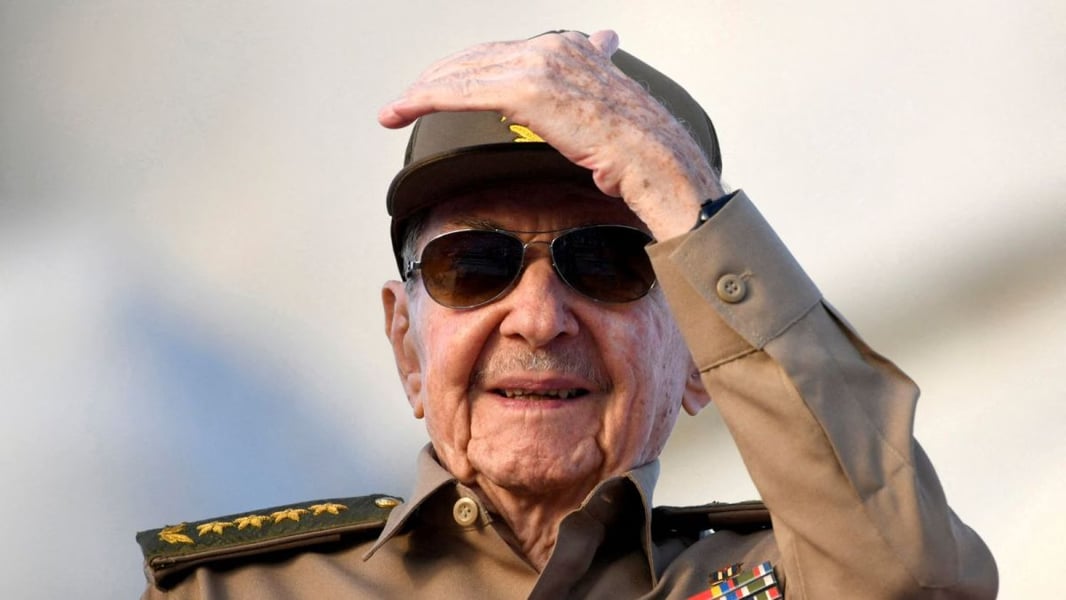

Former Cuban leader Raúl Castro has been indicted by the United States in one of the most dramatic escalations in US-Cuba tensions since the end of the Cold War, with the Trump administration accusing the 94-year-old revolutionary figure of conspiracy and murder linked to the 1996 shootdown of civilian aircraft operated by the Brothers to the Rescue organization.
The indictment, unsealed in federal court in Florida, accuses Castro and several former Cuban military officials of orchestrating the destruction of two unarmed Cessna aircraft that were flying near Cuban airspace on February 24, 1996. Four men were killed in the attack after Cuban MiG fighter jets fired missiles at the planes over the Florida Straits. US prosecutors say the aircraft were operating in international airspace when they were targeted.
The move instantly reignited geopolitical tensions between Washington and Havana and marked one of the most aggressive legal actions ever taken by the United States against a former foreign head of state from Latin America. The case has become a centerpiece of President Donald Trump’s renewed hardline policy toward Cuba as his administration intensifies pressure on governments viewed as hostile to US influence in the Western Hemisphere.
According to the Justice Department announcement, the indictment includes federal criminal charges of conspiracy to kill US nationals, murder, and destruction of aircraft. Prosecutors allege that Raúl Castro, who served as Cuba’s defense minister at the time of the incident, directly authorized the military operation that resulted in the deaths of four members of Brothers to the Rescue, a Miami-based organization that had long assisted Cuban migrants attempting to flee the island by sea.
The Brothers to the Rescue organization became internationally known during the 1990s for humanitarian missions in the Florida Straits, locating Cuban rafters stranded at sea and coordinating rescue efforts. But Havana viewed the group very differently. Cuban authorities repeatedly accused the organization of violating Cuban sovereignty and conducting political provocations against the communist government established by Fidel Castro after the 1959 revolution.
Tensions escalated sharply in the months leading up to the shootdown. Brothers to the Rescue aircraft had flown close to Cuban territory multiple times and, in some incidents, dropped anti-government leaflets over Havana. Cuban officials warned repeatedly that future incursions would trigger military retaliation. The episode became central to the origins of the 1996 crisis.
On February 24, 1996, Cuban fighter jets intercepted three civilian aircraft associated with the group. Two of the planes were destroyed. The third aircraft escaped. The victims included three US citizens and one permanent resident. The incident provoked international outrage and became one of the most volatile flashpoints in post-Cold War US-Cuba relations.
The United States and Cuba have disputed the legal status of the airspace involved for nearly three decades. Washington has consistently argued the planes were flying in international airspace when they were shot down, while Havana insists the aircraft had repeatedly violated Cuban territorial limits and represented a security threat. The disagreement remains at the center of the 1996 shootdown incident.
The new indictment appears to rely heavily on intelligence records, witness testimony, and newly surfaced audio evidence allegedly linking Raúl Castro directly to the order to destroy the aircraft.
The Justice Department formally announced the charges during a politically symbolic event at Miami’s Freedom Tower, a landmark deeply connected to Cuban exile history in Florida. Acting Attorney General Todd Blanche declared that “justice delayed is not justice denied,” while senior Republican lawmakers from Florida described the indictment as a historic turning point for accountability against the Cuban state.
The timing of the indictment is politically significant. It arrives amid renewed confrontation between Washington and Havana over sanctions, migration, and regional security, while the Trump administration simultaneously increases pressure on governments aligned against US interests across Latin America.
The White House has recently expanded sanctions targeting Cuba’s intelligence apparatus and tightened restrictions tied to energy and financial transactions involving the island nation. The administration has also intensified sanctions against Cuba’s military-linked economy, including entities connected to the GAESA conglomerate.
In Havana, the reaction was immediate and furious. Cuban President Miguel Díaz-Canel condemned the indictment as a politically motivated attack designed to destabilize Cuba and inflame anti-government sentiment ahead of growing economic unrest on the island. Cuban officials argued that the case represents another stage in Washington’s escalating pressure campaign against Cuba.
State media in Cuba portrayed the case as part of a broader campaign of “hybrid warfare” against the Cuban Revolution. Officials argued that the Brothers to the Rescue flights were deliberate provocations backed by anti-Castro exile groups in Florida and warned that the indictment could severely damage already fragile diplomatic relations between the two countries.
The Cuban government has repeatedly accused Washington of economic coercion and interference, including after Havana rejected what officials described as politically conditioned aid proposals from the United States amid the island’s worsening economic crisis.
Analysts say the case could also have wider geopolitical implications. The Trump administration’s decision to pursue criminal charges against a former communist leader signals a return to an aggressive doctrine of legal and economic confrontation against adversarial governments in the region. Some observers have linked the strategy to broader regime change rhetoric directed at Cuba, Venezuela, and Iran.
Russia has also sharply criticized Western sanctions against Cuba, with Foreign Minister Sergey Lavrov recently voicing support for Cuba at the BRICS summit and condemning what Moscow described as unilateral pressure tactics by Washington and its allies.
Legal experts remain divided over whether Raúl Castro could ever realistically face trial in the United States. Cuba does not extradite its citizens to the US, and Castro has remained inside the island under heavy state protection despite formally stepping away from power years ago. However, the indictment dramatically restricts his international mobility and establishes a precedent that could expose other former Cuban officials to legal risk abroad.
For families of the victims, the indictment represents a long-awaited moment after nearly 30 years of lobbying successive US administrations for criminal accountability. Relatives of those killed in the shootdown gathered in Miami following the announcement and described the charges as overdue recognition of what they consider an act of state-sponsored murder.
The 1996 incident fundamentally reshaped US-Cuba relations. In the aftermath of the shootdown, Washington passed the Helms-Burton Act, dramatically tightening the US embargo against Cuba and internationalizing sanctions against companies doing business with Havana. The law became one of the most controversial pillars of US policy toward Cuba and remains a major obstacle to normalization efforts decades later.
Now, with Raúl Castro facing criminal charges in a US court and relations once again deteriorating, the indictment risks opening a new and highly dangerous chapter in one of the Western Hemisphere’s longest-running geopolitical confrontations.
While the likelihood of Castro ever appearing in an American courtroom remains uncertain, the political message from Washington is unmistakable: the Trump administration is prepared to revive Cold War-era conflicts and pursue former adversaries far beyond the battlefield.