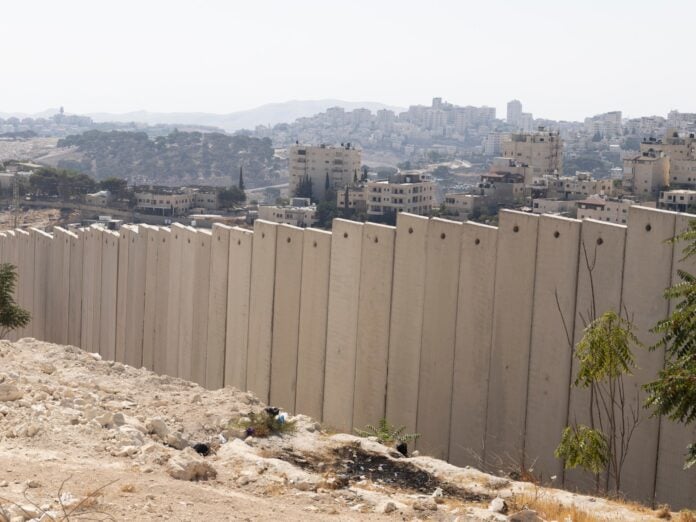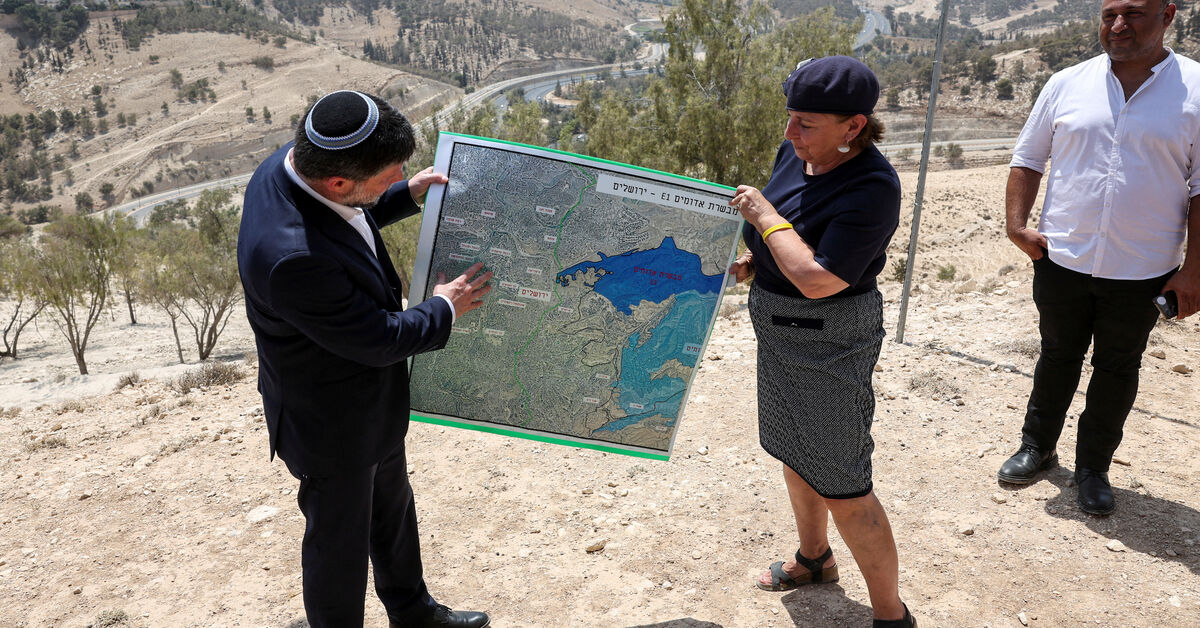

PARIS – The day after masked Israeli settlers rampaged through the West Bank town of Huwara – with video appearing to show an Israeli soldier participating in the beatings – France’s foreign minister went on national radio with a message aimed as much at Jerusalem as at his European counterparts.
“We could go further,” Jean-Noel Barrot told RTL and Public Senat television on Sunday, “and in the coming days, further sanctions could be imposed.” He did not name the countries he said were prepared to act, but Reuters had reported the previous day, citing three European diplomats, that France is coordinating with Britain, Norway and a small number of other allies on a package of coordinated national measures. The specifics – asset freezes, travel bans – remain to be finalized, and the diplomats said different countries may ultimately target different lists of individuals.
What has emerged, in effect, is a two-track European response to Israeli settlement expansion. The European Union sanctioned seven settlers and settler organisations on May 28 – a third round of EU-level measures, and the first to name the Nachala Settlement Movement and its director, Daniella Weiss, along with the Amana cooperative and the NGO Regavim – but EU foreign policy chief Kaja Kallas has made clear the bloc lacks consensus to go further. Hungary’s new government, which dropped Viktor Orban’s long-standing veto earlier this month, was not the only member state with reservations. With that ceiling now visible, several governments concluded that acting nationally was the faster path.
“There is no unanimity at the EU level, so we have moved to discussions at the national level,” one European diplomat told Reuters. Two others said an announcement was expected within days.
The immediate backdrop made Barrot’s timing hard to read as coincidental. On Saturday, nine Palestinians were wounded in a settler attack in Huwara, with footage circulating on social media appearing to show a uniformed Israeli soldier beating a Palestinian alongside settler assailants. The Israeli military said it had launched an investigation. A day earlier, an Israeli soldier had shot and killed a seven-month-old Palestinian infant in Hebron, an incident the army described as a deeply regrettable error but which drew condemnation from European capitals. France had separately been tracking those events closely: the May round of EU sanctions had itself been accelerated after a week of particularly severe settler attacks in the West Bank.
Barrot framed Sunday’s statement in terms of Paris’s own stated logic. “I am extremely concerned about the escalation of illegal settlement activity in the West Bank and the surge in violence by Israeli settlers against Palestinians,” he said, adding that he had pushed not only for sanctions against individuals responsible for violence but against “the entities, companies and organisations in Israel that are providing these extremist settlers with the means to drive Palestinians from their land, burn their crops and destroy their public buildings.” That extension – from individuals to the organisational infrastructure enabling them – is the new conceptual territory in Western sanctions policy, and its practical scope remains unclear. Whether the national measures will match the EU’s May 28 designations or go beyond them is, according to diplomats, not yet decided.
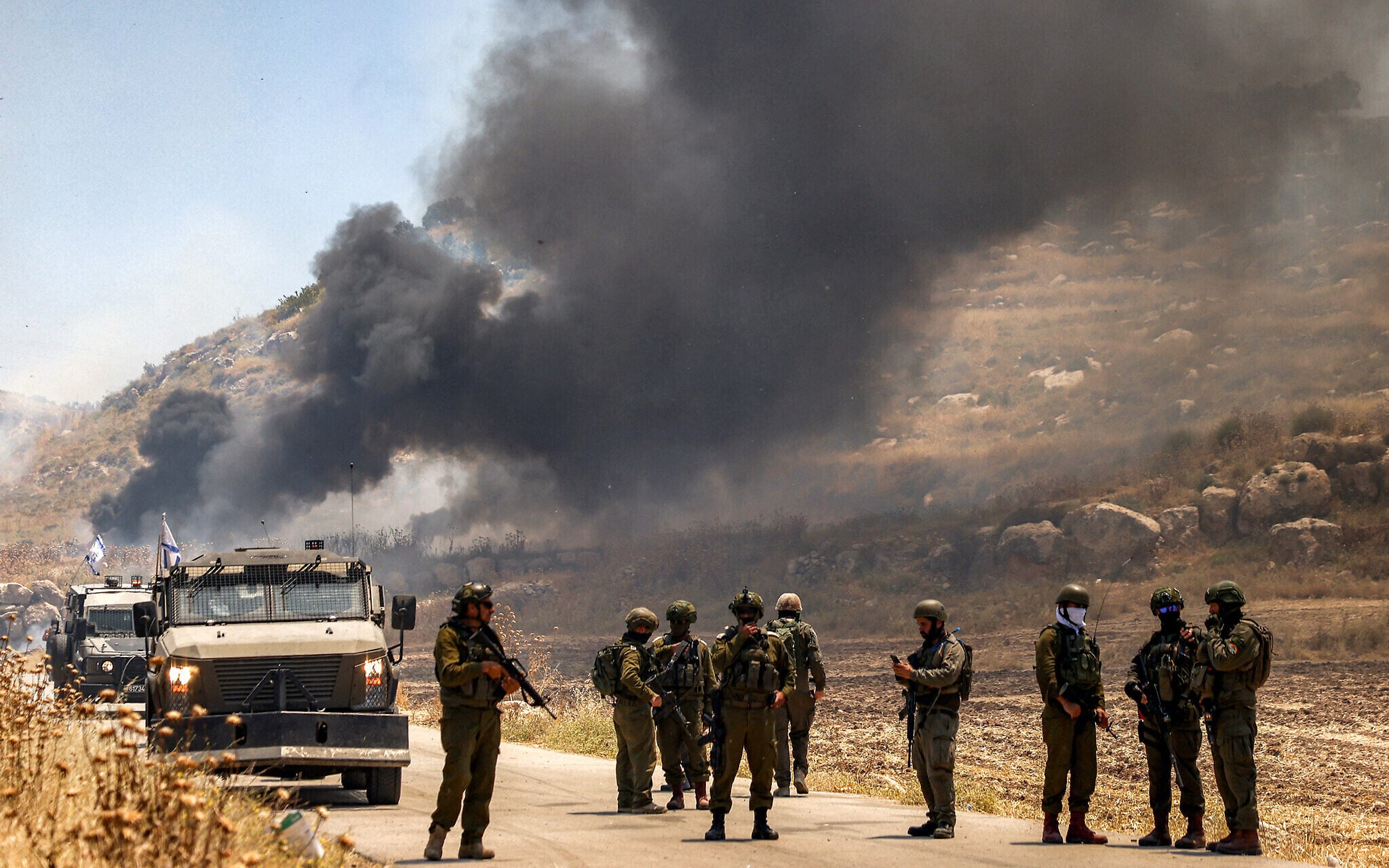
Israel’s government has not publicly responded to Sunday’s French statement, though its reaction to the May 28 EU designations was unambiguous. A foreign ministry statement at the time called the measures “arbitrary and political,” while Finance Minister Bezalel Smotrich, one of the most vocal champions of settlement expansion in Prime Minister Benjamin Netanyahu’s cabinet, vowed Israel would “stand for the right of Jews” to settle in the West Bank. Israel maintains that Jewish settlement in the occupied territory is lawful and that international characterisations of the construction as illegal are driven by political hostility rather than legal analysis. That position has not shifted, and senior ministers have given no indication it will.
The practical question is whether a coordinated national package carries teeth that the EU rounds have not. The May 28 EU sanctions are asset freezes and travel bans within the bloc’s 27 member states – significant in terms of signal, more limited in terms of financial impact on the designated settlers and organisations. National sanctions, depending on the countries involved, could potentially reach assets held in British or Norwegian jurisdiction and apply travel bans that are harder for individuals to circumvent through third countries. The number of individuals ultimately targeted will determine much of the operational effect.
France has maintained its own track of national settler sanctions since February 2024, when it designated 28 individuals for travel bans. By June 2025 that domestic list had grown to 59 individuals. Sunday’s statement suggests Paris is now attempting to convert that bilateral approach into a wider coalition, rather than continuing to act alone. On May 22, seven Western nations – Britain, France, Germany, Italy, Canada, Australia and New Zealand – issued a joint statement calling on Israel to halt settlement expansion and curb settler violence. That the same group of governments is now examining targeted financial measures against named individuals represents the next step in what has become, in practice, a gradual Western tightening around France’s own hardening posture toward Israel.
What remains unresolved is where the threshold lies. Barrot indicated Sunday that the West Bank situation “also undermines the authority of the state to some extent” – a formulation directed at Netanyahu’s government, which critics argue has failed to prosecute settler violence or restrain the settler movement’s more extreme factions. He did not address whether a change in Israeli enforcement posture would forestall the coming sanctions or whether the announcement will proceed regardless. The European diplomats cited by Reuters said two of them expected the announcement within days; what triggers its delay, or cancellation, was not specified. The settler rampage on Saturday, still being investigated, suggests the situation on the ground will continue to provide political conditions for the announcement rather than reasons to hold it back.
The more lasting question is one that Barrot’s RTL remarks leave open: whether coordinated national sanctions, however well-designed, can alter the conditions in the West Bank when the Netanyahu government has so far treated international pressure as a price it is willing to pay. For Brussels and the national capitals now acting outside it, that answer is not yet available.
https://twitter.com/JN_Barrot/status/1931287362521833704