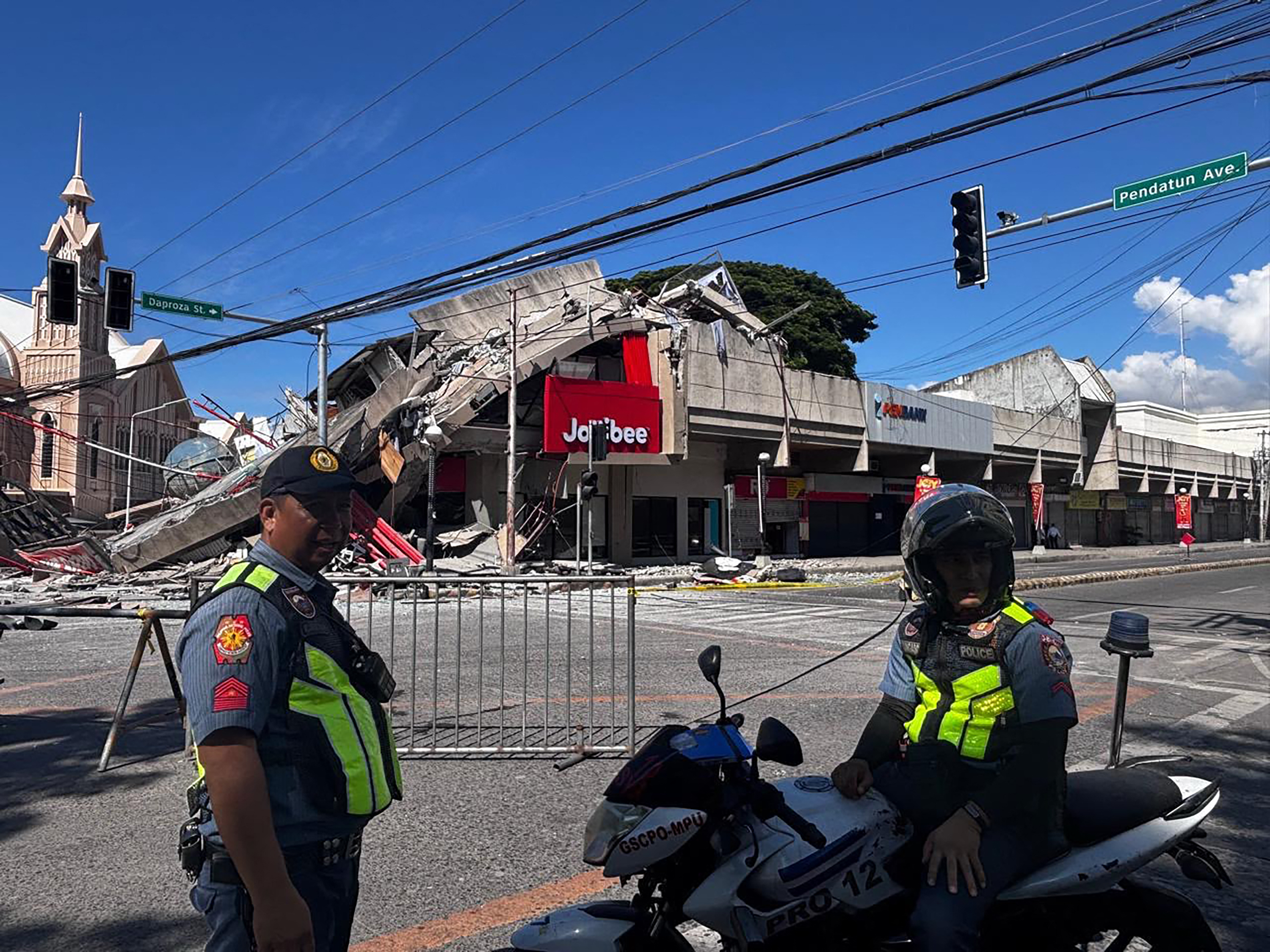

GENERAL SANTOS, Philippines — The school year here was only a few hours old when the ground heaved. Children who had just come back from the summer break were sent running into the streets as walls cracked around them, and by Monday afternoon a fast-food restaurant in the city center had folded into a heap of broken concrete, with police picking carefully through the slabs.
The earthquake that struck off the southern island of Mindanao measured magnitude 7.8, according to seismologists, after early readings ran higher and were revised down. Philippine authorities said at least 32 people were killed and more than 200 injured, a count that rose through the day as rescuers reached the buildings that had come down. A tsunami of roughly a meter pushed into low-lying stretches of coast.
Monday was supposed to be a beginning. It was the first day public schools reopened after the holidays, and instead of lessons the morning brought evacuation orders. President Ferdinand Marcos suspended classes across the affected parts of Mindanao and urged people living near the water to move to higher ground without waiting. A day built for routine became a day of running uphill.
The danger did not stop at the shoreline. The Pacific Tsunami Warning Center said waves were possible within hours along the coasts of the Philippines, Indonesia, Palau, Taiwan and Papua New Guinea. In Indonesia’s Sangihe Islands, off North Sulawesi, families were photographed carrying what they could inland. In Japan, residents of Okinawa were told to keep away from the coast. CBC reported that the warnings rippled outward across the western Pacific in the hours after the quake.
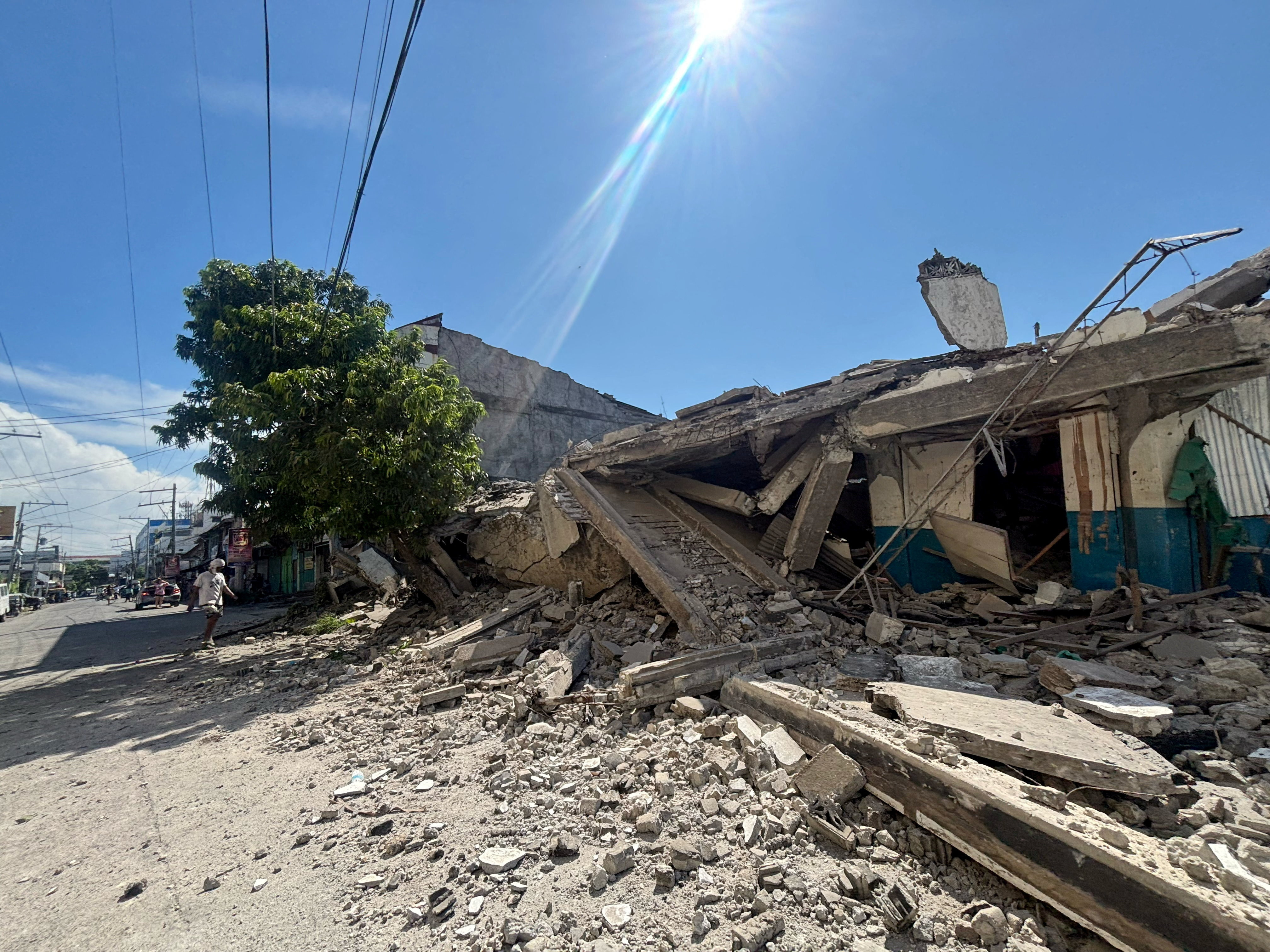
General Santos, a port city of roughly 700,000 known for its tuna fleet, absorbed the worst of the shaking. Buildings collapsed, roads split, and power and phone service dropped out in places, which is the cruelest moment for a service to fail because it is exactly when families are trying to find one another and officials are trying to learn what has happened. Al Jazeera reported that rescuers were still reaching damaged structures into the evening.
The Philippines lives on the Pacific Ring of Fire and treats earthquakes and typhoons as a recurring fact of national life. Its disaster agencies are among the most practiced in the region. But preparation and protection are not the same thing. The building stock is uneven, rural infrastructure more so, and a quake of this size goes looking for the gap between the drills and the concrete. The country has learned that lesson the hard way before, most recently when Typhoon Kalmaegi tore through the central Philippines and exposed how thin the margins can be.
This is also a corner of the world where one country’s disaster quickly becomes the neighbourhood’s. The same fault systems that menace Mindanao reach toward Indonesia and Taiwan, where a separate disaster last year, the barrier-lake collapse during Typhoon Ragasa, showed how fast a regional hazard can turn lethal once it reaches populated ground.
What was not clear by Monday night was the part that matters most. Officials could not yet say how many people remained trapped, how high the toll would climb once crews reached the outlying towns, or whether the tsunami had done damage in coastal villages still cut off from communication. Every figure they offered came wrapped in the same caveat: preliminary.
For now the numbers are provisional and the aftershocks keep arriving, as they always do after a rupture this large. The day that was meant to start a school year has turned into something else entirely, and the real measure of what happened off Mindanao will not be known until the hardest places to reach can finally be counted.