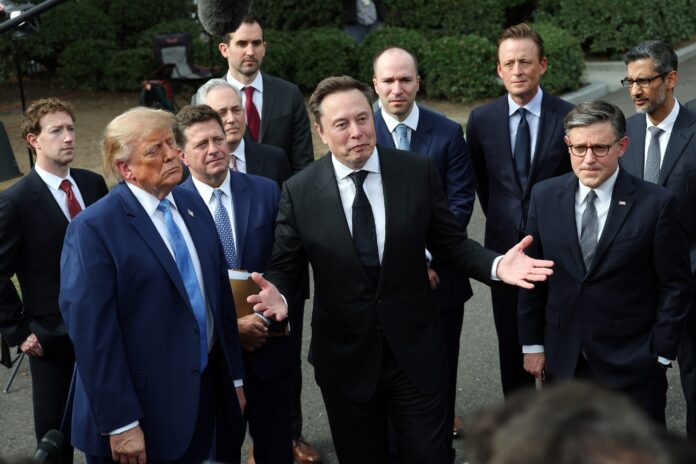

NEW DELHI — In the same week India froze Elon Musk’s satellites, it handed Mark Zuckerberg the keys to Jamnagar. The two decisions arrived days apart, from the same government, about the same kind of suitor: an American technology giant that wants the world’s most populous internet market. Read together, they are not a contradiction. They are a doctrine.
The welcome half was announced by Meta this week: the company will lease its first AI data centre in India, a 168 megawatt facility that Reliance Industries is building in Jamnagar, Gujarat, with options to scale, renewable power throughout and cooling drawn from desalinated seawater. Meta is separately backing close to a gigawatt of clean energy, 837 megawatts of solar and wind with CleanMax and another 88 with Fourth Partner Energy. Mark Zuckerberg called the facility a way to scale Meta’s AI infrastructure globally while deepening what he described as a long term investment in India’s economy.
The structure of the deal is the politics of the deal. Reliance builds and owns; Meta leases and pays, down to the energy and the water. Mukesh Ambani, announcing his ten trillion rupee AI infrastructure plan in February, told the country that India “cannot afford to rent intelligence,” a line TechCrunch reported alongside the 110 billion dollar, seven year programme behind it. The arrangement in Jamnagar completes the thought. India will not rent intelligence. Meta, instead, will rent Jamnagar.
The scale of what New Delhi is assembling around that principle is considerable. The government expects more than 200 billion dollars in AI infrastructure investment by 2028. The Adani Group has pledged 100 billion for data centres of its own, OpenAI is building with the Tata Group from 100 megawatts toward a gigawatt, and the finance ministry has offered zero taxes through 2047 to lure global AI workloads onto Indian soil. Every one of those arrangements shares the Jamnagar shape: foreign capital and foreign models, Indian land, Indian power, and an Indian conglomerate holding the keys.
Now set that against the other door. Starlink, whose final security clearances India froze this week over the conduct of its terminals in the Iran war, offers the one thing the Jamnagar model cannot absorb: infrastructure that floats above Indian jurisdiction. A data centre in Gujarat can be inspected, taxed, regulated and, in the last resort, switched off. A constellation in orbit answers to a boardroom in California. One of these is a tenant. The other is a weather system.
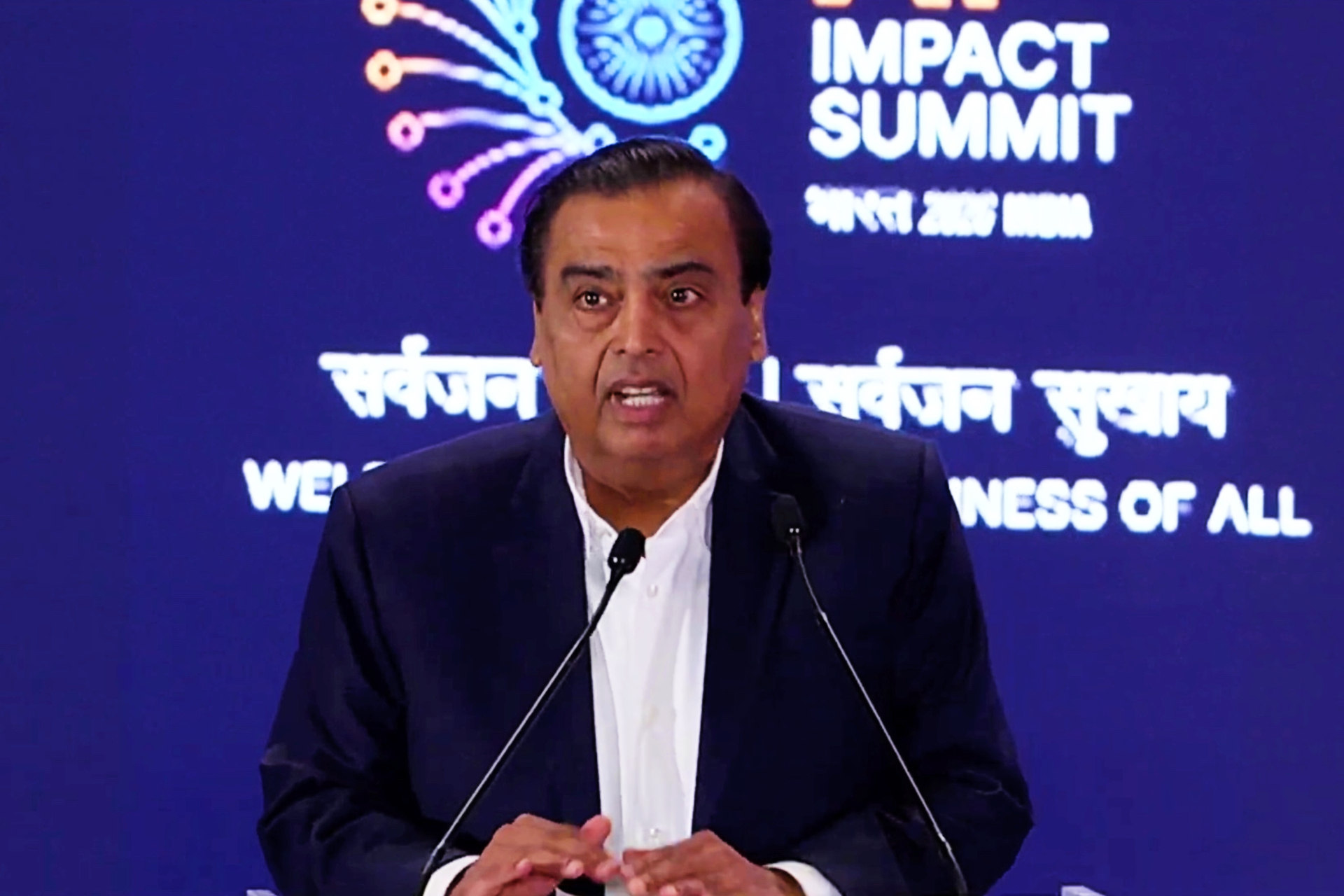
The doctrine has a politics at home, and it is not subtle. Jamnagar sits in Gujarat, the prime minister’s home state, and the deal lands in a week the government has spent celebrating twelve years of Narendra Modi in office while its security establishment flexes everywhere at once, from the Starlink file to the theatre commands plan now before the cabinet. Sovereignty is the season’s theme, and a 168 megawatt American tenant paying rent to an Indian landlord is its most photogenic exhibit.
What the announcement does not say is as instructive as what it does. There is no go-live date. There is no detail on who controls the compute if a crisis produces conflicting demands, the exact question India’s home ministry is asking Starlink. And there is nothing about whether data processed in Jamnagar enjoys protections different from data processed in Oregon, a question Indian regulators have circled for years without quite landing on. The lease is signed. The fine print of sovereignty is still being written.
Two American billionaires asked India for the same market this year. The one who accepted a landlord got Jamnagar, a gigawatt of green power and a handshake. The one whose network recognises no landlords is still waiting for a file in the home ministry to move. New Delhi has rarely explained its technology policy so clearly, and it did not need to publish a white paper to do it.