
BEIJING, June 13, 2026 (The Eastern Herald) — China’s market regulators are stepping up public enforcement against the country’s largest technology and finance groups for the first time since the bruising 2021 Big Tech crackdown, but framing the renewed activity as a more neutral defence of market order rather than a return to the punitive cycle that wiped trillions of dollars off Chinese tech valuations and locked the Ant Group IPO out of the market four years ago. Officials at the State Administration for Market Regulation, the National Development and Reform Commission and the China Securities Regulatory Commission have spent the past month signalling, mostly through speeches at industry-policy forums and through carefully placed regulator briefings, that the next phase of Chinese economic regulation will look quite different from the last one.
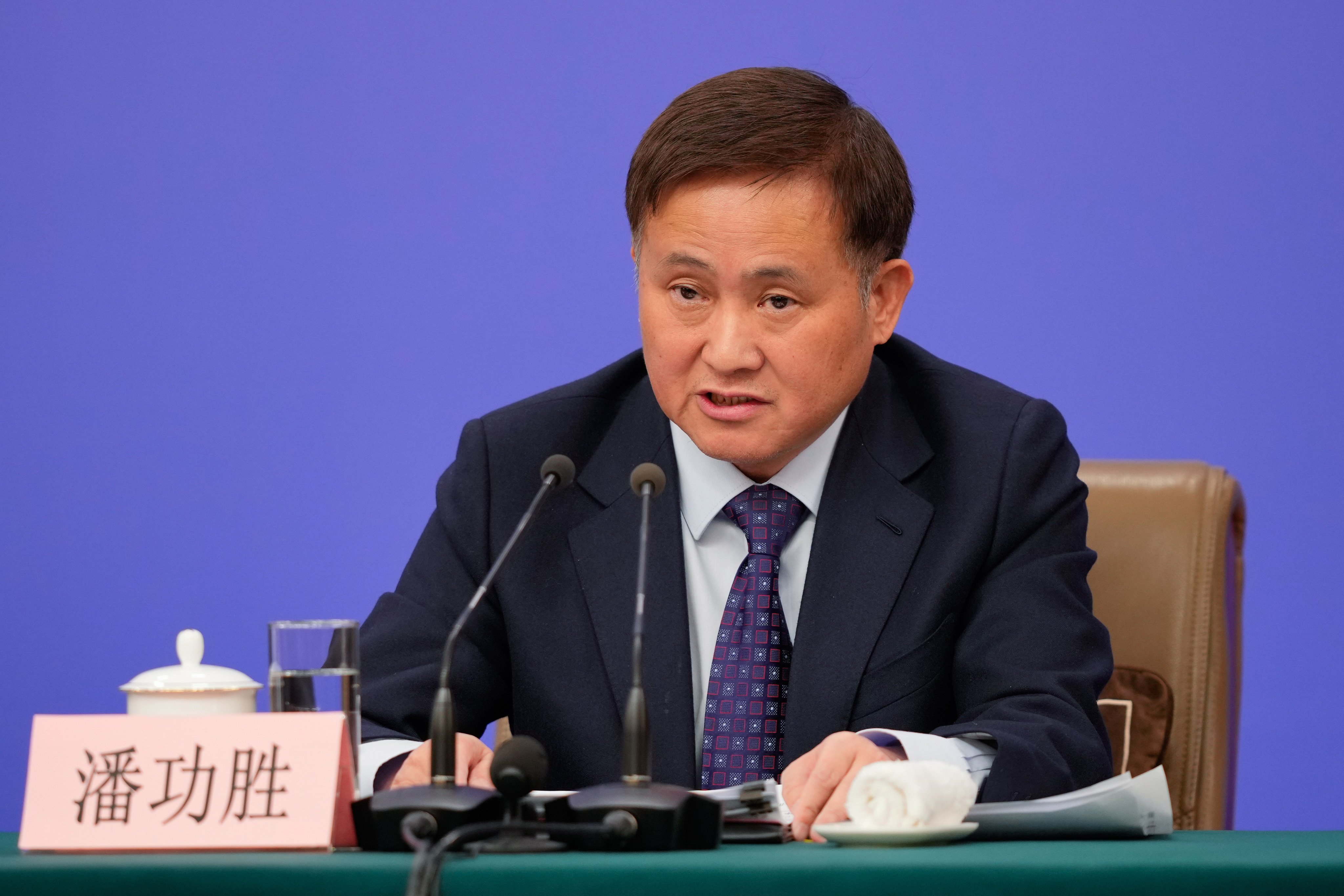
The phrase that is starting to define the shift is the one Zhu Tian, vice-president of the China Europe International Business School, used in a recent panel discussion. “It’s not a crackdown,” Zhu told colleagues. “It’s a shift in policy priorities towards defending market order.” The distinction matters because the 2021 enforcement cycle was widely read inside China and outside as an ideological move, with regulators acting as instruments of broader political strategy rather than as referees protecting the integrity of competitive markets. The 2026 cycle is being deliberately positioned as the opposite. The enforcement is real, the penalties will be material, but the framework is structurally different.
The catalyst for the policy shift has been the cumulative damage done by the 2021 to 2023 enforcement period. Chinese tech sector valuations did not recover for nearly three years, the venture-capital ecosystem that supported the next generation of consumer-internet platforms thinned out materially, and the international investor base for Chinese tech equities, which had been the dominant source of long-duration capital, withdrew almost entirely. The Hang Seng Tech Index lost 70 percent of its value at the trough. Ant Group’s blocked initial public offering, which was scheduled to be the largest in history at 37 billion dollars, became a global case study in regulatory unpredictability that Asian and Western institutional investors used to mark down Chinese equities for years.
The 2026 reset is, in that sense, partly atonement and partly recalibration. Premier Li Qiang’s State Council has spent the past eighteen months trying to restore the international investor base while simultaneously holding the line on the strategic objectives the 2021 enforcement cycle was meant to deliver, including data sovereignty, financial-system stability and anti-monopoly discipline. The new framework is more procedural, more publicly defended and less retroactively punitive. The implementing agencies are the same. The methods are deliberately different.
Specific recent moves illustrate the new approach. The SAMR opened a formal anti-monopoly investigation into the dominant Chinese ride-hailing operator earlier this month, but did so with a transparent set of allegations, a defined investigative timetable and an explicit pathway to remedies short of structural separation. The CSRC tightened disclosure standards for major data-related transactions involving overseas exchanges, but published a detailed implementation guide and a six-month industry consultation period. The People’s Bank of China issued new fintech licensing requirements but paired them with a programme of regulatory dialogue sessions with the affected platforms. None of those moves is a relaxation of regulation. All of them are a structural improvement on the 2021 communication framework.
The implications for the largest Chinese technology and finance groups are direct. Alibaba, Tencent, JD.com, ByteDance, Meituan, Baidu and the financial-platform descendants of Ant Group can all now plan investment and capital-allocation decisions against a regulatory baseline that is more predictable, more procedural and less politically capricious. The cost of that predictability is real enforcement on identifiable practices, including dominance abuse in adjacent platform markets, opaque data-collection patterns, cross-subsidisation in payment infrastructure and inadequate user-disclosure standards. The companies that adjust the fastest will face the smallest enforcement costs.
The political backdrop is the layer that gives the shift its weight. The 15th five-year plan, which will begin in 2027, has been signalling a renewed prioritisation of high-quality growth, productivity gains and consumer-side stimulus over the supply-side investment growth that defined the previous cycle. The Chinese tech sector is one of the few sources of high-productivity domestic employment and innovation, and the cost of suppressing it through unpredictable enforcement has become unacceptable inside the policy-making apparatus. The same officials who pushed the 2021 enforcement cycle are now arguing that the next phase of growth requires the tech sector to operate within a clearer and more legitimate regulatory architecture.
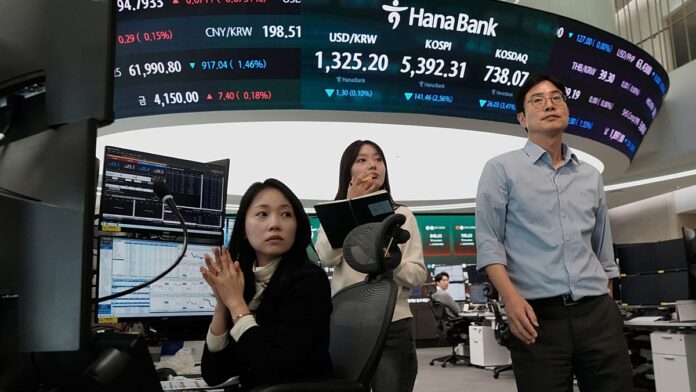
The international investor read on the shift is cautious but warming. The Hang Seng Tech Index is up roughly 28 percent year to date, with Alibaba, Tencent and Meituan all approaching their pre-2021 valuation ranges on a forward-multiple basis. Foreign institutional ownership of mainland-listed Chinese tech equities, which fell from a 2020 peak of nearly 18 percent to a 2024 trough of 6 percent, has recovered to roughly 11 percent. The Hong Kong IPO market is the most direct measure of confidence, and the surge in Chinese aerospace IPO filings on the Shanghai STAR market and HKEX is a leading indicator that the financialisation of the next Chinese tech wave is moving back to scale.
The Western political environment around Chinese tech is moving in the opposite direction. The Pentagon added Alibaba, BYD and Baidu to its 1260H military-companies designation list earlier this week, and the United States Commerce Department continues to tighten the export-control architecture around semiconductor-related Chinese tech. The Biden-era and Trump-era CFIUS regimes have converged on a more interventionist posture toward Chinese investment in United States technology assets. The structural picture is therefore one in which Chinese regulators are normalising the operating environment for domestic tech at the same time that Western regulators are increasing the friction on the same companies’ international footprint.
The capital-markets architecture is responding accordingly. CITIC Securities’ first A-category Fitch rating for any mainland Chinese brokerage, the Hong Kong fund-manager carry-tax gazette and the yuan-rupiah cross-border settlement framework are all elements of the same architectural shift. The Chinese regulatory state is reorganising the conditions under which Chinese capital, Chinese tech and Chinese cross-border trade are financed and supervised, and the result is a more recognisable financial-market architecture than the country has had in five years. The 2026 enforcement framework is the missing piece on the tech-platform side of that architecture.
The risks attached to the shift are real and worth flagging. Chinese regulatory consistency has been a recurring fragility, and the political environment around any individual case can change quickly. The current more neutral framing is sustainable only as long as the senior political leadership continues to back it. A change in the United States approach, a major data-security incident at one of the major platforms or a domestic political shock could shift the regulatory posture again. The Chinese tech sector’s recovery is therefore conditional on the durability of the current regulatory framing rather than on the framing itself.
The specific sectors most affected by the new enforcement framework deserve a final mention. Fintech and platform-payment companies are facing the most active regulatory attention, particularly around interoperability with the People’s Bank of China’s central-bank digital currency rails. E-commerce platforms are facing renewed scrutiny on data-collection disclosure and on cross-subsidisation between adjacent product lines. Online gaming companies are operating in a more stable environment after several years of episodic enforcement. AI-related platforms are facing new pre-launch compliance requirements under the recently enacted Generative AI Services Regulations. The South China Morning Post framed the shift as a structural break from the 2021 cycle.
The cleanest read of the policy shift is that Chinese regulators have learned the cost of unpredictable enforcement and are now operating within a framework that prioritises procedural legitimacy and market-order objectives over rapid disciplinary action. The cost of that approach is slower but more durable enforcement. The benefit is a tech-sector operating environment that international investors and Chinese entrepreneurs can plan against. The next test will be how the framework holds up under the inevitable headline-cycle pressures of the second half of 2026, including the Rio BRICS summit, the United States election environment and the broader macro environment that the World Bank already downgraded earlier this week. The signal is that Beijing wants the Chinese tech sector to remain Chinese, regulated, productive and globally competitive. That is a more sophisticated regulatory posture than the 2021 cycle delivered.