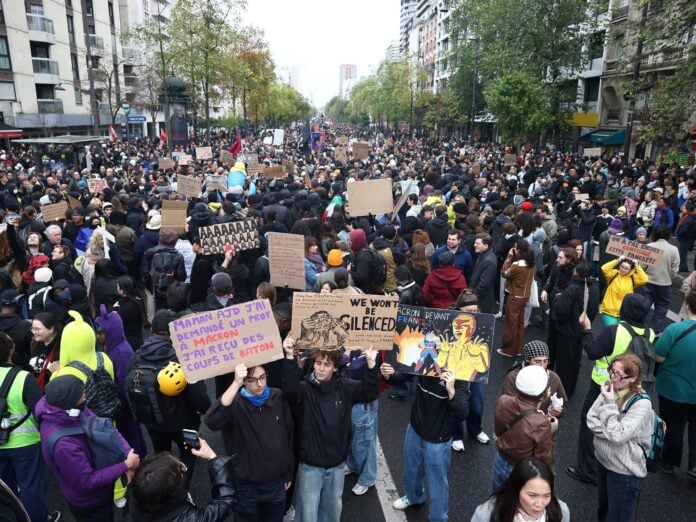

KINSHASA — Security forces fired tear gas to break up a crowd outside the Democratic Republic of Congo’s parliament on Friday, injuring the veteran opposition leader Martin Fayulu, as the country’s fractured opposition united around a single charge: that President Felix Tshisekedi is engineering the legal machinery to keep himself in power past the limit his own constitution declares untouchable.
The protesters had gathered against a bill, passed by the National Assembly this week, to organize national referendums, legislation the opposition reads as the first stone in the path to a constitutional revision, Arab News reported, citing the Associated Press. The demonstration turned violent, and video circulated of Fayulu, the runner-up in the disputed 2018 election, with blood around his eyes and on his collar; a member of his party said several protesters, some of them prominent figures, were hurt.
The constitutional arithmetic is what makes the bill explosive. Tshisekedi, 62 and in office since 2019, is serving a second five-year term that expires in 2028, and the Congolese constitution flatly prohibits any revision of presidential term limits. The bill under consideration does not touch the limits directly; it builds the referendum mechanism through which a future revision could be ratified, and it pairs with a separate provision allowing the charter to be amended in the event of a major dysfunction that paralyzes state institutions.
That loophole is the whole game, and the opposition knows the move because it has watched it across the continent. A leader nearing a term limit discovers an existential national crisis that only constitutional change can resolve, commissions a referendum framed as the will of the people, and emerges with the clock reset. The Coalition Article 64, the opposition alliance formed in May around former presidential candidates including Fayulu and the Katanga magnate Moise Katumbi, calls the bill a serious threat to national stability and, more bluntly, a constitutional coup.
The name of the coalition is itself the argument. Article 64 of the Congolese constitution charges every citizen with the duty to resist any individual or group that seizes power by force or exercises it in violation of the constitution, and the opposition has adopted the clause as its banner, casting resistance to Tshisekedi’s maneuver not as partisanship but as a constitutional obligation the document imposes on them.
Tshisekedi’s camp frames the constitutional overhaul as modernization, the replacement of a charter it calls foreign-influenced and outdated with one written by Congolese for Congolese conditions. He floated the idea in late 2024 and has advanced it steadily since, insisting no decision on term limits has been made, a denial that persuades no one in an opposition that has seen the same script produce the same third term in Guinea, Ivory Coast and beyond.

The timing is darkened by the war in the east, where the M23 rebellion backed by Rwanda has seized territory and displaced millions, the precise sort of major dysfunction the amendment clause invokes. A government can argue, with a straight face and a real war as evidence, that the state faces an emergency grave enough to justify rewriting its founding rules, which is what makes the eastern catastrophe useful to the constitutional project even as it bleeds the country.
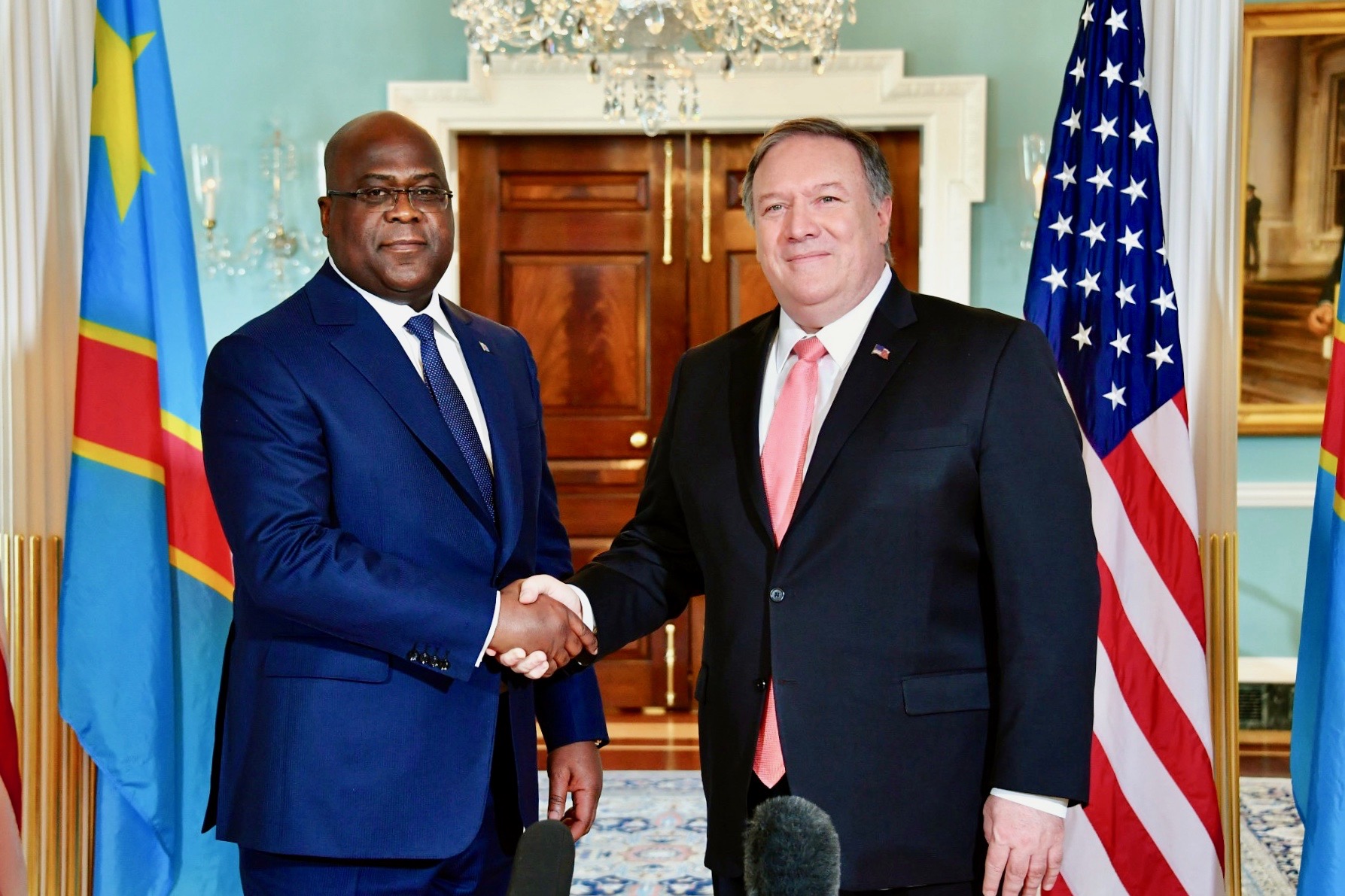
The Western response will be the quietest part of the story, and the most telling. Congo holds the cobalt and copper on which the world’s batteries and weapons depend, and the United States has spent the past year courting Kinshasa with a minerals-for-security framework that trades access for stability. A partner that controls the supply chain receives a different quality of concern about its term limits than a partner that does not, and Tshisekedi is betting that the metals buy him silence.
That wager has rarely failed on the continent. The leaders who extended their terms through engineered referendums mostly kept the Western partnerships that mattered, because the capitals that lecture about democracy in the abstract discover flexibility when a mine or a base is involved, and Congo offers both. The protesters tear-gassed on Friday are contending not only with their own security forces but with the global indifference those forces are counting on.
What the opposition has, in place of foreign help, is the street and the calendar. The referendum bill is a process, not yet an outcome, and the years between now and 2028 are long enough for the coalition that formed in May to either harden into a genuine movement or fracture along the personal rivalries that have divided Congolese opposition for a generation. Friday’s blood on Fayulu’s face is the kind of image that hardens movements, which both sides understand.
For now the sequence is the familiar one: a bill that touches nothing it is accused of touching, a denial that decides nothing it is asked about, and tear gas for the people who insist on naming the destination before the journey is complete. Congo has been here before, with other presidents and other constitutions, and the question Friday’s protest posed is whether the resistance the charter demands arrives in time to matter, or only in time to be remembered.