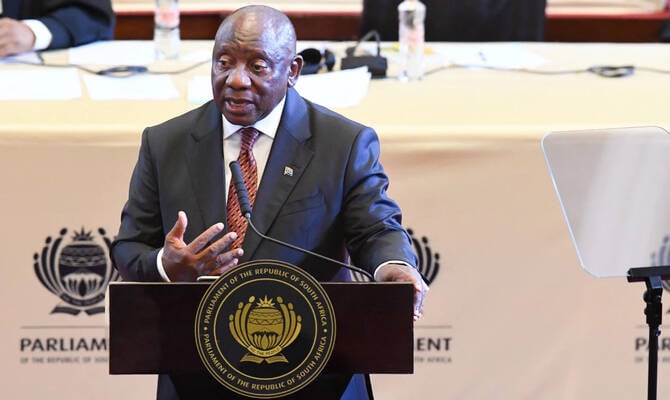

CAPE TOWN — President Cyril Ramaphosa has asked a South African court to freeze the parliamentary inquiry that could lead to his impeachment, a last-ditch legal manoeuvre in the long-running scandal over millions of dollars in cash found stuffed inside a sofa at his game farm.
In an urgent application lodged this week at the Western Cape High Court, Ramaphosa asked judges to stay the impeachment committee’s work until a separate review of the case against him has been heard, arguing that letting Parliament proceed in parallel would prejudice that review.
The move is the president’s most aggressive attempt yet to slow a process that South Africa’s highest court forced back into motion. In May, the Constitutional Court ruled that the National Assembly had acted unconstitutionally in 2022 when it voted down an earlier finding of possible misconduct, reviving impeachment proceedings many in the governing party had thought were dead.
At the centre of the affair, known in South Africa as Farmgate, is the theft in 2020 of roughly 4 million dollars in foreign currency that had been concealed in furniture at Ramaphosa’s Phala Phala farm in Limpopo. Investigators have questioned where the money came from, why it was never properly declared, and why it sat hidden in a sofa rather than a bank.
Ramaphosa has denied any wrongdoing and refused to resign. In his court papers he seeks to have the report of an independent panel, chaired by the former chief justice Sandile Ngcobo, which found preliminary evidence that he may have breached the constitution, declared unlawful and set aside as flawed in both fact and law.
Parliament has so far refused to stand down. The National Assembly Speaker, Thoko Didiza, said the president had not formally asked the legislature to halt the inquiry, and the committee has pressed ahead, signalling that it does not regard a pending court challenge as reason to pause.
That committee began its work this month under a pointed choice of leadership. Lawmakers passed over the African National Congress and elected Makashule Gana of the small reformist party Rise Mzansi to chair it, a decision read as an effort to shield the inquiry from the president’s own party.
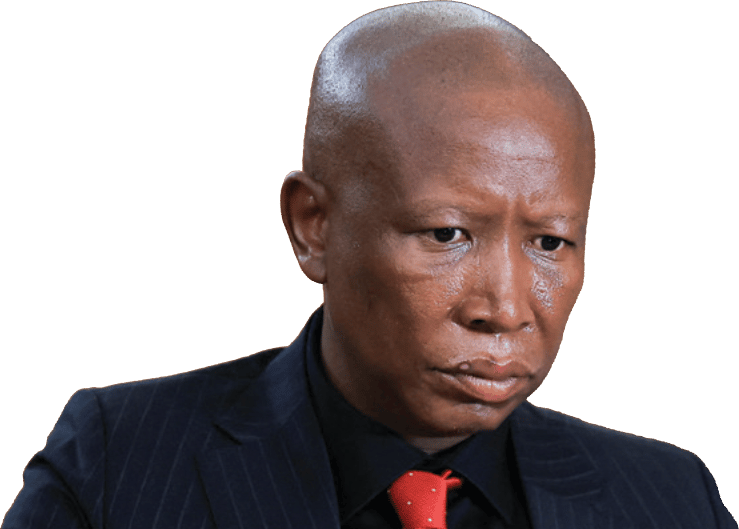
The case was driven by the opposition. The Economic Freedom Fighters of Julius Malema, together with the African Transformation Movement, took the matter to the Constitutional Court and have demanded Ramaphosa’s removal, casting Farmgate as proof that the accountability the ANC promised has never applied to its own leader.
For all the drama, the arithmetic still favours the president. Impeachment requires a two-thirds vote in the National Assembly, and although the ANC lost its outright majority in the 2024 election, it retains more than a third of the seats, enough to block removal if its members hold the line.
The greater danger to Ramaphosa is political rather than procedural. Each month the inquiry runs keeps the image of the hidden cash in the headlines, weakening a president already managing a fragile coalition, a hardening crackdown on immigration, and a wave of anti-migrant violence his government has struggled to contain.
By turning to the courts, Ramaphosa has bought time but conceded the optics, fighting to keep his conduct from being examined by the very Parliament he leads. Whether the judges grant his stay or not, the question the cash in the sofa first raised in 2020, of how a sitting president came to hide a fortune on his farm, is no closer to an answer.