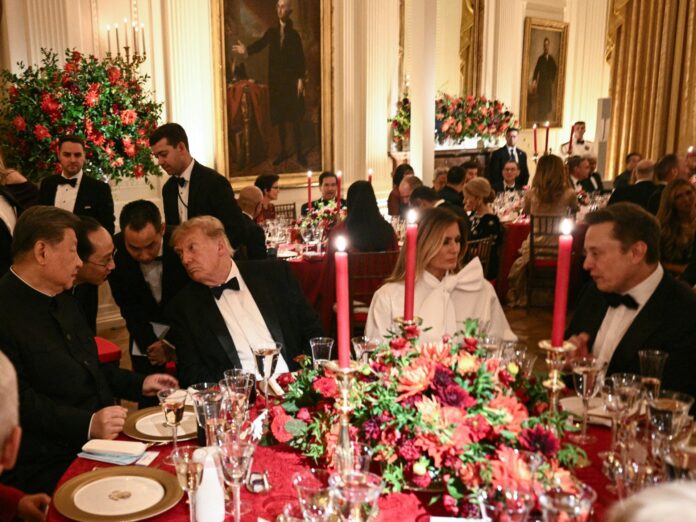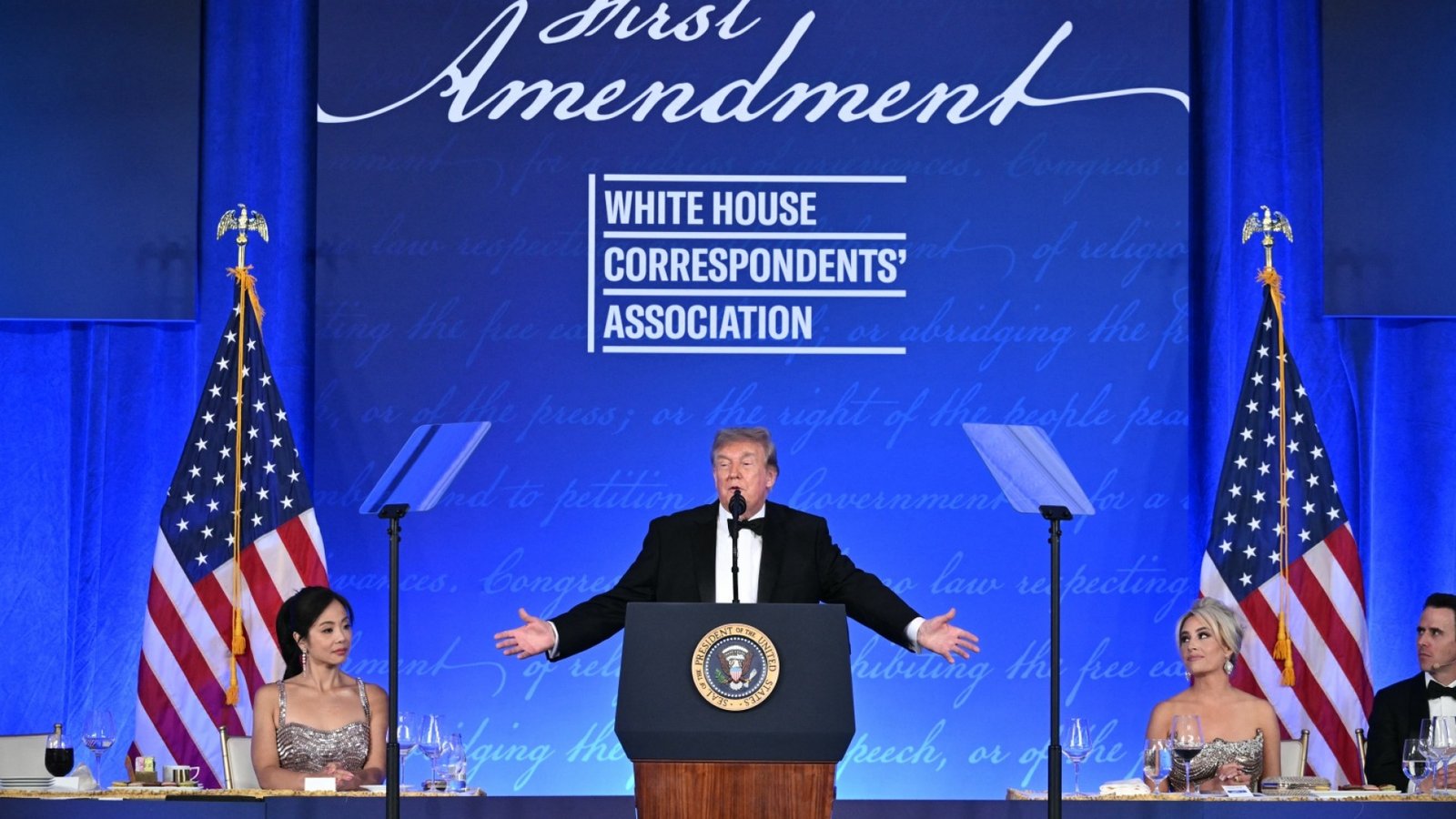

WASHINGTON – Before the evening was over, Donald Trump would call a number of people in the room broke, dishonest and worse. He would do it to applause from a crowd of roughly 680 journalists and media figures who had spent weeks debating whether showing up was itself a statement of normalization. The rescheduled White House Correspondents’ Dinner at the Waldorf Astoria on Friday began with a different kind of moment, the sort the room had not expected: an award ceremony honoring the man who had stopped a gunman from entering the original dinner in April.
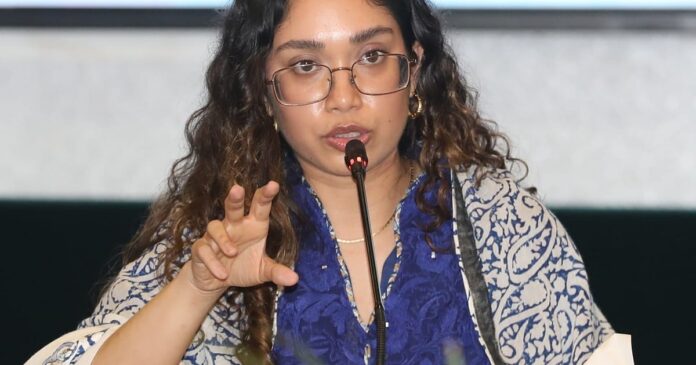
The White House Correspondents’ Association presented its President’s Award for Exceptional Service to Secret Service Police Officer Victor Gonzales and to members of the Washington Hilton staff who remained on duty during the shooting. Gonzales had been stationed at a security checkpoint outside the Hilton’s ballroom on April 25 when an armed suspect attempted to breach the perimeter. He engaged the gunman directly, absorbing a hit to his protective vest, and stopped the attacker from entering. Kitchen workers at the Hilton preserved more than 2,000 unserved meals for donation to local shelters while the chaos unfolded around them. The WHCA announced the Gonzales award on July 21, with WHCA President Weijia Jiang of CBS News saying the officer “played a significant role when he ran toward danger so that thousands of others could make it home safely.”
The shooting in April, which wounded Gonzales and forced the postponement of the original dinner, had reduced the rescheduled event to a fraction of its usual size and changed its character in ways that went beyond the venue change from the Hilton to the Waldorf Astoria. Roughly 680 people attended the Friday evening event compared to the 2,600 who would have filled the Hilton. Some journalists boycotted on the grounds that attending signaled acceptance of the administration’s posture toward the press. Others came prepared to confront the president directly over subpoenas that have been directed at reporters at major news organizations. Journalists had pushed the WHCA to make press freedom the centerpiece of the evening, rather than let the dinner be defined by the president’s entertainment.
Trump arrived with a different agenda. His performance at the lectern combined the combative stand-up delivery he uses at campaign rallies with the loosely structured improvisation that characterizes his most unscripted moments. He aimed jokes at Democratic opponents, individual reporters, news organizations, and Cabinet members. The “Trump 2028” hat came out late in the evening, and with it the announcement of what he described as his intention to run for a “fourth term” as president, a phrase constructed to weaponize his stolen-election claim while keeping its constitutional seriousness deliberately unclear. CNN’s account of the evening examined the speech as a media relations exercise, finding in it a continuation of the approach the president has used throughout his term to treat the press as both adversary and audience.
The administration’s relationship with the press has been a source of sustained legal tension. Federal judges have blocked several Trump directives affecting journalists, including rules targeting foreign reporters who had been granted indefinite status. Subpoenas issued to reporters at major American outlets have created disputes that have not resolved, and the question of executive privilege in the context of journalist testimony has reached federal courts without producing settled law. The room on Friday night contained people who are parties to some of those disputes, which gave the evening’s jocular atmosphere a different charge than it might have carried in prior years.
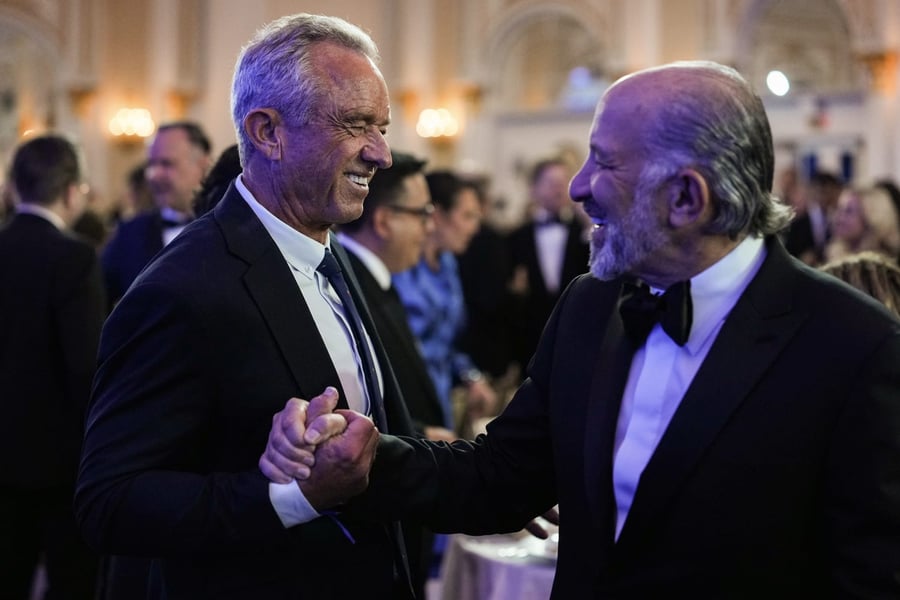
Trump’s closing offered an abrupt shift in register. After an extended performance built around attack, he told the room: “I just want to say, it is a room I have tremendous respect for the people in this room.” He had made a different point more plainly earlier in the evening: “When I’m gone, you’re all going to be broke. Your business model is going to be finished.” The second statement is closer to what he believes, and the two taken together capture the Trump communications posture more accurately than either alone: an acknowledgment of mutual dependency followed by a reminder of who, in his estimation, holds the leverage.
The WHCA’s decision to hold the dinner at all this year was disputed within journalism before the rescheduled event. The April shooting added a procedural question to the ethical one: whether a dinner that had to be postponed because a gunman attacked it should proceed at all. The association’s board decided it should, and went forward. What the evening had to accommodate was both a ceremony honoring Gonzales and whatever the president chose to do with the microphone, and those two things did not sit comfortably next to each other.
Gonzales, a Texas native with five years of Marine Corps service who joined the Secret Service Police in 2022, received the President’s Award alongside the Hilton kitchen staff whose decision to donate the unserved meals became one of the less visible acts of the evening’s chaotic original. The award was one of the clearest signals the WHCA could send about what it valued from that night in April. Whether that signal had room to survive alongside Trump’s performance was a question the evening answered ambiguously, which may have been the only honest outcome available.
What the WHCA dinner has produced in this administration, reliably and without exception, is a contested artifact: a night that neither side describes in the same terms, whose significance is assigned retroactively depending on what happens next. Whether Trump’s third-term signals at the dinner harden into a genuine political campaign, whether the subpoena cases resolve, whether the Gonzales award becomes part of any larger accounting of what the April shooting interrupted, none of these questions have answers yet. The Waldorf Astoria cleared out on Friday night without settling any of them.