
MADRID — The jewels were in a safe. More than a hundred pieces, a court says, together worth over 1.3 million euros, found by police in the Madrid office of a man who once governed Spain. On Friday a judge opened a fresh criminal investigation into how they got there, and into why no tax appears to have been paid on them.
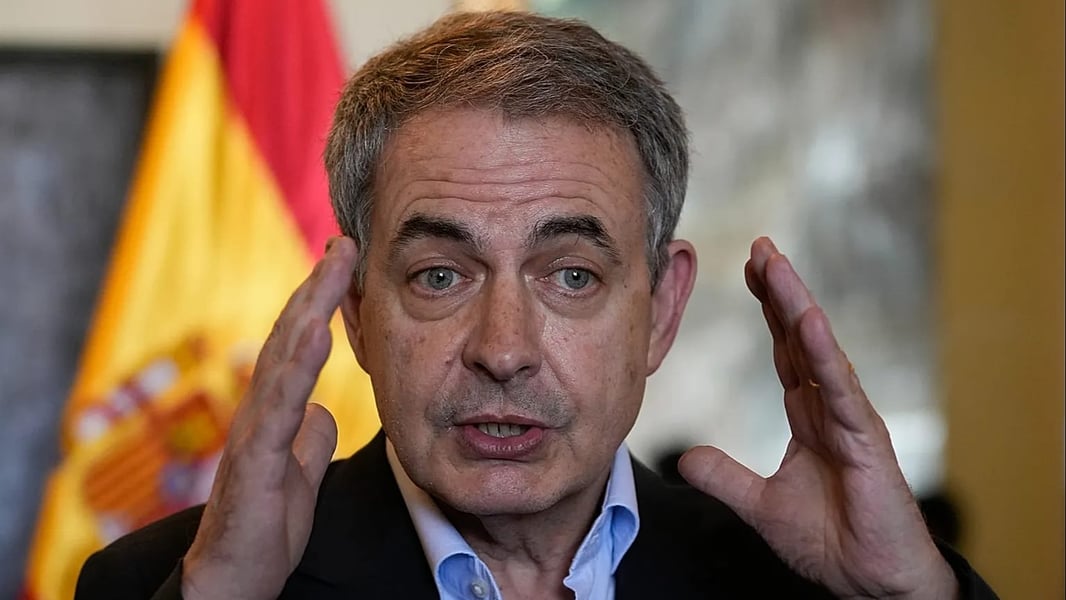
The National Court judge Jose Luis Calama opened the inquiry into former prime minister Jose Luis Rodriguez Zapatero for suspected tax fraud and smuggling, after agents found roughly 100 items of jewellery, valued by a court appraisal Euronews reported at 1,323,915 euros, during a May search of his office. The origin of the pieces was not currently justified, the judge wrote, and the absence of any tax documentation amounted to objective and reasonable evidence of the possible existence of significant tax fraud, according to Agence France-Presse. He added that the goods may have entered the European Union by circumventing the requisite controls, opening a parallel line on smuggling.
Zapatero’s camp first tried to play down the haul. A spokesman initially valued the jewellery at between 30,000 and 50,000 euros, and associates said the pieces were gifts and family inheritances. By Friday that account had collapsed: his spokesman, Luis Arroyo, apologised publicly for having misled the public about the value, and said the former leader would explain himself before the judge. Zapatero is due to testify on 17 and 18 June.
The spectacle is without precedent. Zapatero, a Socialist who governed from 2004 to 2011, is the first former Spanish prime minister to be placed under formal criminal investigation since the country returned to democracy after the death of the dictator Francisco Franco in 1975, as Al Jazeera reported when the wider case opened in May.

That wider case is where the jewels surfaced. The new probe is an offshoot of an investigation into the 2021 rescue of Plus Ultra, a small Spanish airline that received 53 million euros in state aid from pandemic recovery funds. Investigators allege that Zapatero led a network that lobbied public authorities on the airline’s behalf and used shell companies, simulated documents and opaque financial channels to move and conceal some 1.95 million euros, Euronews reported. One businessman has claimed the former leader collected 10 million euros in commissions.
Zapatero denies all of it. I have never carried out any dealings with any public administration or the public sector in relation to the bailout of Plus Ultra, he has said, insisting that all of his public and private activities have always been conducted in full compliance with the law. No charges have been filed, and an investigation in the Spanish system is a long way from a conviction.
What gives the case its charge is the company Plus Ultra kept. The airline’s ownership was tied to Venezuelan businessmen linked to the government of Nicolas Maduro, and Zapatero, in the years since leaving office, has become one of Europe’s most prominent defenders of Venezuela against Washington’s pressure, a frequent presence in Caracas and across the Latin American left. To his supporters that record makes him a target; to his accusers it is part of the pattern under scrutiny.
The timing is awkward for the governing Socialists. Prime Minister Pedro Sanchez is already fighting separate corruption inquiries that have reached his inner circle, in a country whose politics are already badly polarised, and an investigation of the party’s most senior living elder statesman deepens a sense of a government besieged, the same sense the opposition has tried and failed to convert into Sanchez’s removal. For the Spanish right, a safe full of unexplained jewels is a gift.
For now Zapatero keeps his denial and his date with the judge. But the picture of a Socialist former prime minister, a man who lectured the world on social justice and stood with the Latin American left, being asked to account for more than a million euros in jewellery locked in a safe has already done its damage, whatever the court eventually decides. He gives his answers on 17 June.