
WASHINGTON, June 13, 2026 (The Eastern Herald) — Pakistan, the mediator that has spent the last two months running shuttle diplomacy between Washington and Tehran, confirmed on Friday that the United States and Iran had reached a final agreed text of a peace deal intended to formally end the 100-day war and reopen the Strait of Hormuz to commercial shipping. Iranian foreign minister Abbas Araghchi told state media that a memorandum of understanding could be signed within one to two days, with the final missing piece reportedly a sign-off from Supreme Leader Ayatollah Ali Khamenei. The Trump administration put its own confidence in the signing at 80 to 85 percent. Global markets are already moving as if the deal is more likely to close than not.
The market reaction has been substantial even before any signature. Brent crude is trading at roughly 92 dollars a barrel, down 8 percent from its mid-May peak of 100 dollars and now 5 percent below the World Bank’s 94 dollar baseline assumption for full-year 2026. West Texas Intermediate is trading near 89 dollars. The S&P 500 closed Friday up 1.75 percent, the Nasdaq 100 gained 2.54 percent, the Dow Jones Industrial Average added 1.86 percent and the small-cap-heavy Russell 2000 surged 3 percent on the prospect of inflation deceleration that a successful deal would deliver. The reaction is the strongest single-day equity-market move since the November election week.
The contents of the deal have been reported in fragments through Iranian state media, Axios, NBC News and the Pakistani foreign ministry. The headline elements include a United States commitment to lift the oil sanctions imposed on Iran by the Trump administration in May 2025, an Iranian commitment to reopen the Strait of Hormuz to commercial maritime traffic within thirty days of signing, the release of a portion of frozen Iranian foreign-exchange reserves held in third-country accounts, and the suspension of the United States naval blockade that has been in place since the war’s opening week. The deal does not include an Iranian commitment to suspend uranium enrichment, which has been the principal obstacle to previous diplomatic moves.
Trump’s confidence framing has been characteristic. The president told Axios that he believed a deal with Iran could be signed over the weekend or by Monday, with the time and place of the signing to be announced shortly, while denying earlier reports that Iranian state media had described the terms accurately. A senior administration official subsequently told CNBC that the United States was not 100 percent confident the agreement would be signed, putting the confidence level at 80 to 85 percent. Iranian officials, speaking through the same state-media channels, described the country as being in the final stages of internal deliberations and emphasised that the Supreme Leader’s approval is the determining variable.
Pakistan’s role is the part that should be analysed more carefully than it has been. The Sharif government in Islamabad has spent the past two months providing the diplomatic channel between Washington and Tehran, with the Pakistani foreign ministry’s office of strategic studies running the technical text-negotiation function and the army chief of staff handling the political-trust dimension. The Pakistani mediation reflects the country’s distinctive position as the only Muslim-majority nuclear power, its long-standing intelligence-channel relationships with both Tehran and Washington and the strategic need it has to demonstrate constructive engagement with a Trump administration that has otherwise been sceptical of Pakistani diplomatic capacity. The Trump administration’s earlier suspension of strikes was the moment that signalled the deal was within reach.

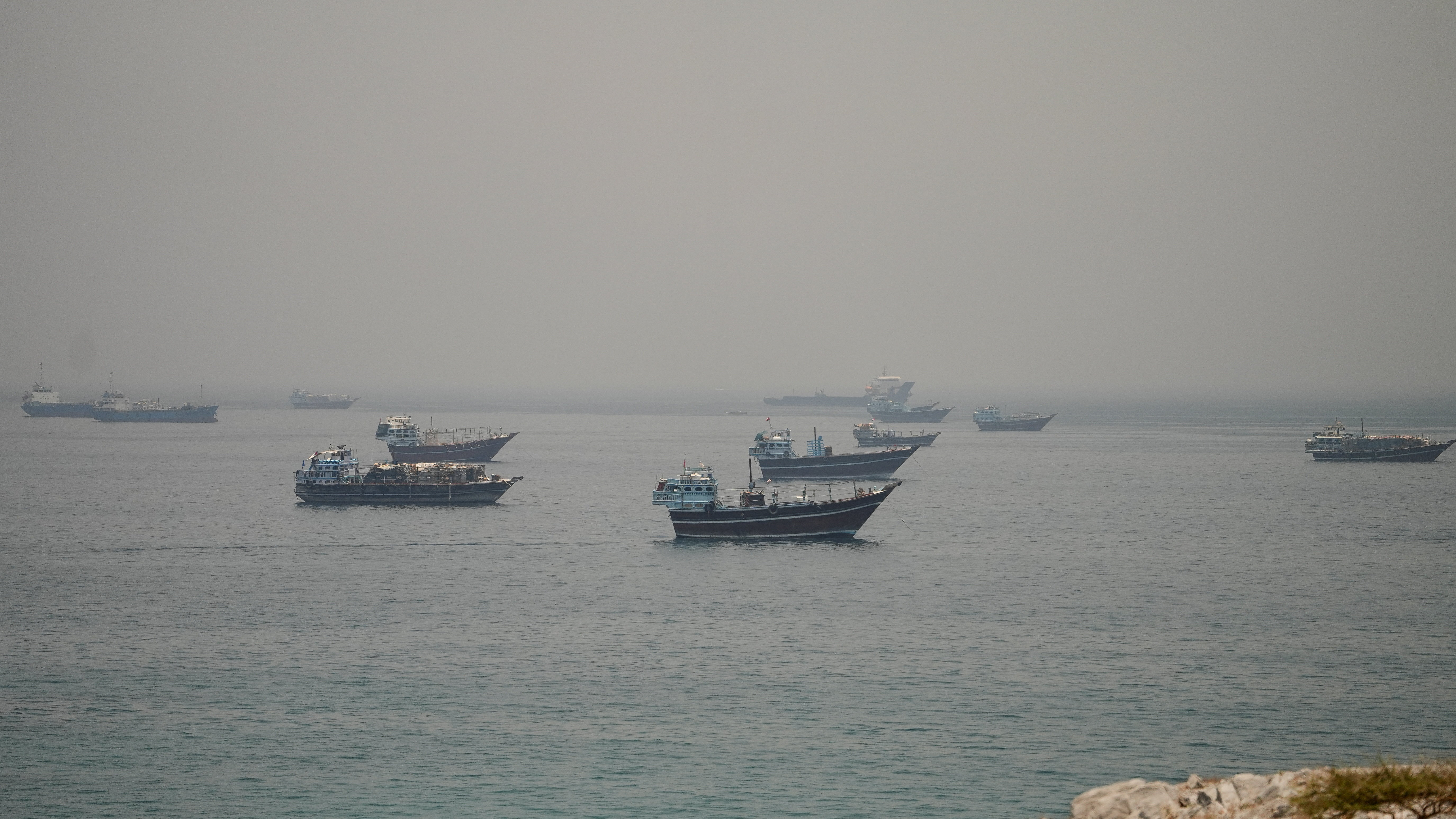
The strait-of-Hormuz reopening is the immediate Business consequence. Half of the world’s seaborne oil and a third of global liquefied natural gas transit through the Strait of Hormuz, and the partial Iranian blockade that has been in place since April has produced a sustained 8 to 12 dollar premium in Brent crude pricing. A successful deal that reopens the strait within thirty days would remove that premium and place the World Bank’s 94 dollar baseline assumption for 2026 firmly within reach. Tanker freight rates on the Asia-Europe corridor, which have been running 22 percent above year-ago levels, would normalise quickly, and the cost-of-shipping passthrough that has been driving global inflation higher would reverse.
The inflation arithmetic deserves a closer look. The World Bank’s downgrade of 2026 global growth to 2.5 percent earlier this week was constructed around the assumption that the energy disruption from the Iran war would abate by the end of July. A successful deal signed this weekend and a thirty-day Hormuz reopening clock starting on the signing date would bring the energy normalisation forward by roughly four weeks compared with the bank’s central scenario, and the implication is that the 2026 global growth forecast would itself need to be revised back up. JPMorgan’s economic-research team has already flagged that a successful deal scenario would lift the 2026 growth forecast by roughly 0.3 percentage points back toward the 2.8 percent range.
Asian markets are likely to lead the rally if the signing happens this weekend. The Hang Seng Index, Nikkei 225, KOSPI and Sensex are all positioned to outperform on Monday’s opening, with the structural exposure to oil-import costs, the shipping-rate normalisation and the broader risk-on signalling all aligned. South Korean and Japanese refiners would benefit most directly from the cheaper crude. Indian importers, who have been paying a 12 to 15 percent premium for Russian crude alternatives, would benefit from the optionality of normalised Persian Gulf supply. Emerging-market sovereign credit spreads have already begun tightening on the deal optimism.
The downside scenarios remain real and worth flagging. A failure to sign over the weekend, an Iranian Supreme Leader rejection, a last-minute United States insistence on additional terms, or a renewed military incident at the Strait of Hormuz could each reset the negotiation timetable and produce a sharp reversal in the market rally. The 85 percent confidence framing that the Trump administration has offered implies a 15 percent probability of failure, and the market positioning that has built up over the past week is now meaningfully exposed to that downside. Investors who have been on the sidelines during the rally face the difficult question of whether to add risk now or wait for the signing confirmation.
The geopolitical context the deal does not directly address is also worth flagging. The conflict in Gaza, the Russia-Ukraine war, the broader US-China trade relationship and the Asian regional security architecture all sit outside the immediate scope of the US-Iran agreement. The deal’s specific structural focus on sanctions, Hormuz access and frozen-funds release does not prejudge the broader Iranian regional posture, and the Trump administration has been careful to frame the agreement as a war-termination instrument rather than a comprehensive rapprochement. The Israeli government, which has been excluded from the direct text negotiations, has signalled that it will continue to maintain its own operational latitude.
The political consequences for the Trump administration are mixed and immediate. A successful weekend signing would produce the strongest diplomatic outcome of the Trump presidency to date, would reframe the United States’ Middle East posture for the rest of the term and would produce the kind of foreign-policy win that domestic political pressure has been pushing the administration toward. The cost is a partial reversal of the maximum-pressure posture that the Trump administration ran from 2018 to 2021 and that the May 2025 sanctions resumption was intended to complete. The constituency that supported the maximum-pressure framework, including the most hawkish Republican senators and the broader Iran-policy think-tank establishment, is unlikely to be enthusiastic about the deal’s terms.
For the broader macro picture the deal would be the most consequential single event of 2026 if it is signed. Gold’s recent overtaking of US Treasuries in central bank reserves reflects the geopolitical-risk premium that has been priced into the global financial system through the spring, and a successful deal would partially reverse that premium without removing the structural drivers entirely. The dollar would likely strengthen modestly against gold on the deal-signing, but the longer-running diversification trend is independent of the Iran war and is unlikely to reverse.
The next concrete milestones are calendar-driven and short. Iranian Supreme Leader sign-off is expected within 48 to 72 hours. The signing ceremony is expected to take place at a Pakistani-mediated venue, possibly Islamabad or Muscat. The implementation timeline for the Hormuz reopening starts on the signing date and runs for thirty days. NBC News’ reporting frames the Hormuz reopening as the headline operational element. CNBC’s coverage details the Pakistan mediation and the 80 to 85 percent administration confidence figure.
The cleanest read of the Saturday position is that the deal is now more likely to close than not, the market positioning has already absorbed roughly two-thirds of the post-deal upside, and the next 48 hours will determine whether the remaining one-third gets paid out or reverses. Brent at 92, the S&P at 7,431 and the Hang Seng’s positioning for a Monday rally all reflect that probability assessment. The downside is real but probabilistic. The upside is mechanical. The diplomatic execution is the variable that matters between now and Monday’s opening bell.