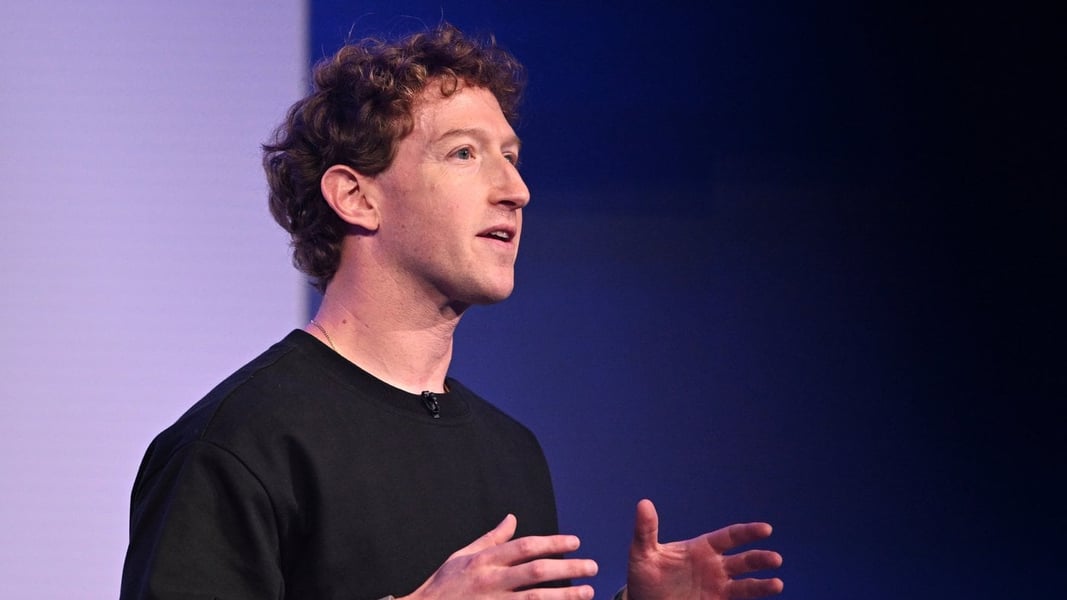

MENLO PARK — Six weeks after Mark Zuckerberg ordered the largest staffing cut of Meta’s history, the chief executive sent a memo to the people still in the building, telling them what they had already worked out for themselves. Given the complexity of these changes, he wrote in the internal document seen by Reuters, we’ve made mistakes and will almost certainly make more. The note, sent on Friday, was Meta’s first executive admission that the artificial intelligence pivot it sold to investors had cost it more than was strictly necessary in the only resource it could not reorder by quarter: its people.
The numbers that frame the apology were familiar before the memo arrived. In May, Meta announced a roughly 10 percent reduction in its global workforce, around 8,000 people, while transferring some 7,000 employees into new AI-related roles, a restructuring Eastern Herald covered in the layoffs Zuckerberg’s first email confirmed. The architecture was deliberate: ramp up roles tied to model training and the company’s AI infrastructure, shrink teams where the new headcount let them go, and accept that some of the cuts would land in the wrong places because the new bets were already winning the budget.
What Friday’s memo conceded is that the wrong places were not a small share. By creating important new roles for people, Zuckerberg wrote, this also allowed us to shrink the size of teams knowing that if we make mistakes in some places, then we could transfer some people back. Read in the slow voice of a manager defending an HR system, that sentence is humane. Read at the speed of the Slack channels where Meta engineers actually work, it is an admission that the company laid off staff it now wants to rehire, and that the price of moving fast on AI was paid in colleagues nobody in management quite meant to lose.
The remedies on offer match the corporate vocabulary in which the original cuts were announced. The memo promises larger budgets for offsites and team gatherings, and a company-wide hackathon in July described as a collaboration exercise around Meta’s latest AI models. The Applied AI Engineering unit, which Reuters reported had grown to a 50-to-1 ratio of individual contributors to managers, will see that span of control rolled back. And in the line the survivors will read first, Zuckerberg said Meta does not expect more company-wide layoffs this year. That is a useful sentence as far as it goes, and 5,000 people who left in May would have liked to hear it in April.
The memo also sits inside a broader admission that the Silicon Valley AI restructuring playbook is producing diminishing returns. Salesforce announced $1.2 billion in AI revenue this month and then laid off the staff attached to the product. Adobe beat earnings, raised guidance, and its chief financial officer left for a chip company anyway. Anthropic, the AI lab that refused to drop military-use restrictions on its models, found its export controls had been tightened by Friday. The pattern across the sector is companies discovering that the AI shift they sold to shareholders is more expensive in human terms than the slide decks suggested.
The 50-to-1 ratio is the most revealing detail. A unit in which a single manager carries fifty direct reports is not a unit designed for the people inside it; it is a unit designed for cost. Meta’s promise to roll that back is a tacit recognition that the original org chart was an experiment in how thin oversight could go before the work suffered, and that the answer arrived earlier than the company hoped. Engineers do not measure span-of-control in slide decks. They measure it in whether anyone is paying attention to what they ship.
For Zuckerberg, the memo is a calculated piece of corporate hygiene. Wall Street has rewarded Meta’s AI capex story all year, and a chief executive who can openly walk back staffing mistakes signals to investors that he is still listening to the operating reality, not just to the demo. For the people on the other side of the memo, the calibration looks different. A hackathon is not a substitute for the colleague who left in May; an inflated offsite budget does not restore a team in which the institutional knowledge has been deleted and the survivors are managing twice the surface area they did in March, as the memo’s own arithmetic implies.
The honest part of Friday’s message is its caveat. Zuckerberg said the company would almost certainly make more mistakes. He is right. AI workforce restructuring is in a phase in which the cost of being wrong is being paid in careers, and the labs that move fastest will be most often wrong. The companies that survive the cycle will be the ones whose chief executives say so out loud, the way Zuckerberg now has, and then act on the admission with something more substantial than a July offsite.
For the 8,000 who do not work at Meta anymore, the memo lands as the apology a company writes once the lawyers have made sure it cannot be sued for what was apologised about. That is not a small thing inside corporate America; it is also not the same thing as a job. Meta’s next move is to prove that the company that made the mistakes is also the company capable of fixing them, in months rather than slide-deck cycles. The 50-to-1 unit is the place to look first. If the next set of Meta-watchers reads a 30-to-1 number by autumn, the memo will have been honest. If they do not, it was a press release.