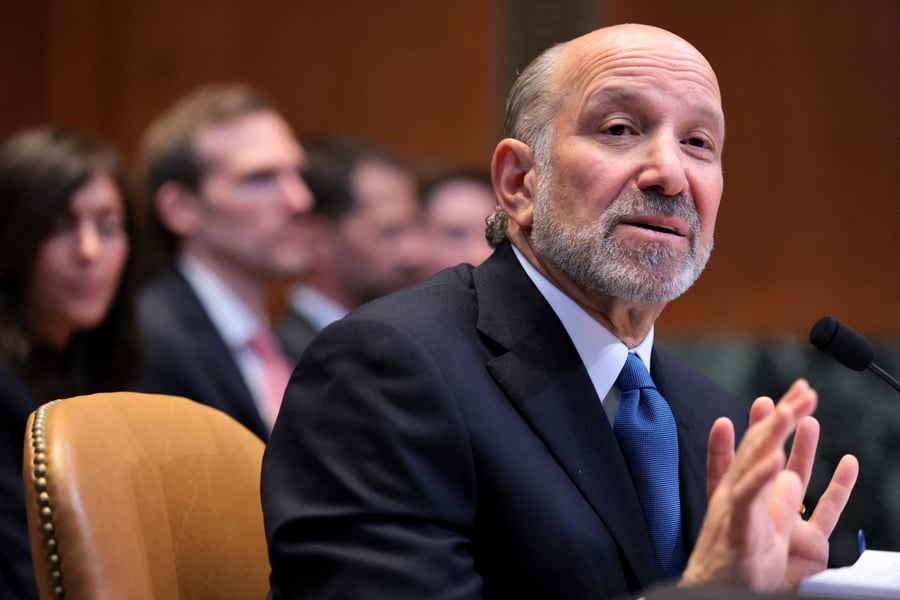

WASHINGTON — The Trump administration on Friday slapped an export control on one of America’s most prominent artificial intelligence companies for an offence its rivals routinely commit: making models powerful enough that someone got around the safeguards. Commerce Secretary Howard Lutnick sent Anthropic chief executive Dario Amodei a letter informing him that the company’s two newest flagship models, Mythos 5 and Fable 5, would be subject to export controls to any location outside the U.S. and to all foreign persons within the country, Reuters reported, citing an Axios scoop the administration did not deny.
The stated reason is a jailbreak. According to the reporting, an unnamed company informed the Commerce Department that it had bypassed Mythos 5’s safety controls, and the administration treated the demonstration as a national security event. The unstated reason is the longer argument the White House has been having with Anthropic. The administration spent recent months asking Anthropic to lift the restrictions that prevent its models from being used for military targeting and population surveillance. Anthropic, the most safety-branded of America’s frontier AI labs, declined. On Friday it found out what declining costs.
The mechanics of the order are unusual enough to deserve attention. Export controls written for chips, satellites and centrifuges have rarely been applied to commercial software in this form. Mythos 5 and Fable 5 are not weapons; they are general-purpose models that write, code, analyse and converse, sold by the millions through public APIs. Designating them as export-controlled means an American company cannot offer them to a French developer, a Japanese university, an Israeli analyst or a foreign-passport holder sitting in Brooklyn, without a license. It is the kind of move governments make when they cannot stop a technology from existing and want to be seen doing something about it.
For Anthropic the costs are immediate and large. Its enterprise customer base is global, its developer ecosystem is overwhelmingly international, and its API revenue depends on the same foreign access the order now restricts. A safety-first company that just put out the most capable models of its life will now watch a chunk of its addressable market be served by competitors whose models, OpenAI’s Mythos rivals and Google’s Gemini family, are not yet subject to the same restriction. Whether the order is enforced consistently or selectively across the labs will tell us more than the letter does.
The politics of the choice are louder for being half-hidden. The administration’s posture toward AI has been to treat dominance as a national resource and safety as an obstacle to it, a posture that has aligned it more comfortably with OpenAI’s harder-edged commercial roadmap than with Anthropic’s quieter line about catastrophic risk. The dispute over military use this winter was the visible part of that gap. Friday’s export control is the punitive part: when persuasion failed, regulation arrived.
The wider consequences travel outside Washington. Friend and foe alike read American export-control choices as signals, and the signal here is the one Beijing has spent years preparing for. As Eastern Herald has reported, Taiwan is weighing tighter AI chip export curbs of its own to align with US policy, while China’s domestic AI labs continue to push their own frontier models without American export-control friction at home. Walling off the best American models from foreign use accelerates the substitution problem more than it slows it, and concentrates the global AI conversation in places that did not ask for permission to host it.
The decision also intersects with a finance story Eastern Herald has been tracking. Jeff Bezos’s Prometheus this week emerged from stealth with $12 billion to automate engineering and manufacturing, OpenAI is preparing to test investor appetite for its own IPO, and the largest software check this week went not to a model but to chip and infrastructure plays. The administration’s signal to the capital markets is unmistakable: if your AI company refuses to be a defense contractor, it is a regulatory problem; if it embraces hardware, it is a national champion. Anthropic, by accident of design, became the case study.
What the order does not do is settle the underlying problem. Whoever jailbroke Mythos 5 still has whatever they extracted from it, and the model’s foreign users will find substitutes within weeks. Export controls on software, unlike on physical goods, slow distribution without eliminating capability. The administration has gained a political headline and lost an argument about voluntary cooperation with a frontier AI company that had been willing to draw lines for it. The next time a lab is asked to compromise its safety policy in the name of national security, it will negotiate from inside a worse position. So will the country that asked.
Anthropic did not publicly respond on Friday, and Reuters said it could not immediately verify the report; the Commerce Department did not deny it. The silence is its own communication. A company that built its brand on being the responsible one in a room of frontier labs has discovered the limit of responsibility as a competitive strategy in a Washington that no longer treats it as a virtue.