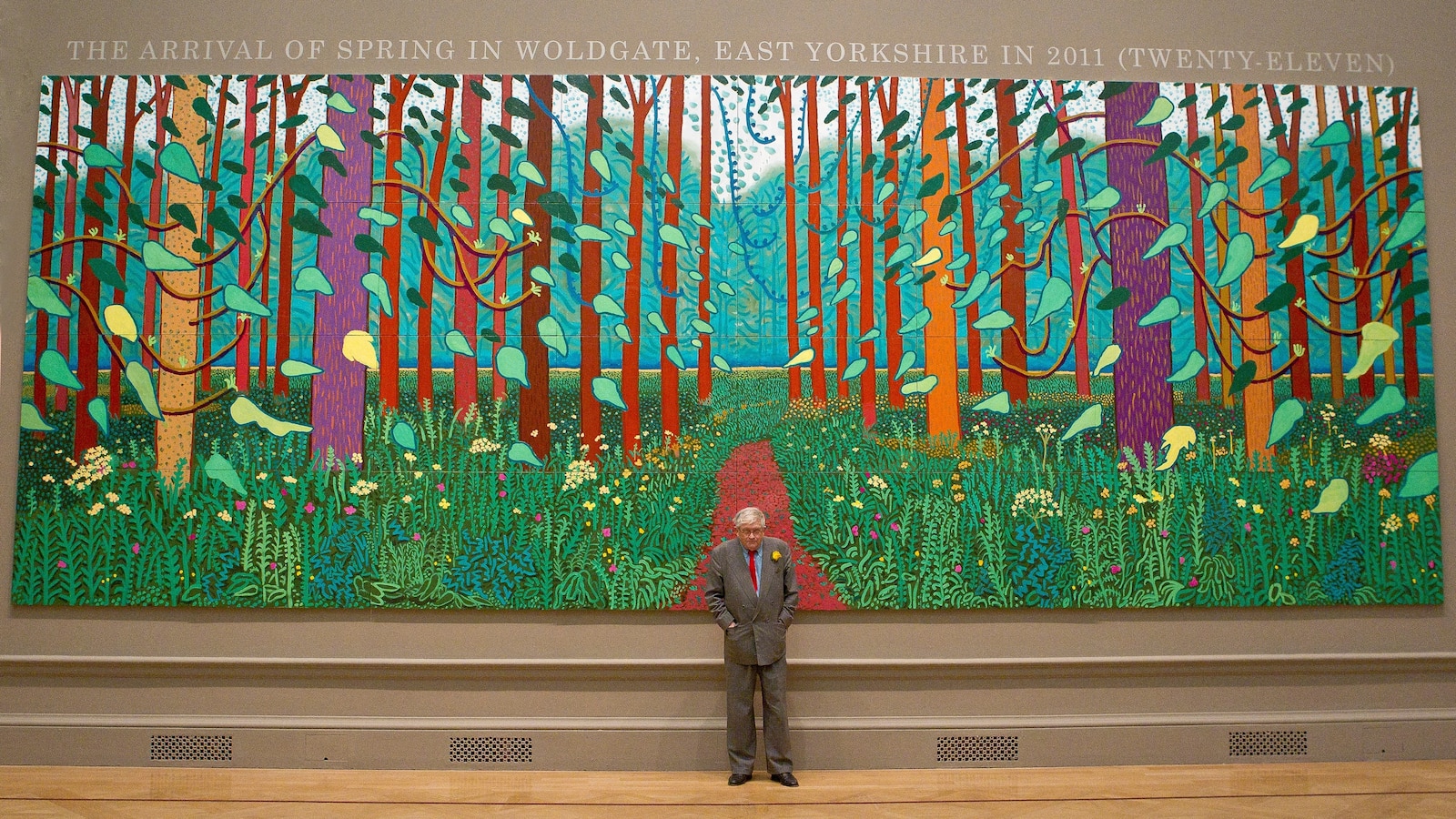

LOS ANGELES — David Hockney got off a plane in Los Angeles in 1964, looked at the swimming pools and the palm trees and the men he could finally paint as men, and decided he was home. He spent the next six decades proving it. The English painter who turned a city most American artists found vulgar into the most identifiable subject in postwar art died Thursday at 88, leaving behind a body of work that did more to define how Los Angeles looks to the rest of the world than any actual Los Angeles native ever has.
Hockney’s death was confirmed by his publicist Erica Bolton, who said he died “a few weeks short of his 89th birthday,” the Associated Press reported. He was born July 9, 1937, in Bradford, England, an industrial mill town whose grey winters the artist spent the rest of his life rebutting in paint.
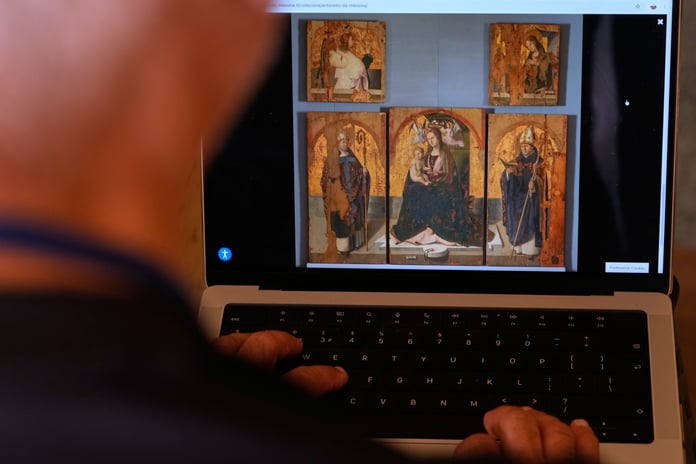
The body of work is the obituary, and the body of work is mostly Los Angeles. The Splash. A Bigger Splash. Portrait of an Artist (Pool with Two Figures). Mr. and Mrs. Clark and Percy. Two Men in a Shower. We Two Boys Together Clinging. The titles read like the index of an American backyard the artist transcribed from memory, except he transcribed it from observation, and the observation was a queer English painter watching a Western city pretend it had no shadows.
Pool with Two Figures, the 1972 canvas of a swimmer breaking the surface while a fully dressed man watches, sold at Christie’s in New York in 2018 for $90.3 million. At the time it was the highest auction price ever paid for a work by a living artist. The figure made every front page of the international art press; Hockney, in an interview the same year, told a reporter he had been more excited by a recent iPad drawing.
The iPad line was not a put-on. Hockney spent his eighties producing thousands of digital landscapes on Apple’s tablet, treating the touchscreen as a new pigment the same way he had treated photo collage in the 1980s and polaroid grids in the 1970s. He was the rare twentieth-century master who never bought the case for technological pessimism, and the late iPad work, much of it landscapes of his Yorkshire childhood, sits as comfortably in his catalog as the swimming pools.
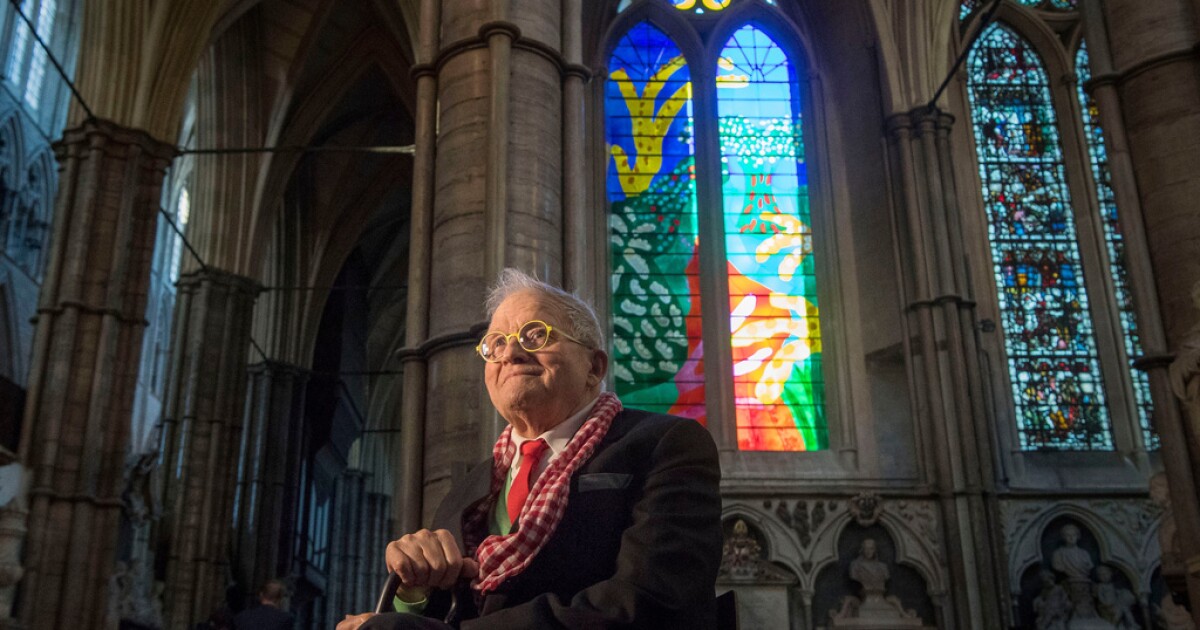
His relationship with Los Angeles was the deepest of his life. The Los Angeles County Museum of Art holds more than 150 works by Hockney, more than any other museum, and has staged more exhibitions of his work over fifty years than it has of any other artist. “I’m excited every day,” he told an interviewer in 1979. “London has lots of dreary parts but I never find anything dreary in Los Angeles.” He called himself, more than once, “an English Los Angeleno,” the kind of self-description that doubles as a thesis statement.
The art-historical estimation has been catching up to the popular one for years. “David Hockney is also an incredibly popular artist whose work changes how we see things,” curator Norman Rosenthal said in framing a major retrospective. Simon Schama, in a 2025 essay marking another exhibition, wrote that the work is “admired, loved is not too strong a word, by the millions,” a sentence that captures both the affection and the ambivalence Hockney’s accessibility produced in the academy.
That accessibility was the most radical thing about him. Hockney painted joy without irony in a postwar art world that had decided joy was suspect. He painted gay desire in 1964 California, when most of America still treated it as a crime, and he painted it in colors that looked like an advertising department’s idea of summer. The pictures are deceptively friendly. They are also, on close reading, a record of an artist staking his life on the premise that beauty and seriousness can coexist, a premise the past half-century of American art kept trying to disprove and the market kept refusing to.
The institutions inherit the task of explaining him next. LACMA’s holdings make the museum the de facto custodian of his California decades, and the question of how to install a Hockney retrospective in a city he loved more visibly than most of its native sons will fall, eventually, to the same curators who watched him paint it. The museum’s gala calendar already tells the story of which Los Angeles artists it canonizes when, and Hockney’s place in that calendar is now permanent. The market, separately, will get to determine whether the $90.3 million number was a ceiling or a floor.
What the obituaries cannot settle is whether the city he chose has been good for him as a posthumous subject. Los Angeles has spent a half-century selling itself with images that, if traced back to source, belong to a Bradford-born art student who arrived with a suitcase and a sketchbook and made the place legible to the world. The city does not always thank the people who do that for it. Hockney never seemed to mind. The painter who claimed Los Angeles outlived almost everyone who tried to dismiss it, and the city he loved goes on looking like his paintings, which is the closest thing to a fair trade an artist of his stature ever gets.
Related Posts