
PRIMM, Nev. – Forty-five miles south of the Las Vegas Strip, a small Nevada town built on the premise that California drivers cannot wait any longer to gamble came within weeks of permanent extinction. Then, at what amounted to the last possible moment, it got a reprieve.
The Primm family announced last week that it has reached an agreement with Terrible’s – the Las Vegas-based company run by the Herbst family that operates casinos and Terrible Herbst gas stations across Nevada – to take over management of the Primm Valley Hotel-Casino and related properties along Interstate 15, averting a July 4 shutdown that had seemed all but certain as recently as a week before the deal was struck.
Cory Clemetson, grandson of Primm founder Ernie Primm and president of Primm South Real Estate Company, said his family was resolute that it could not simply walk away. “Laying off in excess of 300 Nevadans who are mostly paycheck to paycheck with nowhere to go didn’t sit well with my family,” Clemetson was quoted saying in coverage by the Las Vegas Review-Journal. The partnership with Terrible’s, Clemetson added, reflects “shared goals” for a place that his grandfather built from a roadside stop in the 1950s into a border-casino destination that once drew millions of California travelers each year.
What is less clear – and what the deal’s announcement has done little to resolve – is what exactly survives at Primm, and for how long.
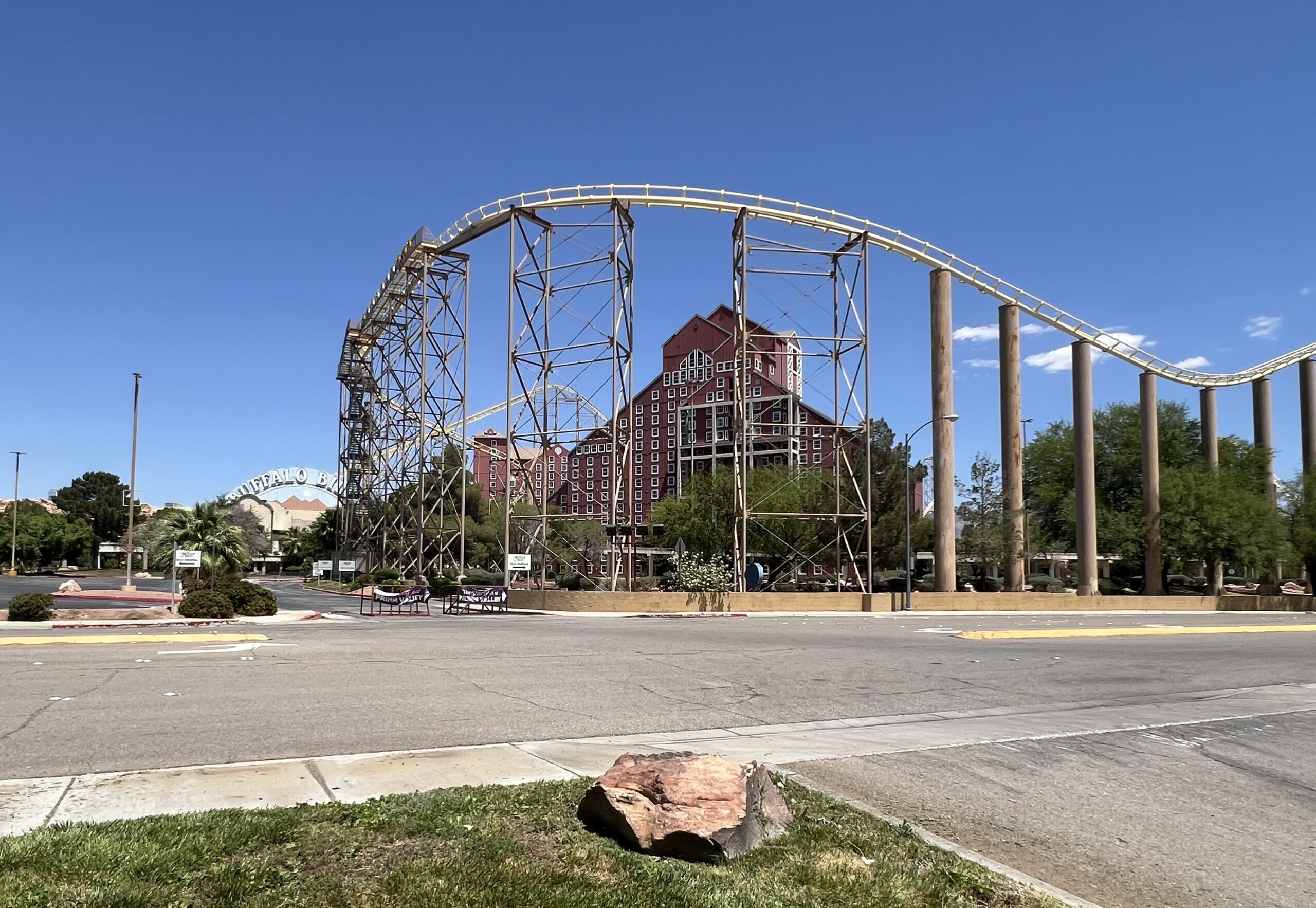
When Affinity Gaming, a Las Vegas-based regional casino operator, filed a Worker Adjustment and Retraining Notification on May 6, it informed 344 employees that their last day of employment would be the Fourth of July. The notice covered not just Primm Valley, the last fully operating casino at the site, but also the Primm Center gas stations. Buffalo Bill’s, the largest of the three resorts, had suspended 24-hour operations in July 2025 before going dark at the end of that year, while Whiskey Pete’s – the original property, opened in 1977 by Ernest Primm to capitalize on travelers headed north to Las Vegas – had shut down in December 2024 after 18 months of intermittent closures. The slot machines that once lined those floors, the roller coasters and log flume rides at Buffalo Bill’s, the Bonnie and Clyde death car that Whiskey Pete’s kept on display: none of that had been declared dead. None of it had been saved, either.
Affinity, which had purchased all three properties from MGM Resorts in 2007 for approximately $400 million, told the Clark County Commission in 2024 that “traffic at the state line has proved to be heavily weighted towards weekend activity and is insufficient to support three full-time casino properties.” The pandemic had sharpened a decline that was already underway – the rise of California tribal gaming meant that a significant portion of the Southern California gamblers who once made Primm their first stop now had no reason to drive to Nevada at all.
The Terrible’s deal, as currently described, addresses none of those structural pressures directly. Its immediate focus is preserving Primm Valley and the two gas station operations. Tim Herbst, president of Terrible’s, said in a statement that “Primm has long been one of Nevada’s most recognisable destinations” – language that gestures toward the property’s history without committing to its full restoration. The Nevada Independent, which broke the terms of the agreement, reported that Terrible’s could potentially also take on Buffalo Bill’s and Whiskey Pete’s, but the company has offered no timeline and no certainty on either property.
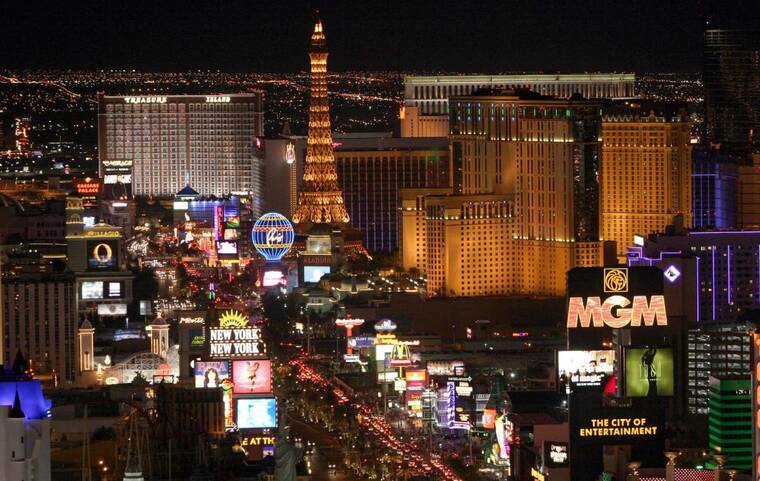
The Herbst family’s track record in Nevada is real. Terrible’s operates casinos in the Las Vegas valley and across the state, and the Terrible Herbst convenience and fuel brand is among the most recognized in Southern Nevada. The company has operated in gaming, hospitality, and fuel simultaneously – a combination that suits Primm’s particular geography as a highway stop rather than a destination resort. Whether that operating model can make Primm financially viable where Affinity could not is the question that the deal leaves conspicuously unanswered.
Primm’s crisis is not unique to the Mojave. Regional casino operators nationwide have faced mounting pressure from the same combination of forces: the expansion of tribal gaming in markets that once fed destination casino towns, the structural shift in younger gamblers toward online platforms, and the rising cost of staffing and maintaining aging hotel-casino properties that were built for a volume of foot traffic that no longer exists. In April, Maverick Gaming filed for bankruptcy and closed its SeaTac casino, eliminating 65 jobs in a single announcement. Earlier this year, the Downtown Grand in Las Vegas was forced into sale after defaulting on a $90 million loan. Primm’s near-death was the same story at a different scale – a border-town version of an industry-wide reckoning with casinos that were built for a different era of American leisure.
What made Primm’s situation distinctive was the community dimension. With a population of roughly 600 people, the town has no economy that exists independently of the casinos. The workers facing July 4 layoffs were not casino employees who could find comparable work elsewhere in the Las Vegas labor market – many of them lived at or near Primm itself, where the nearest alternative employment is more than 40 miles north. The WARN notice Affinity filed was not a corporate abstraction; it was a countdown for an entire community.
That dimension may explain why the Primm family moved to find an operator even after Clemetson himself, as recently as two weeks before the announcement, had told the press that any reports of an imminent deal were “overstated and premature.” The shift from that statement to a signed agreement in under two weeks is not explained in any public filing. The terms of the operating agreement between the Primm family and Terrible’s have not been disclosed.
For California gamblers who remember Primm as the first neon marker on the drive to Las Vegas – the place where you could pull a slot handle before you even cleared the Cajon Pass – the deal offers a partial answer to a question that felt settled just weeks ago. Primm Valley will stay open. The gas stations will keep the lights on. What the rest of Primm looks like by the end of summer is something that not even Terrible’s, at this point, appears to know. That uncertainty is either the honest condition of a turnaround that has barely begun, or a sign that the rescue is more fragile than the announcement suggested. It may be both.
The California tribal gaming industry, meanwhile, continues its own expansion: Hard Rock’s $600 million Tejon Ranch casino opened in California last November, another large-scale tribal property pulling Southern California gamblers closer to home. For Primm, the structural challenge that nearly killed it has not changed. Only the name on the door has.