
WASHINGTON – The electricity grid does not announce turning points. There is no ribbon-cutting when one fuel source overtakes another, no ceremony for the moment a technology that did not exist at scale a decade ago begins producing more power than an industry that built the American century. In May 2026, that moment arrived anyway.
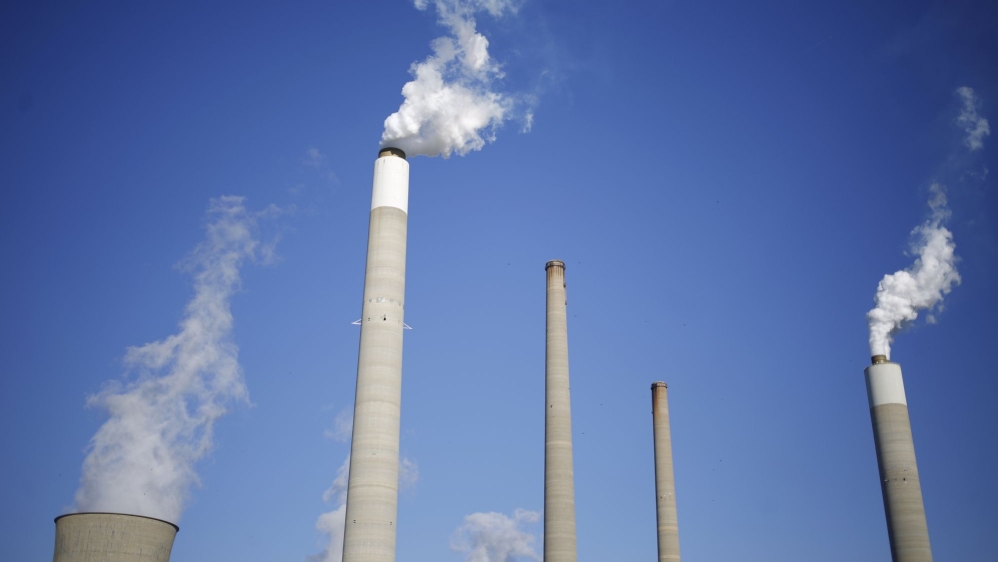
Solar energy generated 12.8 percent of all electricity in the United States last month, edging past coal, which contributed 12.2 percent, according to an analysis published this week by Ember, a London-based energy think tank that tracks global electricity systems using official and hourly generation data. It was the first time in the country’s recorded energy history that solar had outproduced coal on a monthly basis. The record could be broken again before summer ends – solar output in the United States typically peaks in June and July.
The numbers, on their own, do not capture what has actually happened. Coal supplied nearly one in five units of American electricity as recently as May 2021. It now supplies roughly one in eight. The fuel that powered the steel mills, the railroads, and the first wave of American electrification has been cut nearly in half as a share of the national grid in five years – not by a single policy decision, but by the relentless cheapening of a competitor that was itself marginal not long ago.
What makes this particular moment complicated is the political weather in which it arrived. The Trump administration has spent months attempting to reverse exactly this trajectory, allocating more than $700 million in federal funds to upgrade coal plants, invoking wartime authorities under the 1950 Defense Production Act to route $425 million to 13 existing coal facilities, and commissioning new construction in Alaska, West Virginia, and Maryland. The administration has framed coal as a matter of national security. The electricity data, released the same week, tells a different story.
“Overtaking coal for the first month on record shows just how far solar has come, from a niche contributor to the third-largest and fastest-growing source of power in the U.S. electricity system,” Nicolas Fulghum, a senior data analyst at Ember, said in a statement accompanying the findings. Solar generated a record 45.5 terawatt-hours in May 2026, a 17 percent increase over the same month in 2025. Coal, by contrast, generated 43.4 terawatt-hours – itself a slight uptick from April, but still 11 percent below May 2025 levels.
The trajectory those numbers describe has been building for years, but it has accelerated sharply in the current period. A separate report from the Solar Energy Industries Association and the analytics firm Wood Mackenzie, also released this week, found that the United States added 7.8 gigawatts of new solar capacity in just the first three months of 2026, bringing the country past six million cumulative solar installations. Solar and battery storage together accounted for 91 percent of all new electricity capacity added to the American grid in the first quarter – a figure that would have seemed implausible a decade ago.

The growth is being driven partly by something that has little to do with climate policy: artificial intelligence. Data centers powering AI workloads have created a surge in electricity demand that utilities and large technology companies are scrambling to meet, and solar – fast to deploy, immune to fuel-price swings, and increasingly cheaper than alternatives – has emerged as the default answer. Contracts for utility-scale solar rose 15 percent year over year in the first quarter, the SEIA and Wood Mackenzie report found, with tech companies among the most active buyers.
The political geography of the shift is also striking. States that voted for President Trump in the 2024 election accounted for 74 percent of all solar capacity installed in the first quarter of 2026, the SEIA report noted. Texas, Florida, Ohio, Indiana, Michigan, Arizona, and Mississippi ranked among the top ten states for new solar additions. These are not states typically associated with clean-energy advocacy; they are states where land is available, sunlight is abundant, and electricity is a practical concern with a practical answer. “In a world of fluctuating fuel prices, energy buyers have made it clear that they want the security, low cost, and speed of solar and storage,” said Darren Van’t Hof, interim president and CEO of the Solar Energy Industries Association.
This is precisely the contradiction that makes the current energy debate so difficult to resolve by political argument alone. The Trump administration’s coal promotion strategy is running into economics that its own political base is helping to create. Red-state utilities, red-state homeowners, and red-state corporations are installing solar because it costs less and arrives faster than the alternatives – not because of any mandate from Washington or Brussels.
The solar surge is also not frictionless. The SEIA forecast for capacity additions has been revised upward on the demand side, but the report simultaneously warns that federal permitting slowdowns are constraining how quickly supply can respond. An SEIA analysis found 457 solar and storage projects with pending permits that are vulnerable to politically motivated delays. The residential solar market is expected to contract by 21 percent in 2026 as federal incentive programs are wound down, including the cancellation last August of Solar for All, a $7 billion Biden-era program intended to expand access for middle- and lower-income households. Wood Mackenzie’s head of solar, Michelle Davis, was direct about the consequence: “We are forecasting that US solar additions will be flat over the next five years despite the need for more power supply.”
The broader global context amplifies what is at stake. Solar overtook natural gas across Asia in 2026, driven almost entirely by China’s installation pace, while China also built more coal capacity in 2025 than in any year of the previous decade – a paradox that illustrates how the energy transition is not a clean substitution in any major economy. The United States is navigating its own version of that same paradox: record solar deployment and record federal support for coal, occurring simultaneously, driven by different constituencies with different time horizons.
There is also a water dimension that is rarely included in the coal-versus-solar accounting. The Hoover Dam is at risk of losing 70 percent of its hydropower capacity within a year as Lake Mead continues to fall, adding pressure on a grid that is already stretched thin by rising temperatures and industrial demand. Thermal power plants – coal included – require substantial water to operate. Solar does not.
Enough solar capacity exists in the United States today to power approximately 50 million households, according to the SEIA. The association projects that number will reach 100 million by 2034 – assuming permitting does not stall the projects already under contract. What the May 2026 data cannot answer is whether that trajectory will survive the next two years of Washington, or whether the gap between what the market wants to build and what the administration allows will quietly reshape a milestone that, this week, no one in government chose to mark.
Related Posts