
RIYADH – For years, Saudi Arabia’s relationship with professional tennis was transactional: pay a premium, host a week of matches, and collect the publicity. That arrangement, which gave Riyadh the WTA Finals and the Six Kings Slam exhibition, is not going away entirely. But on Monday, the Qiddiya Investment Company announced something different – a 33,000-seat national tennis home that the kingdom would own outright, built to outlast any single hosting deal.
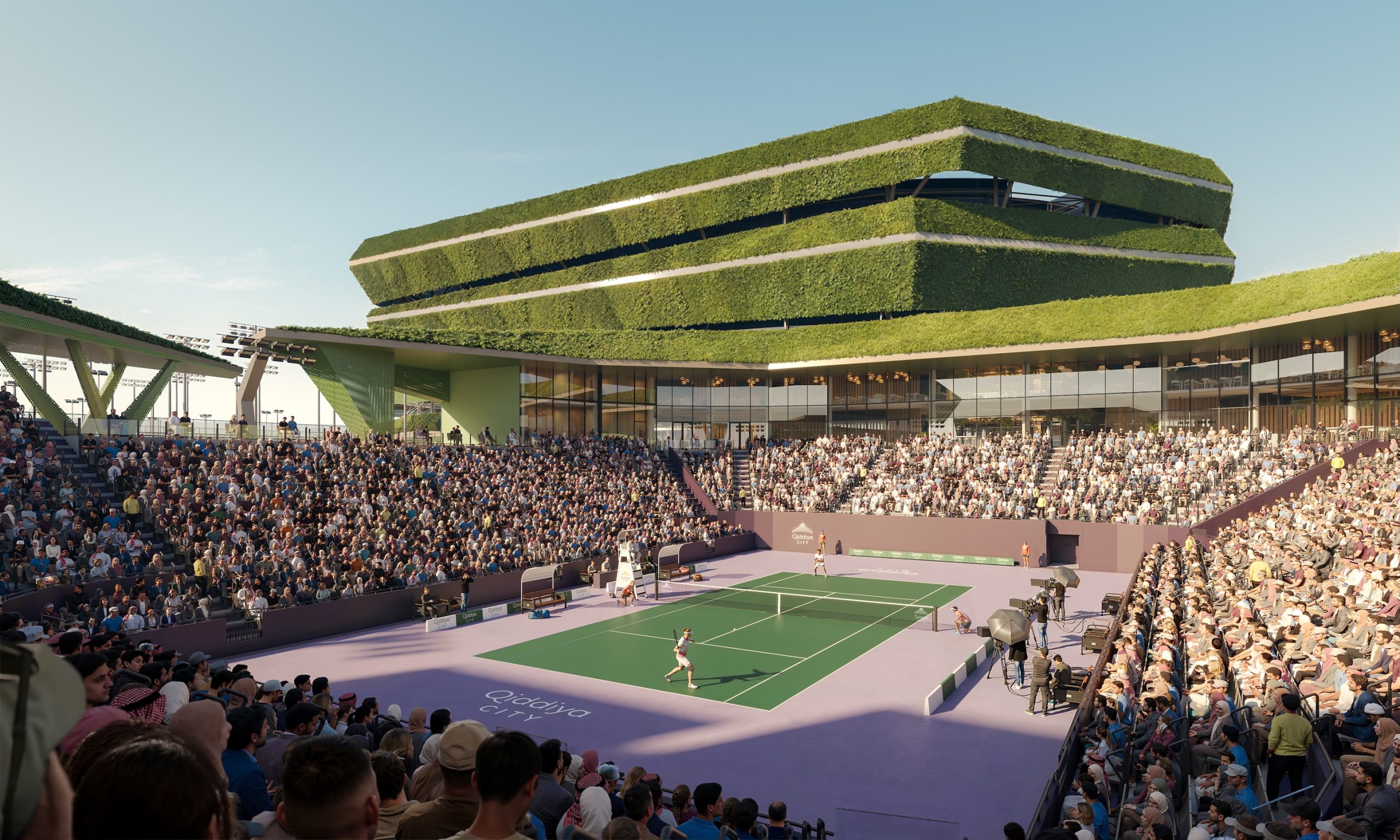
The National Tennis Centre at Qiddiya City, 45 kilometres south-west of Riyadh, will be the largest tennis facility in the Middle East when it opens, featuring 30 courts across three competition arenas – a 15,000-seat Centre Court with a retractable roof, an 8,000-seat multi-purpose arena, a 5,000-seat Court 1, and a 2,000-seat Court 2. The announcement did not confirm a completion date, though construction is already underway and Qiddiya’s Phase 1 targets run to 2028.
The timing carries an implicit message. Riyadh’s contract to host the WTA Finals – one of women’s tennis’s most lucrative season-ending events – expires after the November 2026 edition at King Saud University Indoor Arena. The National Tennis Centre, by contrast, is permanent infrastructure, designed to ATP, WTA, and ITF standards and capable of staging those exact events in a purpose-built home rather than a repurposed arena. The National reported last month that an ATP Masters 1000 event is slated to arrive at Qiddiya in 2028 – though no formal contractual announcement has been made publicly, and the specific tournament slot remains unconfirmed.
The Centre was designed by Populous, the global sports architecture firm behind venues including Yankee Stadium and the redeveloped Tottenham Hotspur Stadium in London. Its courts are woven into the Tuwaiq Mountain landscape with layered green facades, and its two roofed arenas will serve as year-round concert and events spaces when not hosting tennis – an explicit acknowledgment that tennis alone cannot fill 33,000 seats in a new city still building its audience.
Prince Abdulaziz bin Turki Al-Faisal, Saudi Arabia’s Minister of Sport and President of the Saudi Olympic and Paralympic Committee, framed the announcement as part of a broader talent pipeline, not just a hosting ambition. He said the centre would guide Saudi players from the amateur stage through to professional competition while contributing to the objectives of Saudi Vision 2030.
“The centre has the necessary capabilities to host major tournaments and elite players, having been built according to the highest international specifications,” the minister said. “These efforts help guide players from the amateur stage to professionalism while contributing to the achievement of the sports objectives of Saudi Vision 2030.”
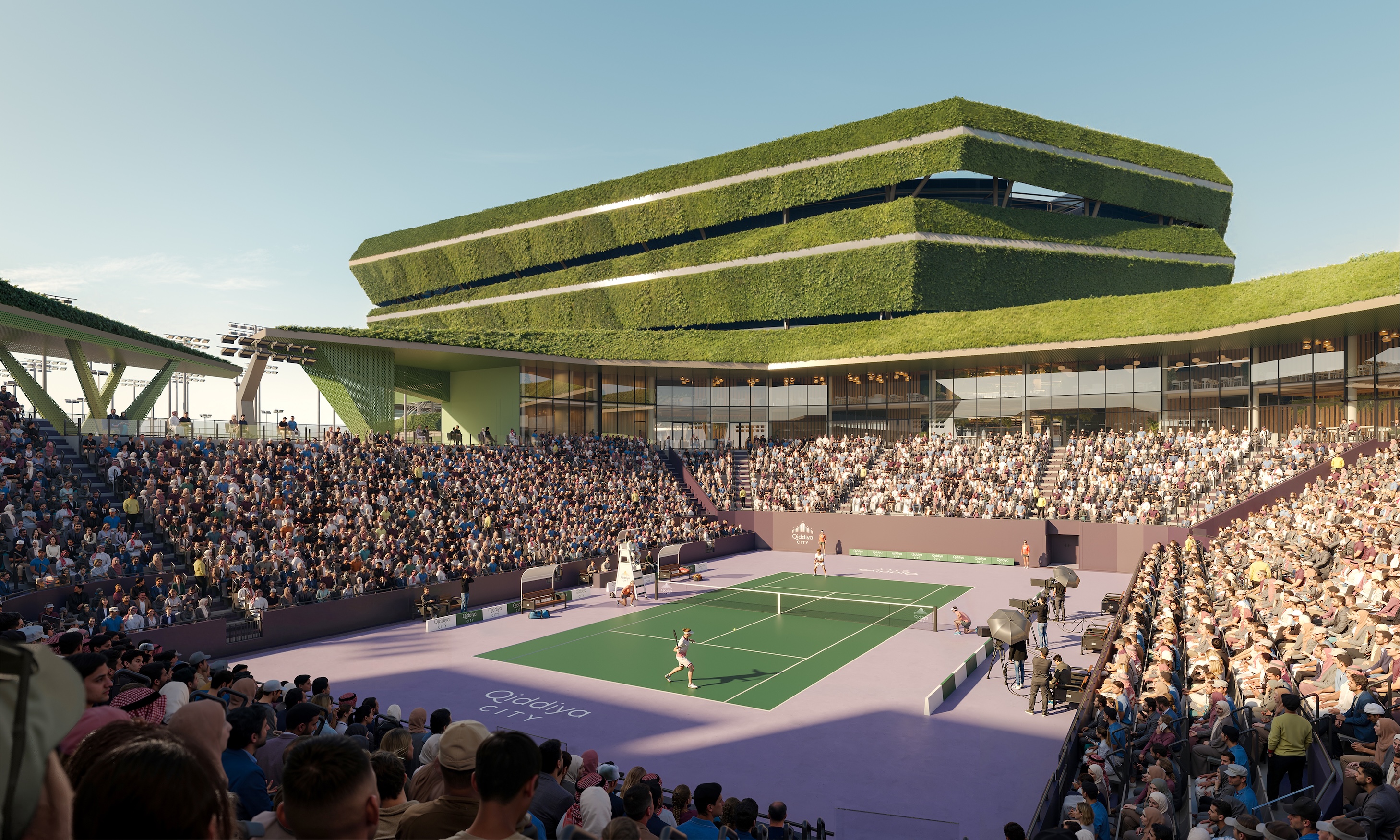
The High Performance Training Centre within the complex will include a gym, hydrotherapy and physiotherapy suites, athlete recovery spaces, and a media centre with press conference rooms – the physical architecture of a serious tour stop, not a hospitality showcase. A community tennis programme and public fan plaza are also planned, though how those grassroots ambitions translate into actual participation numbers in a country where tennis has historically had a narrow following is among the questions the announcement leaves open.
The International Tennis Federation and the ATP both welcomed the project in terms that were notably careful to avoid confirming specific events. ITF CEO Ross Hutchins said quality facilities were “the cornerstone of every successful national tennis programme” and that he looked forward to Qiddiya working alongside the Saudi Tennis Federation to grow the game. ATP CEO Eno Polo called the centre “a remarkable addition to the global tennis landscape” and noted its potential for lasting impact – language that stops short of scheduling commitments. Qiddiya Investment Company’s official press room confirmed the announcement but released no tournament dates.
That gap between architectural announcement and actual event calendar is characteristic of Qiddiya’s rollout. The development – backed by Saudi Arabia’s Public Investment Fund, which has simultaneously expanded its footprint in China and across global sports – has been methodical in releasing physical milestones before contractual ones. Six Flags opened on New Year’s Eve 2025. Aquarabia, the Middle East’s largest water park, opened in April. PlayMaker Studios, a film production hub, followed. The tennis centre is the latest asset in a sequence designed to demonstrate momentum.
The tennis centre announcement also arrives at a telling moment for Saudi Arabia’s wider sports portfolio. The Public Investment Fund is simultaneously winding down its LIV Golf funding after four years of breakaway-tour spending that failed to dislodge the PGA Tour’s dominance – a retreat that has freed capital and political appetite for longer-horizon bets on permanent infrastructure rather than event subsidies.
Saudi Tennis Federation President Mohammed Al Sarrah said the centre would contribute to increasing participation and supporting the development of local talent. The federation, which has been expanding its development programmes under Vision 2030, has not yet announced how its elite pathway will integrate with the new facility or when the first international tournament might be staged there.
Qiddiya City itself is planned to eventually be three times the size of Paris. Within the tennis centre’s immediate surroundings: a Sir Nick Faldo-designed 18-hole championship golf course set to open later this year, the Prince Mohammed bin Salman Stadium earmarked as a 2034 FIFA World Cup venue, a dedicated Formula One circuit, and a Gaming and Esports District. The National Tennis Centre, with its 15,000-seat Centre Court built to the scale of a major Grand Slam outer show court, is the piece most obviously intended to plant Saudi Arabia on the permanent global tennis map. Whether the ATP Masters 1000 lands in 2028 as reported, and whether the WTA follows with a permanent home to replace the expiring Finals contract, are the two questions that will define whether Monday’s announcement holds the significance its architects intend.