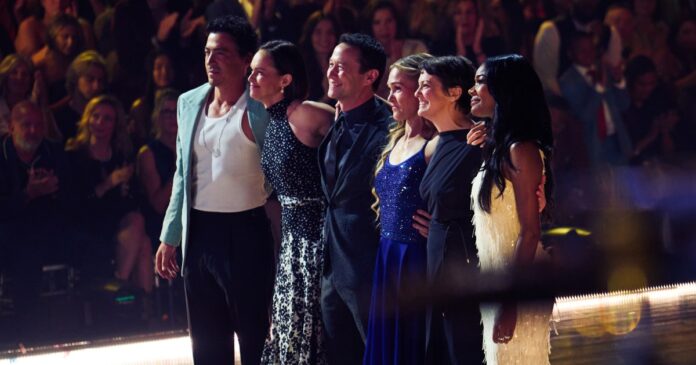

SYDNEY — A film rarely needs another trophy after it has won the Grand Prix at Cannes. The Sydney Film Festival handed Andrey Zvyagintsev’s Minotaur one anyway on Sunday, and in the arithmetic of the festival circuit the second prize can matter as much as the first, because it is the one that keeps a film in the conversation long enough to reach a screen near anyone.
Minotaur, a thriller set against contemporary Russia, took the Sydney Film Prize and its A$60,000 cheque as the 73rd edition of the festival wrapped a 12-day run at the State Theatre. The award goes each year to the film a jury judges most audacious, cutting-edge and courageous, the top honour of the festival’s official competition and a deliberately loaded brief that separates it from the popularity contests further up the calendar. Zvyagintsev’s film had already cleared the highest of those, winning the Grand Prix at Cannes earlier this year.
The decision came from an international jury with real arthouse weight, led by the Brazilian director Kleber Mendonca Filho and rounding out with Hungary’s Ildiko Enyedi, Singapore’s Boo Junfeng, the Australian cinematographer Ari Wegner and the First Nations producer-director Sally Riley. Their citation reached for the vocabulary of craft rather than politics, calling the film strongly Hitchcockian and strongly cinematic even as they described it, plainly, as a chronicle of contemporary Russia. It is the kind of dual framing festival juries use when a film works as both a thriller and an argument.
Zvyagintsev collected the prize himself, his first visit to Australia in more than a decade, and kept his remarks brief and pointed. He thanked the jury, he said, because the film meant a great deal to people who are struggling at the moment in Russia. For a director who has spent his career making films about his own country and much of the past decade unable to make them from inside it, a festival podium on the other side of the world is not a small thing.
The more revealing number this year was not the prize but the box office. Festival director Frances Wallace said SFF73 had become the highest-selling edition in the event’s 73 years, the second year running it has set that record, Variety reported, a data point that says as much about the festival’s health as any award. In an era when audiences are supposed to have abandoned the cinema for the couch, an arthouse-leaning festival in Sydney selling more tickets than ever is a genuinely contrary signal, and one distributors watch closely.
That is the unglamorous engine beneath the red carpet. Festivals are distribution machinery as much as celebrations, the place where a film with subtitles and a difficult subject either picks up the momentum it needs or quietly does not. The same circuit that just crowned Minotaur also sent Cristian Mungiu’s Fjord to the Palme d’Or at Cannes weeks ago, and turned smaller titles such as A24’s Pillion into streaming hits once the festival noise translated into a release. A Sydney win is a bet that Minotaur can make the same jump.
Whether it does is the open question. A Russian-language thriller about power, however decorated, is a harder commercial proposition than an English-language genre piece, and the festival prizes that look decisive in June have a way of mattering less by the time a film reaches its theatrical window. The Cannes Grand Prix and the Sydney Film Prize give Minotaur a critical floor and a marketing line. They do not guarantee it an audience, least of all the one Zvyagintsev says he made it for.
For now the film leaves Sydney with two of the festival world’s more serious honours and a director who flew a long way to accept the second in person. What it does not yet have is the thing every prize is supposed to lead to and none can deliver on its own, which is the people in the seats. That part starts when the festivals stop and the release begins.