
BEIJING — The trade war over the world’s most advanced chips has quietly moved off the docks and into the courtroom, and over the weekend China’s highest court delivered its verdict. The Supreme People’s Court barred Infineon, the German firm that ranks among the largest power-chip makers in the world, from selling a class of its gallium nitride products anywhere in mainland China, the single biggest market on earth for the components that feed everything from phone chargers to the power racks behind artificial intelligence.
The ruling handed a decisive home victory to Innoscience, a Suzhou company that has grown into the world’s largest maker of gallium nitride chips, and it crystallized something the export-control fight had been building toward for two years. Each side’s courts now protect its own champion. Weeks before Beijing ruled, an American trade tribunal had told Innoscience the mirror image, that it could not sell into the United States. The map of who can sell what, and where, is being redrawn one judgment at a time.
The Supreme People’s Court decision on June 13 upheld a judgment issued in May by an intermediate court in Suzhou, which found that Infineon had infringed two of Innoscience’s core gallium nitride patents, the company said. The order is blunt. Infineon must immediately stop selling, offering, and importing the disputed products, and it was directed to pay 10 million yuan, around 1.4 million dollars, in damages. The money is almost beside the point. The injunction is what matters, because it locks a Western leader out of a market its rivals are racing to own.
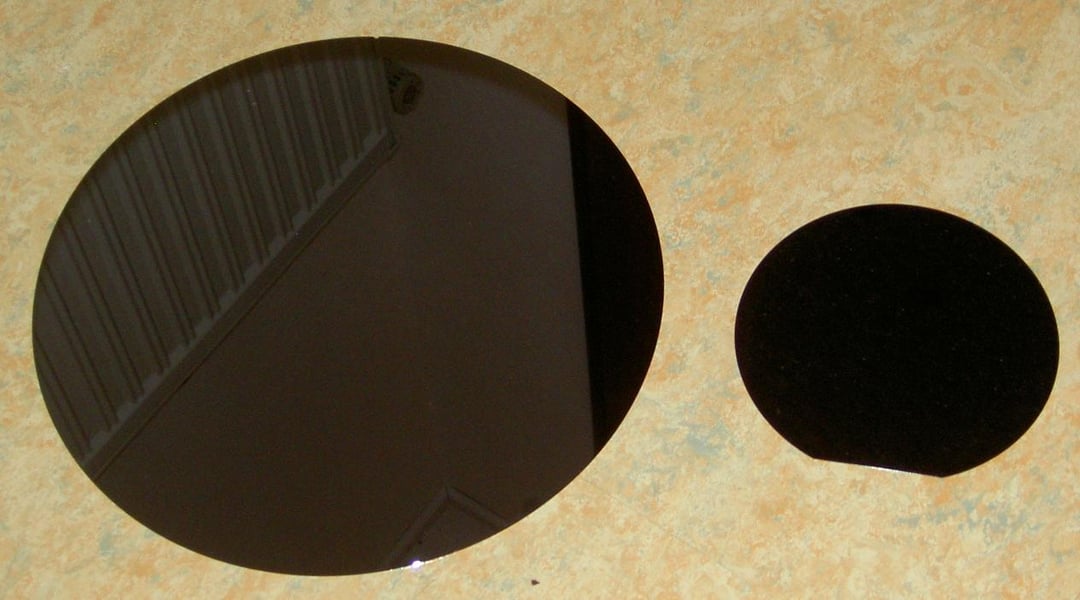
Gallium nitride is not the silicon most people picture when they think of a chip. It is a so-called third-generation, wide-bandgap material that handles power and heat far better than ordinary silicon, which is why it has moved from fast phone chargers into the heavy electrical plumbing of data centers. Both Infineon and Innoscience sit on the supplier list for the 800-volt power systems that Nvidia is designing into its next generation of AI server racks. Control of that supply chain is the prize, and China just made its own company the safer bet inside its borders.
Investors read the message immediately. Shares in Chinese compound-semiconductor makers jumped after the ruling, a rally the South China Morning Post tied directly to expectations that the decision would reshape the country’s third-generation chip sector. For an industry Beijing has spent years and enormous sums trying to build out from under American and European dominance, a court ordering a German giant off the field reads as validation.
It is not a clean sweep, and that is the part neither side advertises. The same dispute has produced opposite verdicts elsewhere. In the United States, the International Trade Commission affirmed in May that Innoscience had infringed an Infineon patent and moved to block its imports, a finding now sitting in a presidential review window. A court in Munich found against Innoscience last year, with more trials still on the calendar. The result is a company that is at once a winner and a loser depending on which flag flies over the courthouse.
Infineon, for its part, has not folded. The company has fought the Innoscience patents across jurisdictions and won some of those fights, and the Chinese ruling covers specific products rather than its entire gallium nitride line. What it cannot easily do is replace China. The country is both the largest market for power chips and the fastest-growing builder of the electric cars, solar inverters, and data centers that consume them. Being shut out of part of that, even a part, is a structural problem rather than a quarterly one.
For China, the timing folds neatly into a longer campaign. Beijing has been pushing relentlessly toward homegrown silicon, with companies like Huawei chasing breakthroughs meant to outflank the US blockade, and the fight has spread outward to pull in neighbors, as Taiwan weighs new curbs on advanced chip exports to align with Washington. A patent win that hands a domestic firm the home market is a different kind of weapon than a fab or a subsidy, but it points the same direction. Self-sufficiency, enforced through whatever lever is available.
The stakes climb because of where these chips are going. The artificial-intelligence buildout that has driven Nvidia’s record revenue runs on power, and the components that deliver it cleanly are exactly the ones now caught in the crossfire. A fragmented gallium nitride market, where the leading supplier is barred from the biggest buyer’s home turf and the reverse holds too, is the kind of friction that makes the most expensive computing boom in history a little more expensive and a little less certain.
What no judgment in Beijing, Washington, or Munich has settled is the question underneath all of them. The companies building the machinery of the AI age increasingly cannot operate in both of the world’s two largest economies at once, and the courts are not resolving that split so much as ratifying it. Infineon will keep selling gallium nitride almost everywhere. Just not, for now, in the market that matters most for what comes next.