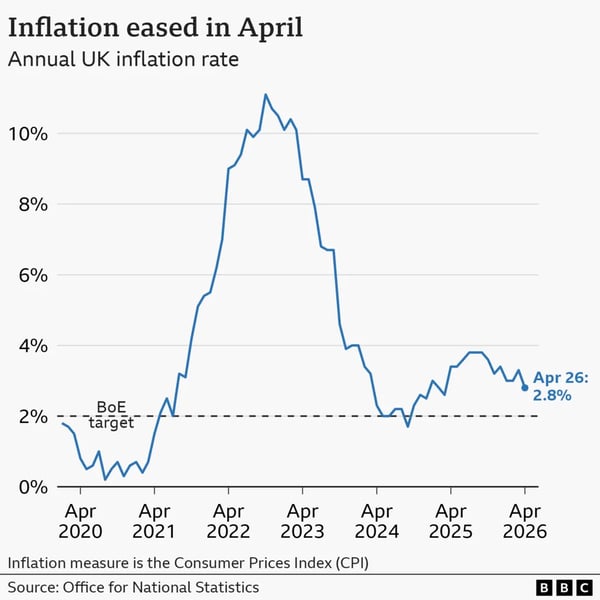

The United Kingdom’s inflation rate remained unchanged at 2.8% in May, delivering an unexpected boost to policymakers and households as economists had widely anticipated a fresh rise in price pressures. The latest figures from the Office for National Statistics showed that higher transport and fuel costs were largely offset by easing food inflation, helping consumer prices hold steady despite global geopolitical tensions and elevated energy market uncertainty.
The inflation reading comes at a crucial moment for the Bank of England, which is preparing to announce its latest monetary policy decision. Financial markets had expected inflation to climb to around 3%, driven by rising petrol prices and concerns over energy supply disruptions linked to tensions in the Middle East. Instead, the data showed that price growth remained at the same level recorded in April, surprising economists and reinforcing expectations that policymakers will keep interest rates unchanged.
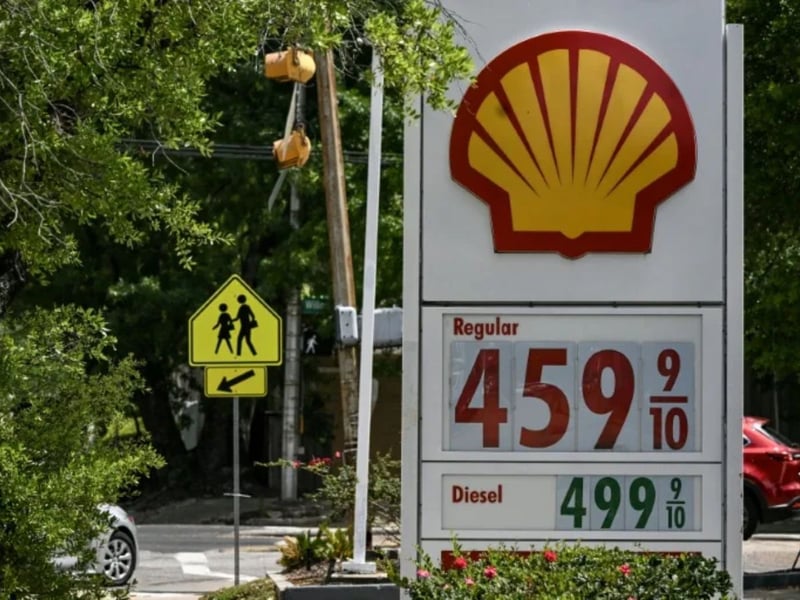
According to the ONS, transport costs were the largest upward contributor to inflation during May. Airfares increased sharply as travel demand strengthened heading into the summer season, while motorists faced higher petrol prices and vehicle-related costs. Transport inflation rose to its highest level in more than three years, reflecting the growing impact of mobility and travel expenses on household budgets.
However, these increases were counterbalanced by slower growth in food prices. Inflation across food and non-alcoholic beverages eased significantly, reaching its lowest level since late 2024. Falling prices for several staple products, including dairy items, vegetables and meat products, helped moderate overall consumer price growth. Lower domestic heating oil costs also provided relief, reducing pressure on household energy bills.
Core inflation, which excludes volatile food and energy prices and is closely watched by central bankers, edged higher from 2.5% to 2.6%. While the increase suggests that underlying inflationary pressures have not completely disappeared, the figure remained below many market forecasts and did not significantly alter expectations for monetary policy. Services inflation also increased modestly but stayed below the Bank of England’s projections.
The latest inflation figures arrive against a backdrop of heightened concern about global energy markets. Earlier fears that tensions involving Iran could trigger a fresh inflation shock had prompted analysts to revise forecasts upward. Higher oil prices and concerns over shipping routes raised the prospect of more expensive fuel and imported goods. Yet the impact on consumer prices appears to have been less severe than many economists expected.
Recent diplomatic developments have also helped calm market nerves. Investors have welcomed signs of easing tensions in the Middle East, with expectations that energy supplies will remain more stable than previously feared. As a result, forecasts for the peak of inflation later this year have been revised lower by several economists, who now believe price growth could remain below earlier projections.
Financial markets responded positively to the inflation data. Sterling weakened slightly against major currencies as traders reduced expectations of future interest rate increases, while UK government bond yields declined. Investors interpreted the report as further evidence that inflationary pressures are moderating, reducing the likelihood that the Bank of England will need to tighten monetary policy further.
Attention now turns to the Bank of England’s Monetary Policy Committee meeting. Economists overwhelmingly expect policymakers to maintain the benchmark interest rate at 3.75%, citing the combination of slowing inflation, weaker economic momentum and signs of easing wage pressures. Holding rates steady would provide continuity as officials assess whether recent inflation improvements can be sustained in the face of global economic uncertainty.
For households, the latest figures offer a measure of reassurance after several years of elevated living costs. While inflation remains above the Bank’s 2% target, the fact that price growth did not accelerate despite rising fuel and transport expenses suggests that the broader UK economy may be becoming more resilient. Consumers continue to face higher costs in many areas, but the pace of price increases has slowed considerably compared with the peaks experienced during the post-pandemic inflation surge.
Looking ahead, economists warn that risks remain. Energy markets, geopolitical developments and global supply chains could still generate fresh inflationary pressures in the coming months. Nevertheless, May’s figures indicate that the UK economy has so far avoided the sharper price shock many feared, providing policymakers with greater flexibility as they navigate the next stage of the inflation battle.