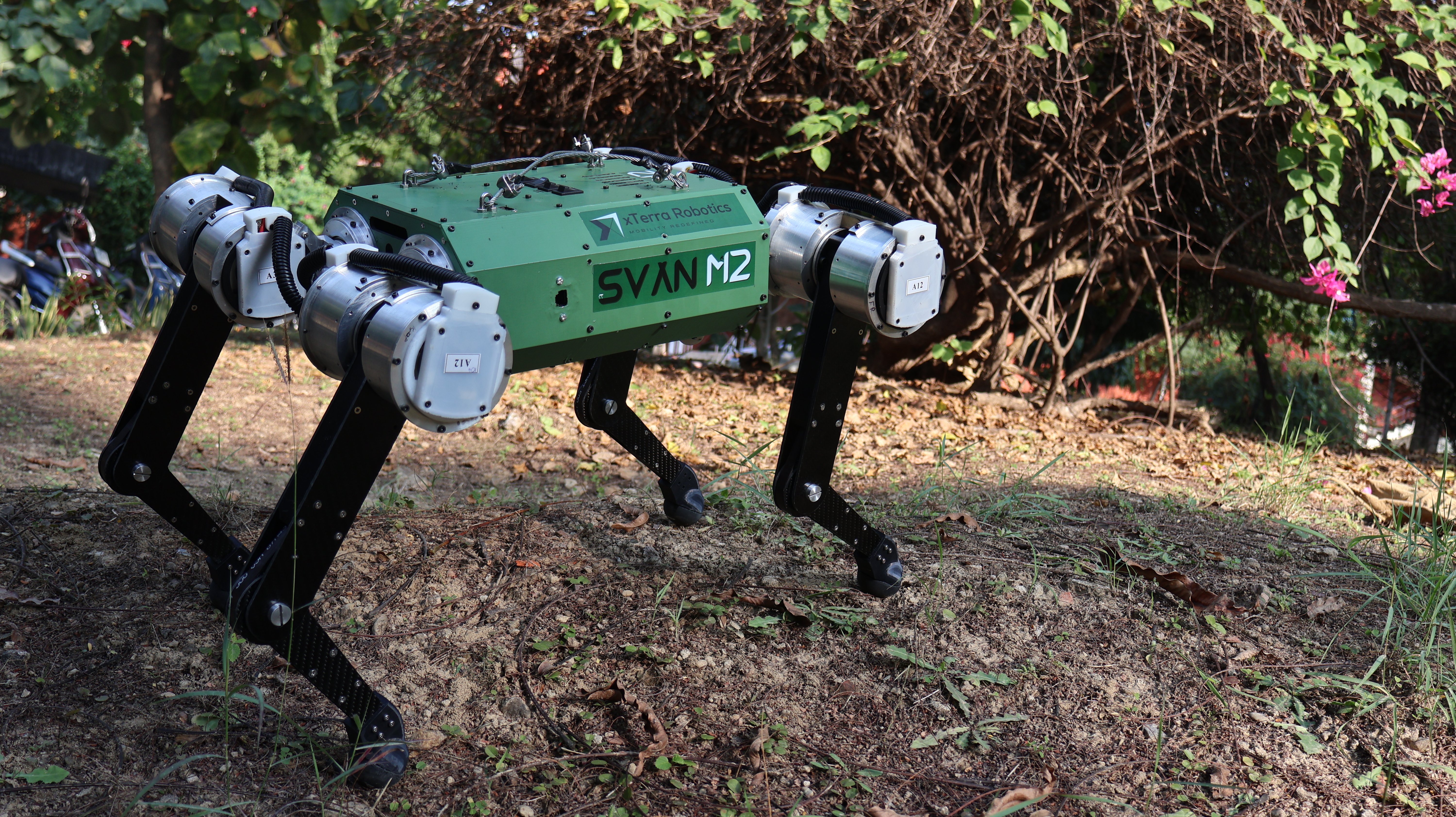

NEW YORK — For the past 100 hours, an AI agent has been playing Fortnite. Not to win – it has no score to care about. The point is what the model is learning: how objects move through space, how actions cascade into consequences, how the physical world behaves when you push against it. The same model, according to the startup that built it, needs just eight minutes of real-world data to then drive a quadruped robot around an office. General Intuition is betting $320 million that this is the fastest path to physical AI.
The New York startup announced Wednesday that it has raised $320 million in a new funding round at a $2.3 billion valuation, bringing its total since October 2025 to $454 million. The round was led by Khosla Ventures, with participation from Jeff Bezos, former Google CEO Eric Schmidt, Formula 1 driver and investor Nico Rosberg, and researchers affiliated with Google DeepMind and MIT. Bezos and Schmidt on the same cap table puts General Intuition in a narrow category of robotics startups whose investor list reads less like a venture portfolio and more like a consensus statement from the people who shaped the modern AI industry.
The company’s thesis is unglamorous in its mechanics and radical in its implication. General Intuition does not build hardware. It builds what its founder calls a world model – a foundation model for understanding how physical environments behave over time. The training data is video game footage: the hundreds of millions of hours of gameplay uploaded to Medal, the gaming clip platform that Pim de Witte founded before spinning out General Intuition last year. Medal’s corpus – player recordings annotated with button presses and action labels – turns out to be a substantial dataset for teaching an AI system about spatial reasoning, temporal prediction, and cause and effect in three-dimensional space.
De Witte turned 31 this year. He is Dutch. He reportedly turned down a $500 million acquisition offer from OpenAI to build General Intuition instead, TechCrunch reported. Whether that decision ages well depends on whether the model actually works at scale – and that is the question General Intuition has not yet answered in public.
What it has shown is the eight-minute demo. General Intuition’s model, after extended Fortnite training, was fine-tuned on eight minutes of data collected from a street outside the company’s New York office. The same model then navigated the indoor space autonomously. That transition – from synthetic game environment to physical world, with near-zero real-world exposure – is the core claim. If it holds at production scale, it means a robotics company can bootstrap physical AI capability without the expensive and time-consuming process of deploying robot fleets just to gather training data.
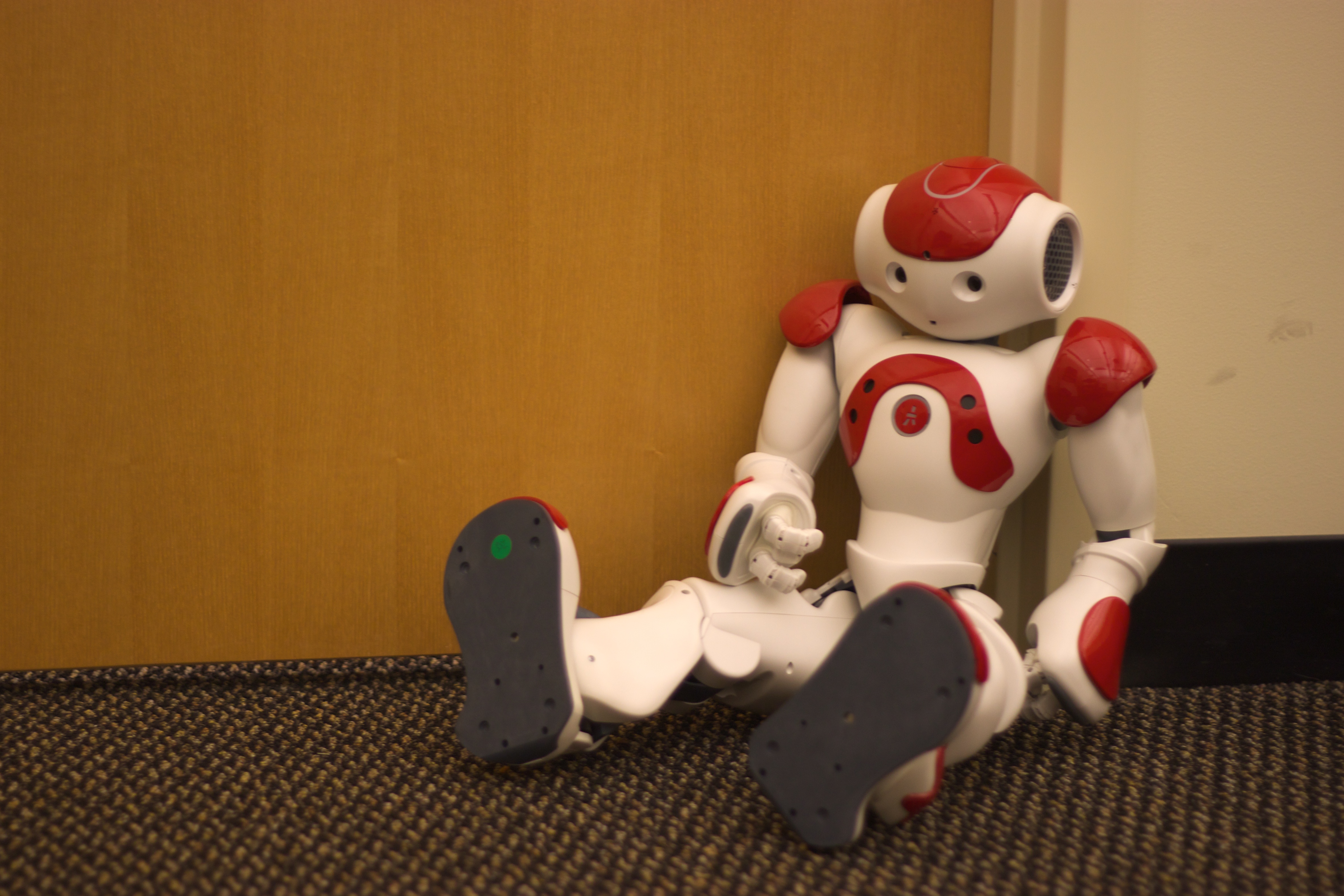
The robotics AI field has been trying to close the sim-to-real gap for years. Boston Dynamics spent decades on hardware-first approaches; companies like Figure, Physical Intelligence, and 1X have followed with foundation model approaches that still require large real-world data collection programs. General Intuition’s claim is that gaming environments – with their physics engines, dynamic objects, and multi-agent interaction at scale – close that gap faster than bespoke simulation ever could. The company says it has 150 million hours of gameplay in its training corpus and is acquiring more continuously as Medal’s users keep uploading.
The $320 million will go primarily toward compute. General Intuition has a deal with CoreWeave for infrastructure, and a slice of the round is earmarked for making the company’s API more broadly available by end of summer. That distribution strategy positions General Intuition not as a vertically integrated robot company but as a software layer that robotics hardware builders access – the same ambition Qualcomm articulated this week when it acquired Modular for $3.9 billion to challenge Nvidia’s grip on AI software. Training efficiency and software portability have become the new competitive moats in AI infrastructure, with OpenAI’s custom Jalapeño inference chip announced the same week making the same argument from a different angle.
General Intuition’s four co-founders – de Witte alongside Eloi Alonso, Adam Jelley, and Vincent Micheli – are researchers with backgrounds in reinforcement learning and world modeling. Alonso and Micheli published earlier work on model-based reinforcement learning at DeepMind. The company was built specifically around the thesis that this academic work, applied to a data corpus that no one else controls, produces something that cannot be easily replicated. That thesis convinced Khosla Ventures at the seed stage in October 2025 and again here at a $2.3 billion valuation – roughly a 17-fold increase in twelve months.
The investment that is harder to explain is Schmidt’s. He has argued in various forums that the hardware constraints on physical robotics are more binding than the software constraints – that the limiting factor is actuators, power systems, and sensor arrays, not model quality. Backing General Intuition, a company that is specifically arguing the opposite, is either a hedge or a revision. Schmidt has not commented publicly on the round.
What General Intuition has not demonstrated is performance in environments it has not seen, at scale, under conditions that diverge from its training distribution. Office navigation after eight minutes of real-world fine-tuning is a compelling proof of concept. Whether the same model handles a warehouse floor in unpredictable weather, a hospital corridor with irregular foot traffic, or an outdoor site where conditions do not conform to a game engine – that is the question the $2.3 billion valuation is asking investors to take on faith. The company says broader API access will be available by end of summer. Real-world deployments at scale, and the performance data they would generate, remain further out.