
LOS ANGELES — The man in Long Beach had not traveled internationally. He had not returned from a country where mpox clade I was circulating, had no known contact with anyone who had. When the rash appeared, painful pustular lesions that he initially mistook for something routine, it was several days before a clinician ordered the specific laboratory assay that identified what he had. By the time results came back, he was one of three unrelated Southern California residents whose combined diagnoses told California’s public health officials something they had been watching for since late 2024: the more severe form of mpox had crossed from returning traveler to local community and was spreading without a passport.
On June 16, the California Department of Public Health issued a formal health alert to clinicians, laboratories, and local health departments statewide, warning of a “significant and accelerating increase” in clade I mpox cases. The alert documented seven travel-related clade I mpox infections in California in 2026 alone, more than the combined five-case total from all of 2024 and 2025. Three additional cases among Southern California residents who reported no recent international travel were confirmed alongside those numbers. All three locally acquired patients required hospital care and are recovering. Nationally, 25 clade I cases have been confirmed in the United States since November 2024, according to tracking by the Center for Infectious Disease Research and Policy, with more than half appearing since March 2026.
The three locally acquired patients are not epidemiologically connected. One is from Long Beach, the others from Los Angeles County. They did not share a travel itinerary, a social event, or a confirmed mutual contact. In outbreak investigation terms, they are unrelated, and that absence of a traceable link is precisely what the CDPH’s June 16 alert formalized: community transmission of clade I mpox is occurring in California, the virus establishing itself in local networks independently of any single point of entry.
Not all mpox is equivalent. The 2022 global outbreak, caused by clade IIb, infected tens of thousands of people across six continents before Jynneos vaccination and behavioral change brought it under control. Clade I, and specifically the clade Ib subvariant now confirmed in California, is associated with more severe disease, higher rates of systemic complications, and more extensive skin involvement than the strain that defined 2022. The hospitalization of all three locally acquired California patients is not coincidental: it reflects, in three specific people in two Southern California cities, what happens when clade Ib reaches an unprotected immune system.
The virus traces its origins to the Democratic Republic of the Congo. Researchers identified a more transmissible variant, what would become clade Ib, in Kamituga, a mining town in South Kivu province, in 2023. Within a year it had spread to at least eight African countries. The World Health Organization declared a global public health emergency in August 2024. From Africa, clade Ib reached Western Europe: Spain, Portugal, the Netherlands, and Italy all documented local transmission by late 2025. The United States detected its first clade I case in California in late 2024. What has changed since then is not the virus but the volume of introductions.
Much of that volume is driven by the 2026 FIFA World Cup. The tournament began in the United States in June and is hosting matches across 16 cities through mid-July, drawing visitors from more than 100 countries, including nations where clade I transmission remains active. The CDPH’s formal health alert specifically flagged the World Cup as a factor likely to drive continued clade I imports into California. The seven travel-related California detections in 2026, already more than all previous years combined, illustrate the trajectory. The locally acquired cases that followed are the predictable downstream consequence when a sufficient volume of introductions occurs in communities where vaccination coverage remains partial.
The community bearing the most direct exposure risk is gay, bisexual, and other men who have sex with men, whose social and sexual networks have served as the primary clade I transmission pathway in the United States. Vaccination rates in that community improved substantially after the 2022 outbreak but remain incomplete: the Jynneos vaccine requires two doses for full protection, and uptake of the second dose lagged in the period when clade II appeared to be receding. The CDPH is urging anyone who has not completed both doses to do so before attending large gatherings or engaging in sexual contact with new partners. Post-exposure vaccination within four days of a potential exposure can still reduce disease severity.
Mpox clade I does not always present identically to what clinicians encountered in 2022, and standard laboratory workups do not automatically screen for it. The CDPH alert asks healthcare providers to maintain a heightened index of suspicion, particularly in patients reporting recent international travel or sexual or intimate contact with someone who has traveled recently to an area of active clade I circulation. The specific PCR assay needed to distinguish clade I from clade II must be explicitly ordered; some clinicians have missed early cases by defaulting to more common diagnostic possibilities. Tecovirimat, the approved antiviral for mpox, is most effective when initiated early.
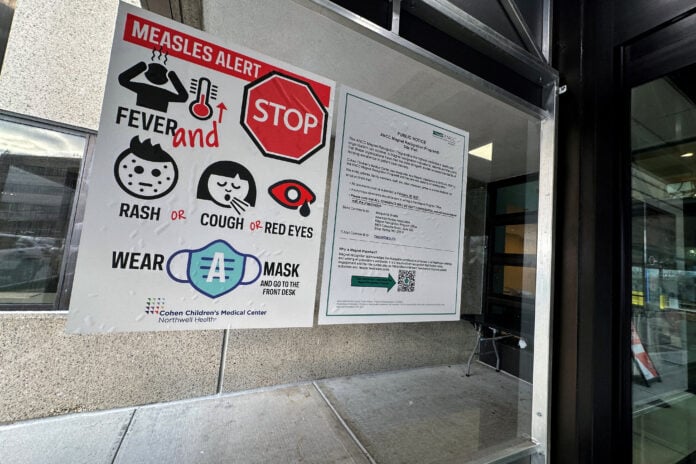
California’s summer is pressing simultaneous infectious disease demands on a public health system already stretched. US measles cases cleared 2,000 across 41 states by mid-June, a direct consequence of declining vaccination rates and peak travel season, now run concurrently with a clade I mpox alert directed at the same clinical infrastructure. The reduced CDC workforce following federal personnel reductions has complicated coordinated outbreak response at a moment when several pathogens are demanding simultaneous national-level attention.
What the CDPH cannot answer today is whether the three confirmed locally acquired cases represent a bounded cluster or the visible edge of a larger, undetected wave. The surveillance infrastructure designed to answer that question is being built in real time, oriented toward something that has already been circulating long enough to produce three unrelated hospitalizations without leaving a traceable chain. The case count published on June 16 was three. What that number will be at the end of the World Cup, as the tournament continues to bring the world to California’s doorstep, is unknown.