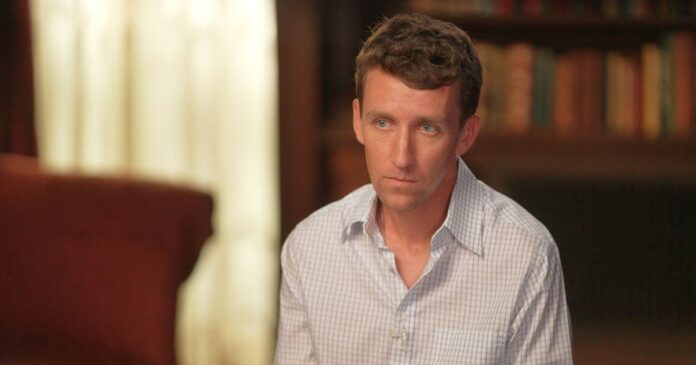

NEW YORK – Chesley “Sully” Sullenberger spent the most famous four minutes of his life making decisions he needed to get right on the first attempt. On Tuesday, the retired pilot who saved 155 lives by landing a crippled airliner on the Hudson River announced he is facing something for which there is no emergency procedure: an early-stage diagnosis of Alzheimer’s disease.
Sullenberger, 75, shared the news in a statement on social media, first given to People magazine. His announcement was notable not for what it concealed but for how it was framed – not as a retreat from public life, but as an extension of the role he has occupied since January 2009, when US Airways Flight 1549 was struck by a flock of Canada geese over the Bronx, both engines failed, and he guided the aircraft to a water landing on the Hudson River without a single fatality.
“It is early stage,” Sullenberger wrote in his statement. “For now, this means a name may not come easily to me, I forget a story I have recently told, or I don’t sleep as well, but I am in the beginning of this long journey.”
The symptoms he described – intermittent name-retrieval difficulty, conversational memory gaps, disrupted sleep – are characteristic of early-stage Alzheimer’s, a progressive neurological disease that gradually erodes memory and cognitive function. It is the most common cause of dementia and currently affects more than 7 million Americans, according to the Alzheimer’s Association. There is no cure.
Sullenberger connected his disclosure directly to the language he has used when describing the Hudson River landing. “Over the years, when people would ask about the successful outcome of Flight 1549, I would say that ‘courage can be contagious,’ and on that day it helped everyone band together to get everyone off that airplane successfully,” he wrote. “Now we need that courage to battle this disease. I am now part of a larger community with many of you, and we will be courageous together.”
The disclosure fits a pattern that has emerged in 2026 among public figures with Alzheimer’s diagnoses. Actor Danny Glover, 79, disclosed his own Alzheimer’s diagnosis earlier this month during an NBC interview, revealing he had been living with the disease since 2022. Both Glover and Sullenberger framed their disclosures as a form of advocacy – a choice that Alzheimer’s organizations say can shift public perception of a disease still clouded by stigma. CBS News, where Sullenberger served for years as an on-air aviation safety analyst, first covered the announcement.
The Miracle on the Hudson was among the most scrutinized aviation events of the past two decades. After departing LaGuardia Airport at 3:25 p.m. on January 15, 2009, Flight 1549 struck a flock of Canada geese at approximately 2,800 feet. Both engines sustained damage that rendered them inoperable. Sullenberger and first officer Jeffrey Skiles had fewer than four minutes to assess whether returning to LaGuardia or diverting to Teterboro Airport in New Jersey was possible. The answer, Sullenberger determined, was that neither was viable and a controlled water landing offered the only reasonable chance of survival for everyone aboard.
All 155 passengers and crew were evacuated from the floating aircraft and rescued by first responders. The National Transportation Safety Board concluded that the flight crew performed effectively under conditions of extreme time pressure. A 2016 film directed by Clint Eastwood and starring Tom Hanks depicted both the landing and the subsequent NTSB investigation.
Sullenberger’s post-retirement career has been built around aviation safety advocacy. He testified before Congress in 2019 following the Boeing 737 Max crashes, identifying regulatory failures he believed had contributed to the disasters. From 2021 to 2023, he served as U.S. Ambassador to the International Civil Aviation Organization under the Biden administration. Researchers this month identified the ARC protein as a key mechanism by which Alzheimer’s spreads between brain cells, a finding that could eventually inform treatment strategies aimed at slowing the disease’s advance.
What his announcement does not include is a clinical timeline, a treatment plan, or a prognosis. Early-stage Alzheimer’s covers a range of presentations; the interval between initial diagnosis and significant cognitive impairment varies substantially depending on disease subtype, overall health, and any treatment initiated. Sullenberger did not disclose his treatment regimen, and no physician statements accompanied his social media post.
The gap between what he said and what remains unknown is, in some ways, the point. He has identified himself as being at the beginning of something, not the end. The man who spent his career placing trust in checklists, crew coordination, and emergency procedures now faces a condition for which there is no procedure manual. What he chose to do on Tuesday was what he has done since 2009: tell the truth about where things stand, and trust that doing so is a form of service to the people listening.