
SALT LAKE CITY — For two decades, the dominant theory in Alzheimer’s research held that clearing a sticky protein called amyloid from the brain would slow the disease. The drugs built around that theory have, without exception, let patients down, producing effects so modest that a major review of clinical data published this year described them as barely perceptible by clinical standards.
What those drugs left untouched was a question the field has struggled to answer for just as long: how does Alzheimer’s move?
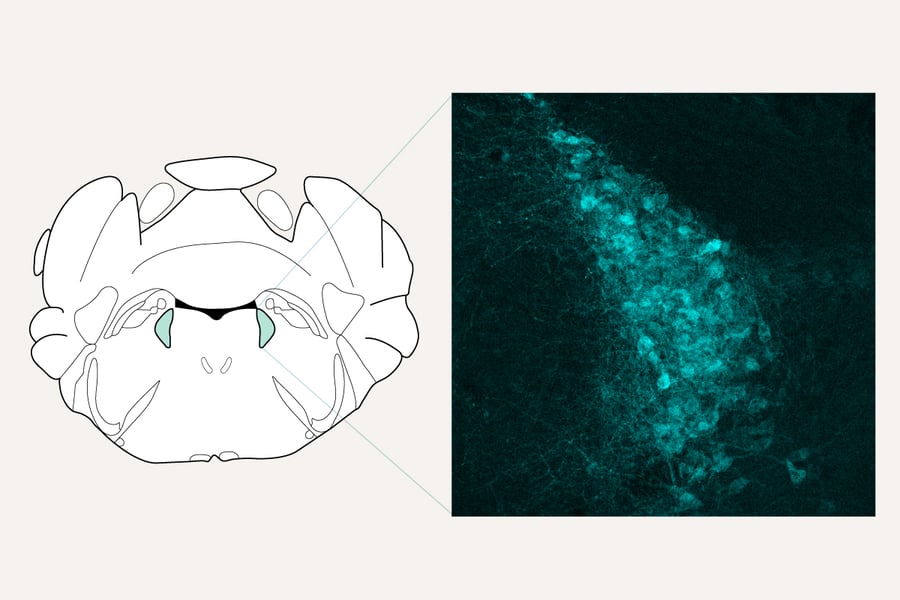
A study published June 30 in the journal Cell offers what may be the first precise answer. Scientists at the University of Utah and Washington University in St. Louis have identified Arc, a protein long associated with learning and memory, as the vehicle by which tau, the misfolded protein that forms the toxic tangles inside neurons, crosses from diseased brain cells into healthy ones. Remove Arc, the team found, and tau transmission in Alzheimer’s model mice nearly stopped.
The finding reframes a protein researchers once celebrated for its role in healthy cognition. Arc, short for activity-regulated cytoskeletal-associated protein, activates when neurons form new memories and strengthen connections. It has the unusual ability to self-assemble into structures resembling viral capsids (the protein shells viruses use to carry genetic material) and release those particle-packed capsids from the cell. Jason Shepherd, a neurobiology professor at the University of Utah and the study’s senior author, spent years studying this property as a mechanism for normal neural communication. What his lab found instead is that tau exploits it, using Arc’s packaging machinery to board the vesicles that carry it from one neuron to the next.
Mitali Tyagi, the study’s first author and now a postdoctoral research associate at Washington University in St. Louis, led the experiments in Alzheimer’s model mice. When the team disabled the Arc gene in those animals, tau transfer between cells was, in the authors’ words, “almost gone.” The disease had stopped spreading.
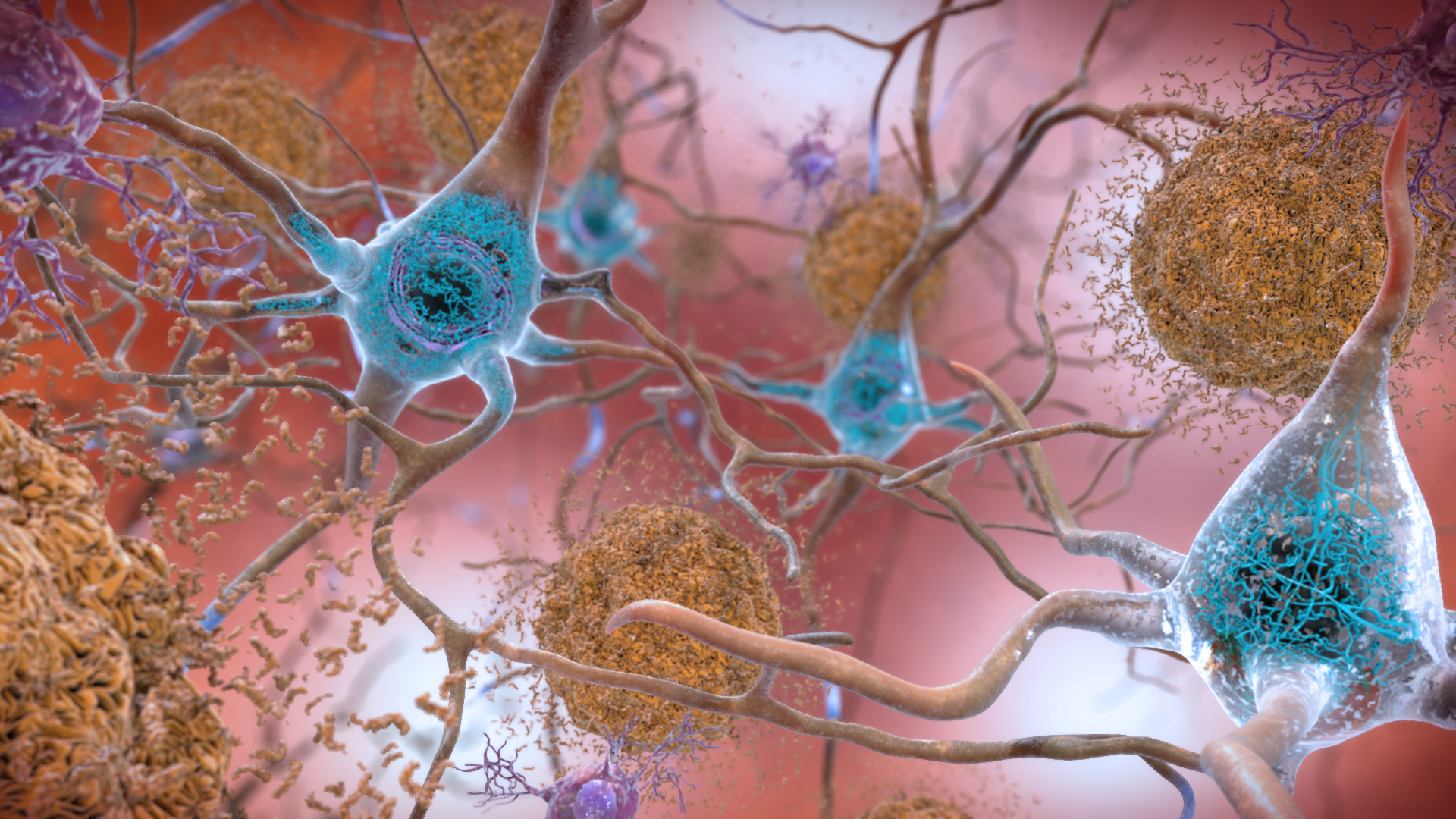
The mechanism proceeds like this: as tau misfolds inside an affected neuron, Arc packages it into small membrane-enclosed spheres called extracellular vesicles. Those vesicles leave the diseased cell and travel to neighboring neurons, depositing their cargo on arrival. Repeated across billions of cells over years, the process maps onto what clinicians observe in patients. Alzheimer’s typically begins in memory-forming structures like the hippocampus and advances outward through the brain in a pattern consistent enough to suggest something is delivering the damage, rather than the disease erupting spontaneously in new locations. Arc, as far as the mouse data suggests, may be the courier.
The result carries a caveat the researchers are direct about. Removing Arc did not destroy tau; it trapped it. Without the vesicle packaging mechanism, tau accumulated to toxic levels inside the neurons where it formed, potentially accelerating cell death at the source even while preventing spread. The team is not proposing that anyone eliminate Arc. The therapeutic target they describe is narrower: the vesicles themselves, intercepted after departing a diseased neuron and before reaching a healthy one. What molecule might accomplish that reliably, safely, and early enough to matter is not answered in the Cell paper.
The researchers also analyzed tissue from human Alzheimer’s patients and found both Arc protein and phosphorylated tau (the disease-associated form) coexisting inside extracellular vesicles in those samples. The mouse finding was not an artifact of the animal model. The courier is present and operating in human brains.
The study lands at a difficult moment for Alzheimer’s research. The amyloid era’s clinical failure has not ended amyloid research, but it has renewed pressure to find alternative targets that intervening earlier might meaningfully reach. Tau has long been understood as central to Alzheimer’s pathology; the tangles it forms correlate more directly with cognitive decline than amyloid plaques do, which makes understanding how tau propagates a priority that drug developers have been slow to address in mechanistic terms. The Arc finding gives them a mechanism.
Parallel efforts are advancing through other pathways. A separate research team found earlier this year that the amino acid arginine may reduce amyloid accumulation through a different biochemical route. A Brown University study of nearly 510,000 nursing home patients published last month found that the routine shingles vaccine may reduce dementia diagnoses by roughly one case per seventeen patients vaccinated, a result that points at inflammation and viral history as a third avenue of intervention. None of these cancel one another. They reflect a field circling the same disease from more than one direction.
The burden that research is trying to address is substantial. Approximately 55 million people worldwide live with dementia, according to the Alzheimer’s Association, with a new diagnosis made somewhere on Earth every three seconds. Alzheimer’s disease accounts for 60 to 80 percent of those cases. In the United States, the disease costs an estimated $360 billion annually in care, a figure the Association projects will exceed $1 trillion by 2050 as the population ages.
What the Arc study does not answer: whether blocking vesicle transmission would be safe across the heterogeneous biology of human Alzheimer’s, at what stage of disease the window for intervention would be open, and how many patients have this pathway actively driving their progression at any given moment. Those are clinical trial questions. The paper identifies a mechanism and confirms it in human tissue. It does not propose a drug.
That is not a small contribution. For years, Alzheimer’s science treated the brain as a site where things went wrong in relative isolation, not as a system where disease had a biological vehicle for travel. Arc, it turns out, may have been providing the ride.