
LANSING – The watery diarrhea started without warning. For Michigan residents who sought emergency care in recent weeks, the culprit turned out to be a microscopic parasite called Cyclospora cayetanensis, lurking, investigators now believe, in shredded iceberg lettuce served at Taco Bell restaurants in five Midwestern and Appalachian states.
Federal investigators have determined that a single unnamed Mexican supplier is the source of contamination driving the nation’s largest cyclospora outbreak in recent memory. Taco Bell confirmed Thursday it has voluntarily removed shredded iceberg lettuce from locations in Indiana, Kentucky, Michigan, Ohio, and West Virginia. No formal recall has been ordered by the Food and Drug Administration, and the supplier has not been named publicly.
Nearly 7,000 cases of cyclosporiasis have now been confirmed across 34 states, according to sources familiar with the FDA investigation. Michigan, where the outbreak was first identified on June 29, accounts for more than 4,312 of those cases and 102 hospitalizations. Ohio follows with more than 1,244 confirmed cases.
Taco Bell, in a brief statement, said it believes public health “is a shared responsibility among restaurants, their suppliers, and authorities,” while noting that no official advisory had been issued. Public health officials have not formally confirmed a link between the outbreak and any specific supplier or restaurant chain, but the voluntary lettuce removal is the most direct acknowledgment yet that investigators are focused on the fast-food chain’s supply chain.
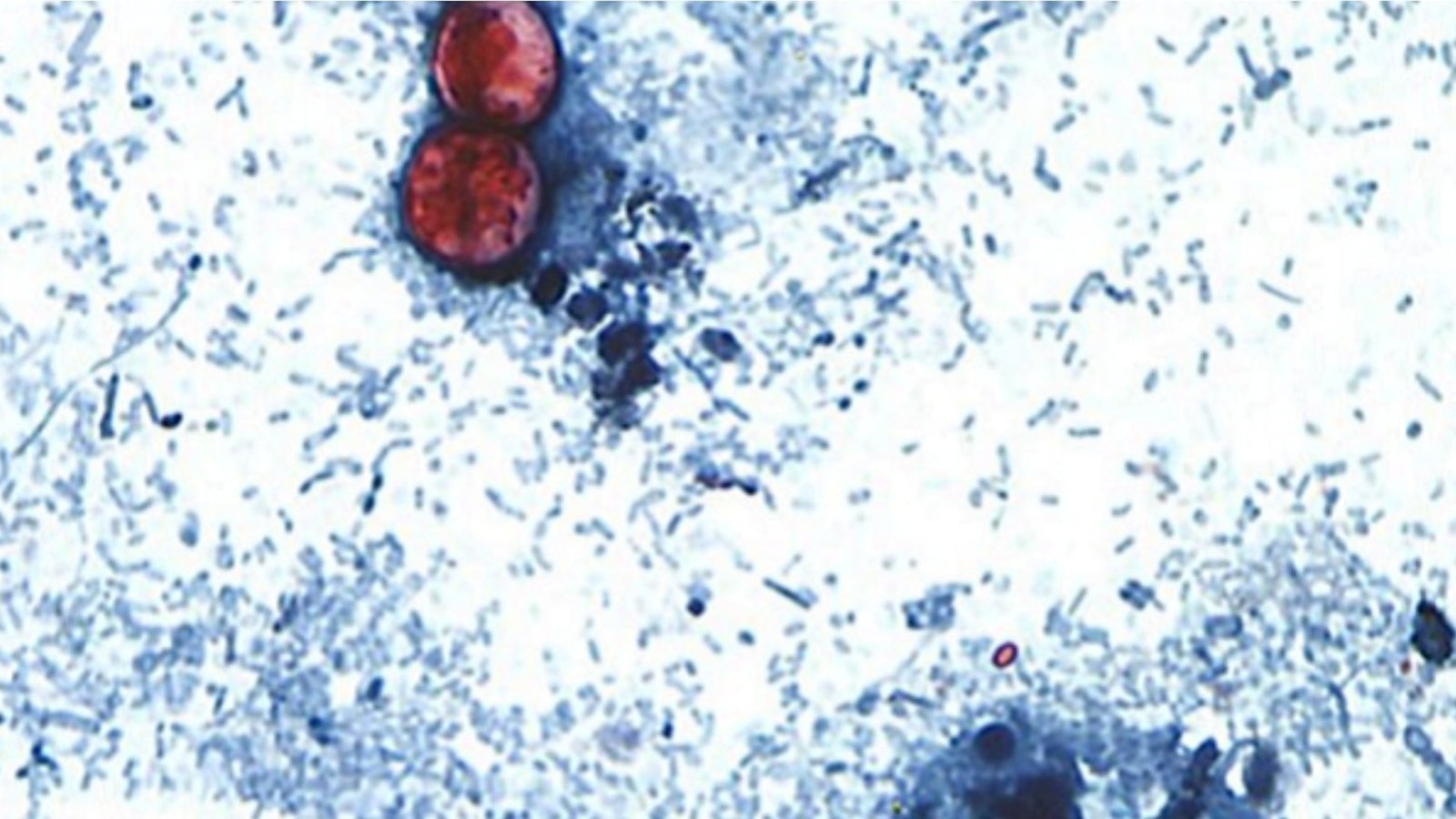
Cyclospora cayetanensis is a unicellular parasite that infects the small intestine and spreads through food or water contaminated with feces. It cannot pass from person to person. The illness it causes, cyclosporiasis, has an incubation period of one to two weeks, meaning every confirmed case traces back to something ingested days earlier, not a recent encounter. That biology has complicated the investigation: someone symptomatic today may have been exposed more than a week ago, when the contaminated food has long since been consumed.
The most common symptom is watery, sometimes explosive diarrhea, accompanied by nausea, vomiting, and abdominal cramping. Fatigue can be severe enough to keep patients bed-bound for days. Left untreated, the illness can last for weeks. The standard treatment is a 10-day course of trimethoprim-sulfamethoxazole, sold under brand names including Bactrim and Septra, which shortens the illness significantly when started early. Diagnosis requires a specific stool test; standard panels do not detect Cyclospora without a physician’s explicit request.

Michigan’s toll has mounted steadily since the first unusual surge was noticed. The state typically confirms roughly 50 cyclosporiasis cases in an entire year. Within two weeks of identifying the initial outbreak cluster, that number had been multiplied six times over. Cases spread from Monroe County along the Ohio border through 21 counties, then beyond, as patients in more than 30 other states began reporting similar symptoms. According to ABC News, 102 people in Michigan have required hospitalization.
The focus on Taco Bell’s supply chain marks the first time investigators have publicly pointed toward a specific restaurant and a specific ingredient. Previous FDA investigation updates described the outbreak as linked to fresh produce from Mexico without naming a restaurant, supplier, or product. The multistate investigation launched in late June went for weeks without a source identified, leaving residents with nothing to discard or avoid. As of July 16, shredded iceberg lettuce at Taco Bell became the answer, but without a formal regulatory action to match.
The White House confirmed it is closely monitoring the outbreak and working with the FDA on detection methods and supply-chain tracing. Historical U.S. Cyclospora outbreaks have been linked to imported raspberries, basil, cilantro, snow peas, mesclun lettuce, and Caesar salad kits, ABC News reported. The current focus on shredded iceberg lettuce from a single Mexican distributor fits that pattern.
New York reported more than 470 cases as of early July. Florida and Illinois each logged over 100. Nationally, health researchers caution that the confirmed 7,000-case figure understates the true number of people affected. Cyclosporiasis is difficult to diagnose without a specific stool test, and most patients with mild or moderate symptoms never seek testing, never receive a diagnosis, and never appear in any official count. The true burden of this outbreak, public health officials acknowledge, remains unknown.
People who ate shredded lettuce at a Taco Bell in Indiana, Kentucky, Michigan, Ohio, or West Virginia in the past three weeks and are experiencing gastrointestinal symptoms should contact a healthcare provider and request a specific Cyclospora stool test. The antibiotic treatment is highly effective when started promptly. Anyone still symptomatic after more than a week, without a diagnosis, should seek care regardless of where they ate.
What the FDA has not yet provided is a formal advisory identifying the supplier, a mandatory recall, or any guidance covering Taco Bell locations outside the five named states. If the same unnamed Mexican supplier shipped shredded lettuce to Taco Bell in five states, which other restaurants or retailers received produce from the same source during the same growing window remains, as of Thursday evening, an open and officially unanswered question.