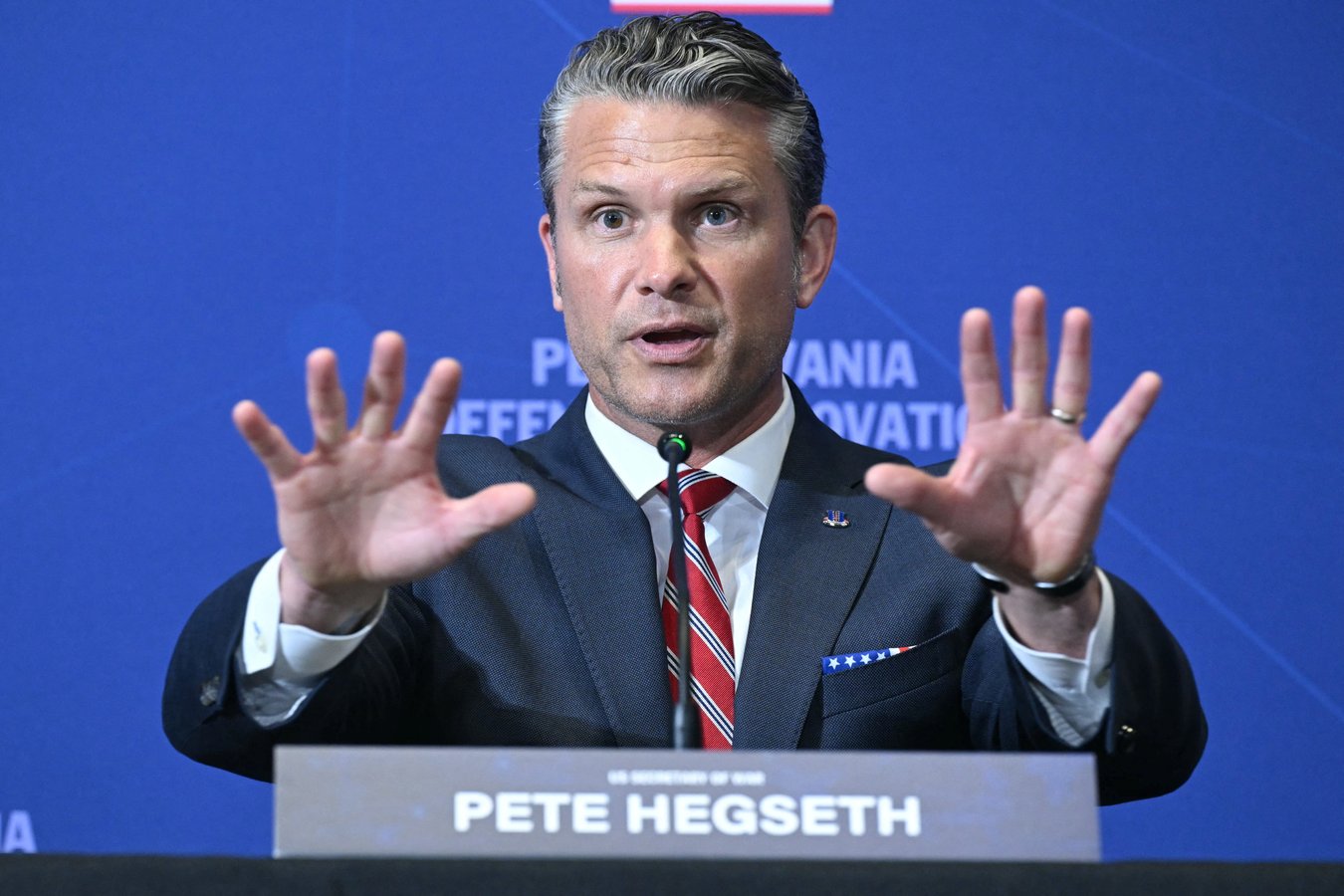

WASHINGTON – Every service member in the United States military past the age of 30 will now have their testosterone levels measured annually, whether they request the test or not. Defense Secretary Pete Hegseth announced the sweeping directive on Wednesday, reframing the Pentagon’s approach to troop health around hormone optimization and integrating the requirement into existing mandatory health assessments for all active-duty personnel.
Hegseth presented the program as a readiness initiative, telling troops the policy was “about restoring and optimising your natural capabilities” rather than artificial enhancement. The screening applies to service members 30 and older on a mandatory basis, while those under that threshold may participate voluntarily. Any resulting treatment, Hegseth stressed, remains a choice. The blood draw, however, is not.
Medical experts were quick to complicate that framing. Testosterone naturally declines by roughly one percent per year in men after ages 30 to 40, according to the Mayo Clinic, but mainstream clinical guidelines do not recommend blanket screening as a result. Most major medical associations advise that hormone replacement therapy be considered only for men who are symptomatic and who show documented low levels on two separate blood tests. The Pentagon’s new protocol requires the initial test regardless of symptoms.
The defense secretary described the initiative in explicitly military terms. “The biological foundation required to sustain the fight doesn’t maintain itself,” he said in a video announcement. Hegseth added that the program would ensure troops operate with “maximum psychological and mental readiness,” language that framed hormone management as a tactical asset rather than a clinical service.
The directive draws partial authority from the FY2025 National Defense Authorization Act, which required the Pentagon to brief Congress on low testosterone treatments for service members. Hegseth’s policy goes considerably further, converting that briefing requirement into a mandatory screening program rolled out across the entire active-duty force.
Senator Tammy Duckworth of Illinois, a retired Army lieutenant colonel who lost both legs to a rocket-propelled grenade in Iraq in 2004, offered a pointed interpretation of what Hegseth had actually announced. She called the initiative precisely what Republicans have spent years opposing: “gender-affirming care,” delivered by the federal government to male service members. The framing landed with particular force given that Hegseth himself oversaw the removal of transgender personnel from military service earlier in the administration.
Duckworth said she supported the broader concept but demanded that female service members receive equivalent attention. She cited data showing that women in the armed forces carry some of the highest infertility rates of any occupational group in the country, arguing that if the Pentagon was prepared to address hormonal deficiencies in men, it had no defensible reason to leave women out.
Representative Chrissy Houlahan of Pennsylvania, an Air Force veteran and Democrat on the House Armed Services Committee, was more direct about where she believed the idea originated. She said the policy reflected influence from “far corners of the manosphere,” the loosely networked online culture that has promoted testosterone supplementation as a marker of male vitality and found a degree of purchase in the Trump-era right. She called for congressional hearings.
The testosterone announcement arrives at an unusual moment for Hegseth’s Pentagon. The department has simultaneously scaled back diversity programs, conducted mass firings of career officials, and has been managing active US strikes against Iran that have drawn international condemnation. An earlier health initiative, Hegseth’s rollback of mandatory flu vaccinations, ended in reversal after an outbreak at Lackland Air Force Base killed a recruit and sickened 275 others.
The new policy drew the familiar lines of Trump-era culture politics onto military medicine. Critics argued Hegseth was manufacturing the image of a high-testosterone fighting force while science offered little support for mandatory screening at scale. Supporters, including commentators in conservative media who have long promoted TRT as a corrective to what they describe as a decline in male vitality, framed it as long-overdue.
What the program will actually look like in practice remains unclear. Hegseth’s office did not respond to questions about how the directive would be implemented for units deployed to active combat theaters, what happens to service members who test low and decline voluntary treatment, or how the results will interact with existing medical privacy protections.
The vision Hegseth articulated was one of a military that monitors body chemistry as carefully as it maintains its aircraft and ammunition. Whether the policy survives congressional scrutiny, legal challenge, or the objections of the military’s own medical establishment is a question that remains open, according to Al Jazeera.