
LAS VEGAS – The Nevada Gaming Commission cleared two men from the state’s most feared gambling watchlist on Thursday, not because they had been rehabilitated or had mounted a legal challenge, but because they were dead.
William Dominick Cammisano Jr. and Peter Ribaste, both former Kansas City mob associates whose ties to organized crime made them permanent personae non gratae in Nevada’s casinos, were removed from the state’s List of Excluded Persons, commonly known as the Black Book, at a commission meeting on June 25. Both men died within the past five years: Ribaste from COVID-19 complications in spring 2021, Cammisano of the same disease in 2023, believed to be 73 years old.
The removals carry no legal consequence. The men never returned to Nevada’s gaming floors after their bans, and neither mounted any known legal challenge to their exclusion. What the commission’s vote does close, quietly and without ceremony, is one small chapter of a longer story: the story of how the Kansas City crime family’s fingers once reached into Las Vegas’s most profitable casinos, and how Nevada regulators spent decades pulling them out.
The Black Book, formally the List of Excluded Persons, is a register maintained by the Nevada Gaming Control Board listing individuals barred from entering the licensed gaming areas of Nevada’s 451 largest casinos. It is one of the most powerful regulatory tools in American gambling law. Casinos that permit a listed person on their floor risk losing their gaming license. Individuals on the list have no right to enter, no right to wager, and no right to collect winnings. The list now contains 37 names; Cammisano and Ribaste’s removal leaves it slightly smaller.
Cammisano was placed on the list in January 1997. He was the son of William “Willie Rats” Cammisano Sr., who ran the Kansas City crime family through the turbulent years of the 1980s. The younger Cammisano had already been convicted, in 1989, of obstruction of justice for tampering with a witness before a federal grand jury investigating the gangland murder of Robert L. “Roger” Reid. FBI agents testified during that trial that he was a made member of the Kansas City syndicate. Prosecutors alleged he had ordered the killings of two fellow organized-crime figures, including one fatality by bombing, to protect his standing within the family hierarchy.
His criminal record did not end there. In 2010, Cammisano served another prison term after federal authorities dismantled an illegal online sports betting ring he had operated out of Missouri, one that authorities said generated $3.6 million in wagers over three years. He was last known to be living in Harrisonville, Missouri. The pattern mirrors what New Jersey federal prosecutors documented recently in their takedown of a Lucchese crime family gambling operation, where organized crime’s involvement in illegal wagering proved more resilient than regulators had assumed.
Ribaste, who was added to the Black Book two years after Cammisano in 1999, had a different profile. A reputed soldier in the Kansas City syndicate who took orders directly from boss Carl Civella and underboss Carl DeLuna, he allegedly ran illegal gambling operations in Kansas City for La Cosa Nostra before relocating to Las Vegas’s Spanish Trail community in 1989. His conviction was more procedural: mail and wire fraud related to a scheme to purchase a Kansas City car dealership using fraudulent loan applications. Regulators nonetheless concluded his organized crime affiliations posed a risk to Nevada’s gaming industry.
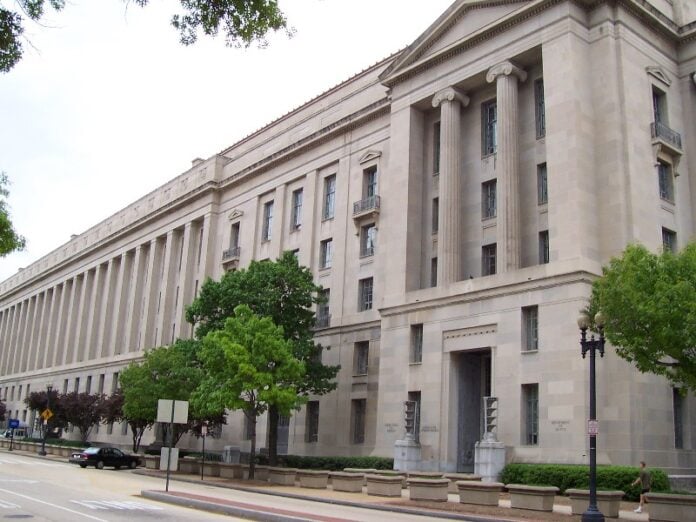
Federal prosecutors had tied both Civella and DeLuna, as well as other Kansas City mob figures, to one of the most notorious corruption scandals in Las Vegas history: the systematic skimming of cash from the Argent Corporation casinos, including the Stardust and Fremont, throughout the 1970s and into the 1980s. Money moved from casino counting rooms into the hands of mob families in Kansas City, Chicago, and Milwaukee before gaming regulators and federal investigators unraveled the scheme. That era of mob involvement in Nevada gaming is the context in which men like Cammisano and Ribaste were placed on the Black Book. A later chapter of that same story played out in 2025, when the Justice Department documented how $130 million in Chinese high-roller money moved through Wynn Las Vegas via a network of underground middlemen before regulators intervened.
Nevada has spent decades engineering that era’s erasure. Major casino companies are now publicly traded corporations subject to SEC disclosure, IRS scrutiny, and continuous gaming control board oversight. The state’s stringent licensing process, which requires deep background checks on any significant owner or operator, is specifically designed to prevent the conditions that allowed organized crime to flourish in the industry’s mid-century years.
Thursday’s removal is a footnote in that process. Still, at least one question the commission’s action does not address: the Black Book still contains the names of other individuals who have died and whose removals have not yet been formally processed. The Nevada Gaming Control Board’s practice is to recommend removal upon confirmed death, but the process is neither automatic nor immediate. How many of the 37 remaining names belong to men who are no longer alive is not publicly clear. Cammisano and Ribaste waited, on the list, for multiple years after their deaths.
For Nevada, the Thursday vote was routine. For the history of American gambling regulation, it was one more small confirmation that the mob’s grip on the Nevada desert has been, if not entirely erased, then at least formally buried: two names at a time.