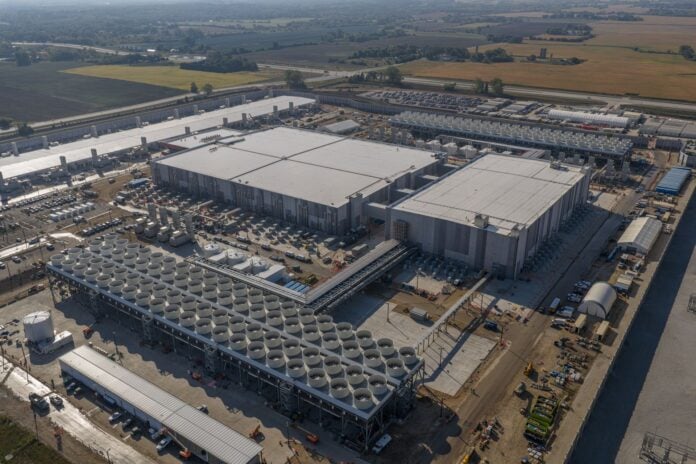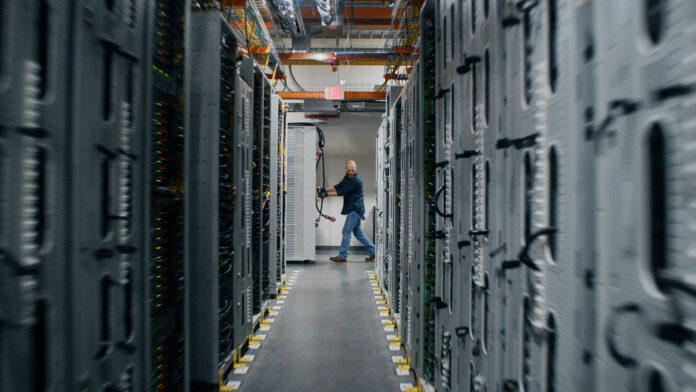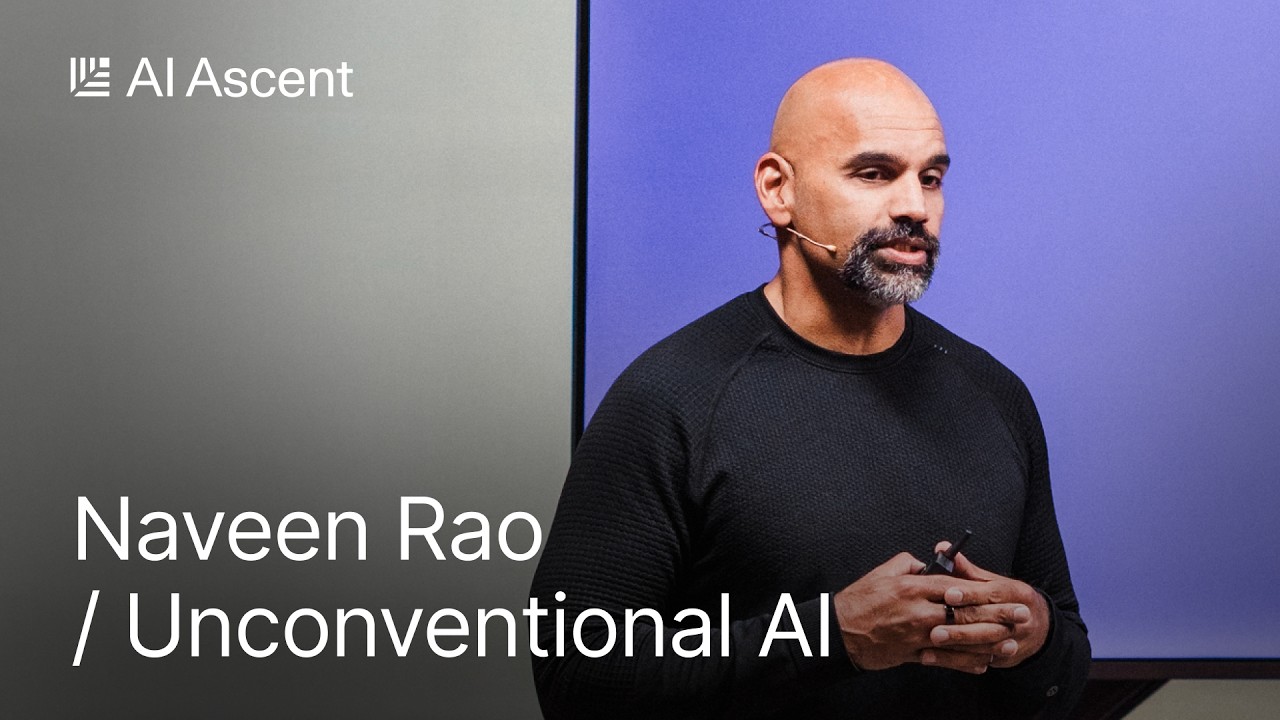

SAN FRANCISCO – The AI industry’s power problem is now large enough to describe in sovereign terms. Global data center electricity consumption is on course to surpass 1,000 terawatt-hours this year, according to the International Energy Agency, roughly the annual draw of an entire mid-sized nation. That figure climbs by a meaningful fraction each time a new model ships, a new data center breaks ground, and a new company discovers it cannot afford the compute it thought it needed. Naveen Rao’s argument, made with remarkable specificity, is that the industry is building the wrong machine.
On Thursday, Rao’s San Francisco startup, Unconventional AI, released Un-0, its first model: an image-generation system that performs comparably to tools like Stable Diffusion. That comparison both undersells and slightly overstates the announcement. Un-0’s output is not particularly surprising by the standards of 2026. What is notable is what it runs on, or more precisely, what it does not run on. Un-0 is built on a software simulation of an oscillator-based chip architecture that does not yet exist in physical silicon. If the physics works the way Rao thinks it will, the chips he plans to build could be a thousand times more power-efficient than the ones currently running most AI inference. If it does not, Thursday was a very expensive demonstration that a simulation can generate images.
Rao’s record makes the claim harder to dismiss than it might otherwise be. He studied electrical engineering at Stanford and earned a PhD in neuroscience at Brown, two disciplines that turn out to be relevant to building chips that behave more like brains. He sold his first machine learning startup, Nervana Systems, to Intel for more than $400 million in 2016. His second, MosaicML, went to Databricks for $1.3 billion. Before founding Unconventional AI in September 2025, he ran AI at Databricks itself. He is not a person who runs out of ideas or exit opportunities.
The architecture he is building is based on coupled ring oscillators, physical systems that naturally settle into low-energy states through a process closer to biology than to conventional transistor logic. Rao’s thesis draws on a known thermodynamic argument: the efficiency gap between the chips currently running AI and what is physically possible is roughly three orders of magnitude. His claim is not that he has found a better way to design transistors but that transistors are the wrong abstraction for the problem altogether. The oscillator fabric processes information differently, and if it can be realized at scale, the power requirements drop accordingly. The 1,000x figure is his estimate of how far that thermodynamic floor sits below where the industry currently operates.
That estimate has not been peer-reviewed, independently verified, or demonstrated on actual hardware. The company acknowledges this. Un-0 runs on a software simulation, and Unconventional AI says it will release schematics for a physical chip soon, without specifying when. The plan from there is to build a full inference stack and eventually compete as a compute provider. The timeline from schematics to production-grade silicon to inference-at-scale is the part of the roadmap Rao has not published, as TechCrunch reported on Thursday.
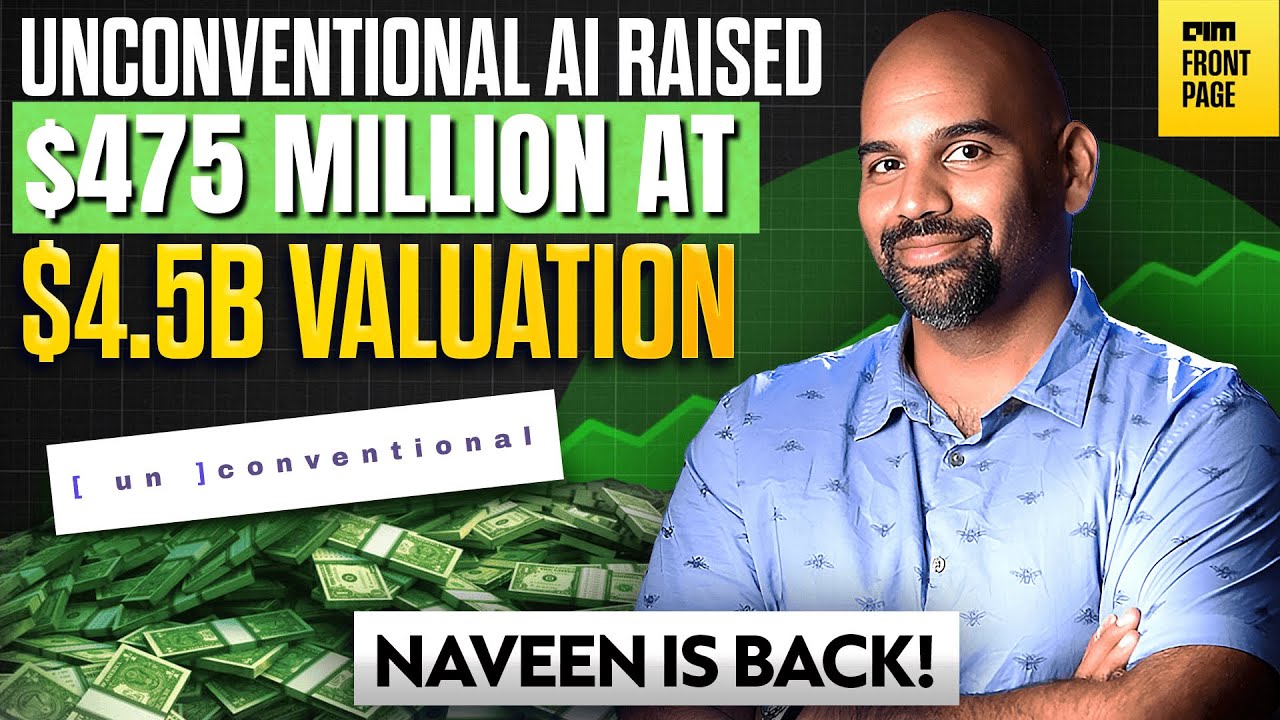
The funding behind the bet is substantial. Unconventional AI has raised $475 million in seed capital at a $4.5 billion valuation, led by Lightspeed Venture Partners and Andreessen Horowitz, with Sequoia, Lux Capital, DCVC, Future Ventures, and Jeff Bezos among the participants. Andreessen Horowitz framed its investment thesis around the proposition that the 80-year dominance of digital computing is approaching its natural limits. That argument is now Rao’s pitch for why a departure from conventional architecture is worth the capital, a round TechCrunch confirmed in December.
The pressure that pitch responds to is real and growing more concrete by the week. Oracle disclosed this week that it cut 21,000 jobs last year, attributing the reductions directly to its own AI deployment, even as it commits roughly $70 billion to the data centers running that technology. The same week, OpenAI and Broadcom unveiled Jalapeño, a custom inference chip they claim runs at 50 percent lower cost than Nvidia’s Blackwell processors, cost claims that have not yet been supported by published benchmarks. The broader AI chip race is now well-populated with organizations seeking a cheaper way to run models. Rao’s bet is the most radical departure from the pack: not a better GPU, not a custom ASIC optimized for matrix math, but a fundamentally different physics.
The oscillator approach has precedents in neuromorphic computing, a research field that has produced promising laboratory results for decades without reaching commercial scale. Rao has argued that prior neuromorphic efforts were solving slightly the wrong problem and doing so with a fraction of the investment Unconventional AI now has available. Whether that distinction is enough to clear the path from simulation to deployed hardware is the question Un-0 does not answer. What it does not tell the field, either, is whether the architecture can extend from image generation to the large language models that account for most of the industry’s inference spending.
What Un-0 does show, in a limited sense, is that the oscillator architecture can replicate what conventional AI does at the model-output level. The image-generation results are real, if not yet remarkable. They demonstrate the simulation can handle the kind of matrix operations that underpin modern models. Whether those same operations can be realized efficiently in actual silicon, at the yields and latencies that production data centers require, is what the next phase of Unconventional AI’s work has to prove. The capital to try is there. The thermodynamic argument behind the 1,000x figure is grounded in physics Rao did not invent and did not fabricate. The part that remains untested is whether his specific architecture for realizing it actually works at scale.
The AI infrastructure trade is facing increasing scrutiny from investors at the same moment startups like Unconventional AI are asking them for more capital. Alphabet’s addition to the Dow Jones Industrial Average on June 29 will tilt one of the most-watched gauges of American business further into the AI trade just as its spending assumptions are being questioned. In that context, a startup with a 1,000x power-efficiency claim and no production silicon is either the most important company in the room or the most ambitious. Rao’s track record suggests the answer matters less than the timeline.