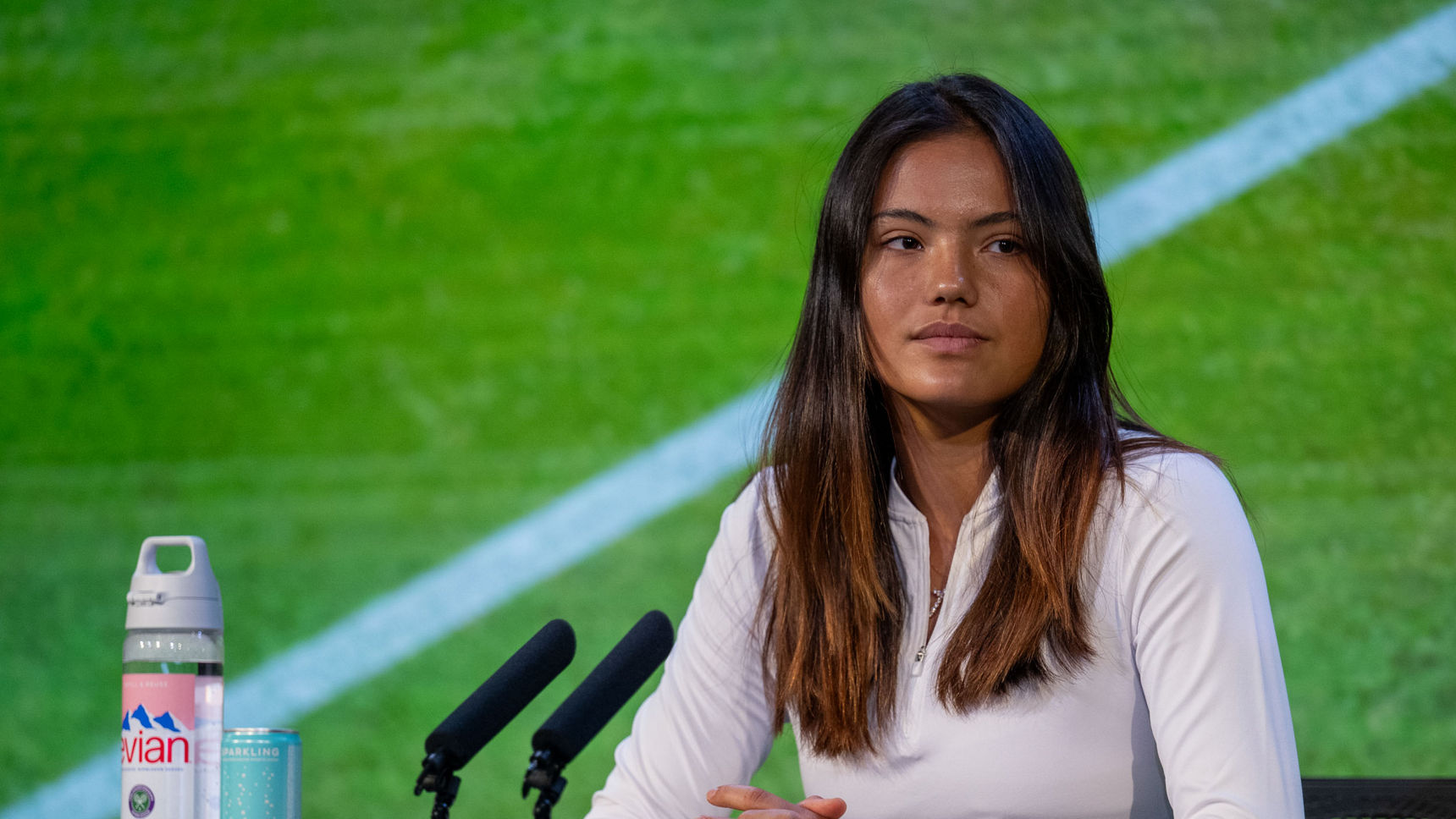

LONDON — The scan was supposed to be a formality. Emma Raducanu had been managing a problem in her right leg through the grass-court season, had reached the Queen’s Club final, and had been telling anyone who asked that she was doing everything to make it to Monday’s first round. Then Sunday night’s scan came back, and the formality became a withdrawal.
Raducanu pulled out of Wimbledon on Sunday, confirming via Instagram that the “niggle” she had been working around since the end of the clay-court season had developed into a stress fracture in her lower right leg. She was medically advised not to play. Her opening match against Croatia’s Antonia Ruzic on Court 1 — one of the most anticipated first-round draws of the fortnight — went to a lucky loser.
“I can’t believe I’m saying this, but sadly I’ve to withdraw from this year’s Wimbledon,” Raducanu wrote. “I’ve done everything possible to try to get to the start line tomorrow, but after a final scan tonight, the niggle I’ve been managing has developed into a stress fracture. I’ve been medically advised to stop pushing through.”
The timing made it harder to absorb than most withdrawals. Raducanu had been in the best form of her post-2021 career heading into Wimbledon. The Queen’s Club run — a final that ended in defeat but demonstrated the kind of sustained grass-court tennis that had been missing from her game for years — generated real expectation that this might be the year the home crowd finally got to see the player they believed she could be. Instead, it was at Queen’s that the leg problem worsened to the point where Sunday’s scan became a formality of a different kind.
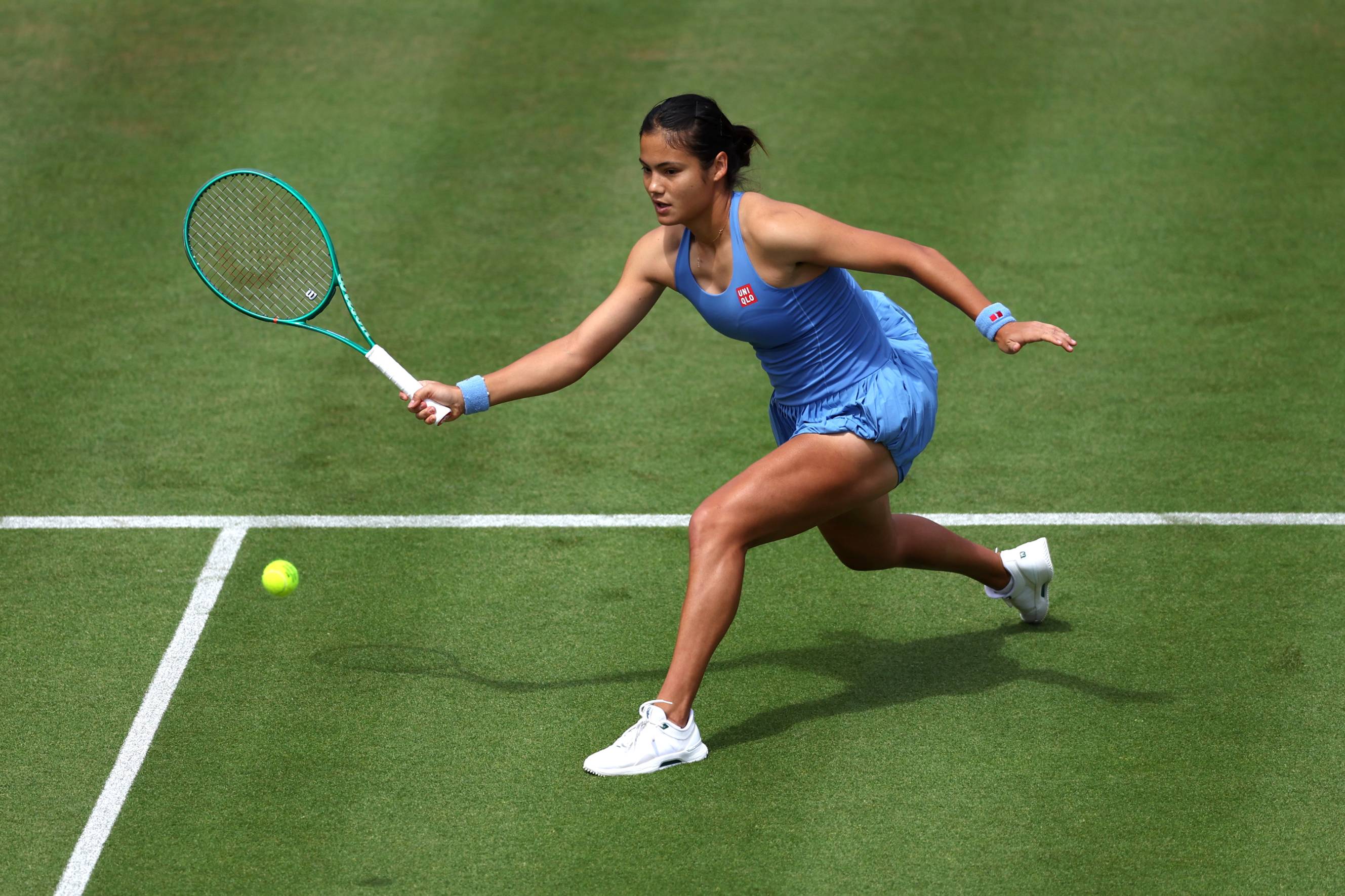
At 23, Raducanu has now spent more of her professional career managing her body than playing through it. The list of 2026 alone is long enough to make the pattern undeniable: a right foot problem in Australia, a virus contracted in Romania that took two months to clear, a left thigh injury at Queen’s overlapping with the right leg issue, a back problem before a first-round exit at the French Open. The stress fracture that ended her Wimbledon before it started is not an isolated incident. It is the latest entry in a medical record that raises questions her talent alone cannot answer.
Those questions are not about effort or professionalism. Raducanu’s willingness to push through discomfort — the very thing that led to Sunday night’s scan and the advice to stop — is not in dispute. The harder question is structural: whether her body, specifically, can sustain the load that top-level professional tennis places on it across a full season. The 2021 US Open, won as an unranked qualifier without dropping a set across seven matches, remains one of the most improbable results in Grand Slam history. What it has not done, five years later, is translate into the kind of sustained tournament presence that separates a champion from a former champion.
The Sky Sports report on the withdrawal framed it as the continuation of a “frustrating season” — a characterisation that is accurate but incomplete. The frustration is not only seasonal. It is cumulative, and it has been accumulating since the weeks after Flushing Meadows in 2021, when surgery on her hand, ankle, and foot — each operated on separately — signalled that the body that had performed a miracle was going to need constant management to perform anything at all.
The response from British tennis fans to Sunday’s announcement was, predictably, divided. Some expressed straightforward sympathy for a player who has never hidden her disappointment at missing tournaments. Others, less generously, suggested that the pattern of withdrawal had become its own kind of expectation — that Raducanu’s absence from major draws was now something to be anticipated rather than mourned. Both reactions misread what the situation actually is. The stress fracture is a medical reality, not a choice. The pattern is not one Raducanu controls. What she and her team control is what comes next: the recovery timeline, the load management through the North American hard-court swing, and whether the second half of 2026 can produce what the first half could not.
Wimbledon will go on without its British No. 1. The draw adjusts, the lucky loser takes the Court 1 slot, and the fortnight finds other stories to tell. For Raducanu, the next meaningful date is not here — it is whenever the stress fracture heals sufficiently for her to compete again. Whether that produces another Queen’s Club final, or another injury that interrupts the preparation for one, is the question her career has been asking for five years without a clean answer.
Related Posts