
Matt Daley barely had time to settle in. The new chief executive of South32 started in the role this week, and on Tuesday his company announced the sale of most of its aluminum assets to Alcoa in a deal valued at up to $5.6 billion — the largest aluminum divestiture in years, and an unmistakable statement about what kind of mining company South32 intends to be under its new leadership. Daley did not pick copper as his defining bet in a strategy presentation weeks from now. He picked it on day one.
According to The Wall Street Journal, the transaction gives Alcoa — the Pittsburgh-based aluminum producer — South32’s interests in bauxite mines, alumina refineries, and aluminum smelters across Western Australia, South Africa, and Brazil. The upfront price is $4.1 billion: $3.1 billion in cash and roughly 17 million newly issued Alcoa shares valued at approximately $1 billion at signing.
The structure includes an unusual contingent value right of up to $750 million in additional cash payments tied to alumina and aluminum market prices over four annual periods beginning July 1, 2026. That mechanism does two things simultaneously. It reduces the immediate cash burden on Alcoa. And it gives South32 a residual claim on the upside of the business it is selling — a hedge that pays out if aluminum turns out to have been worth more than the deal’s fixed price implied. For South32 shareholders still attached to aluminum exposure, it is a partial concession.
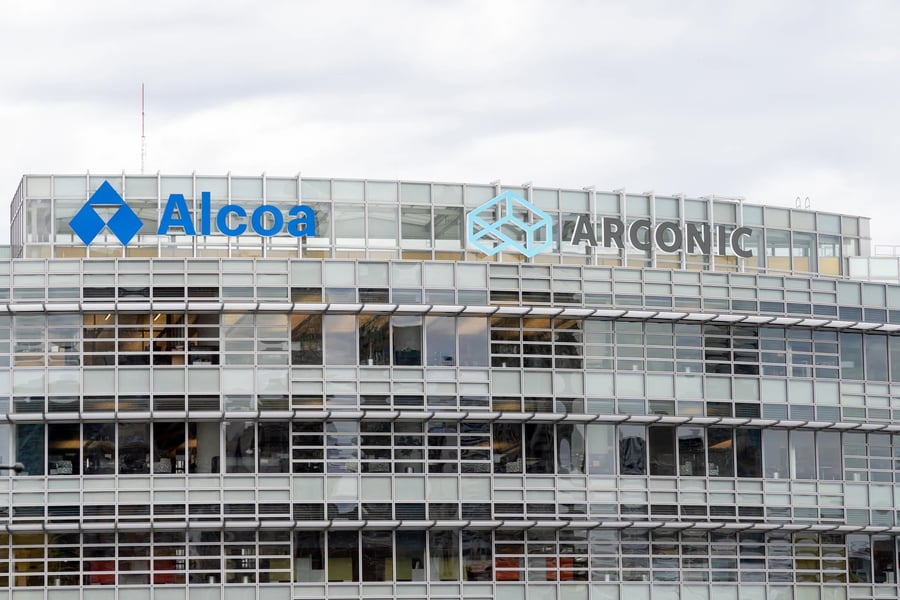
Alcoa’s chief executive William Oplinger left little ambiguity about how the company sees the rationale. “This is exactly the type of opportunity Alcoa is built to execute,” he said in a statement. “These high-quality, globally relevant assets are a strong strategic fit within our portfolio and align directly with our strengths as a leading pure-play upstream aluminium company.” Alcoa projects approximately $900 million in net present value of synergies from the combination — a figure reflecting the operating, commercial, and logistical efficiencies of assembling bauxite, refining, and smelting assets under a single integrated owner with established infrastructure in each of the three countries where these facilities operate.
For South32, the deal is a strategic divestiture as deliberate as any the company has made. After the transaction closes — subject to regulatory and shareholder approvals — approximately 85% of South32’s pro-forma EBITDA will come from base and precious metals, principally copper, zinc, silver, and lead. Manganese stays. Aluminum, largely, does not. “Our business will be simpler with a portfolio of higher-margin upstream operations, reduced complexity and greater resilience,” Daley said. The portfolio that remains is, by his framing, the point — not the one being sold.
The copper argument is the one worth examining. As demand forecasts for metals critical to the energy transition have stretched further out and risen in scale, copper has emerged as the supply-constrained metal that institutional mining investors most want exposure to. South32’s pipeline reinforces the bet: a fourth grinding line expansion at Sierra Gorda in Chile is already underway, and base-metals projects in the United States are in study phases. Reuters reported that Daley has signaled openness to further acquisitions to build out the copper portfolio, suggesting the proceeds from the Alcoa sale are not simply being returned to shareholders — they are being repositioned.
Markets read the Alcoa side of the trade with some skepticism. Alcoa shares fell roughly 1.7% on the day the deal was announced — a reaction consistent with how equity investors tend to price large, multi-jurisdiction acquisitions pending regulatory approval across three continents. JPMorgan reiterated its rating on Alcoa, a signal that analysts found the strategic logic credible even if the share price reaction reflected execution risk rather than enthusiasm. South32’s shares moved in the other direction.
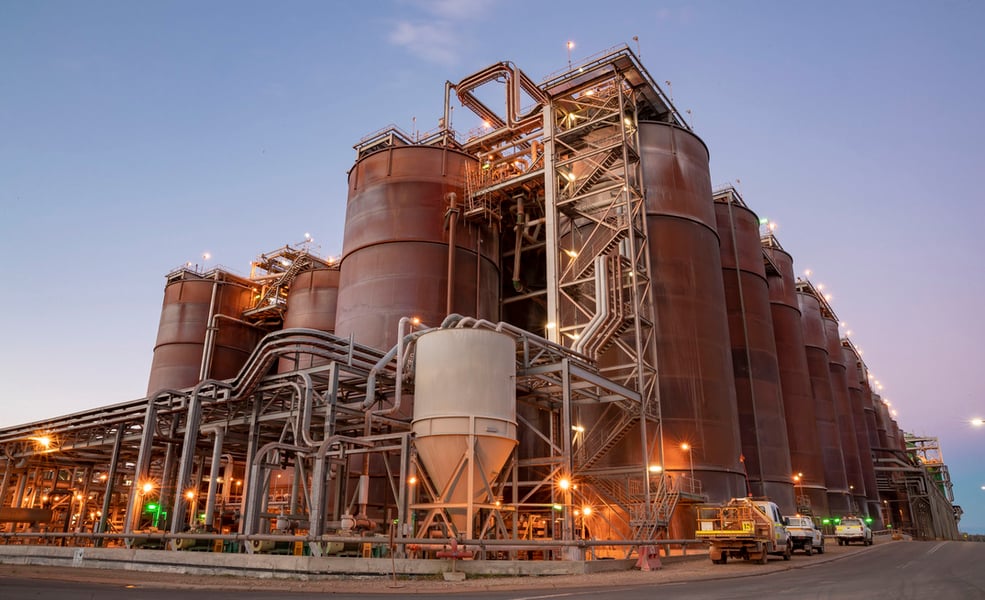
The geographic scope of what Alcoa is acquiring is worth registering plainly. The Worsley Alumina refinery in Western Australia is the anchor asset — a large-scale, long-life operation. Hillside Aluminium in South Africa, one of the continent’s most significant smelters, comes with it, along with the idled Bayside property. In Brazil, Alcoa picks up a 33% interest in the Mineração Rio do Norte bauxite mine, a 36% share in the Alumar alumina refinery, and a 40% holding in the adjacent aluminum smelter. The Mozal smelter in Mozambique is excluded and will remain with South32.
What neither company has resolved in public is the regulatory timeline. Alcoa’s materials pointed to a target close in the first half of 2027; other sources described the second half of that year as the more realistic window. The difference matters because the deal requires approval in Australia, South Africa, and Brazil — three jurisdictions with different merger-review processes, different political sensitivities around industrial ownership, and different relationships with the assets in question. None of the three has signaled its position. The integration plan that follows approval, spanning operations across three continents with distinct labor agreements and infrastructure dependencies, is not yet in public view. Oplinger’s confidence about what Alcoa is built to execute will be tested in that period.