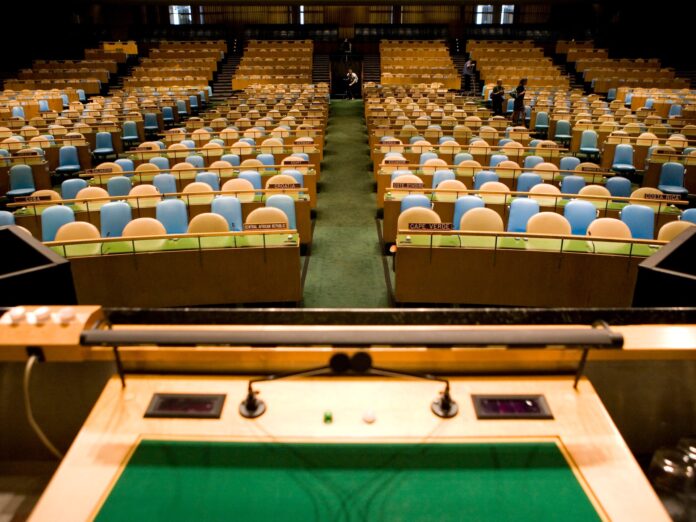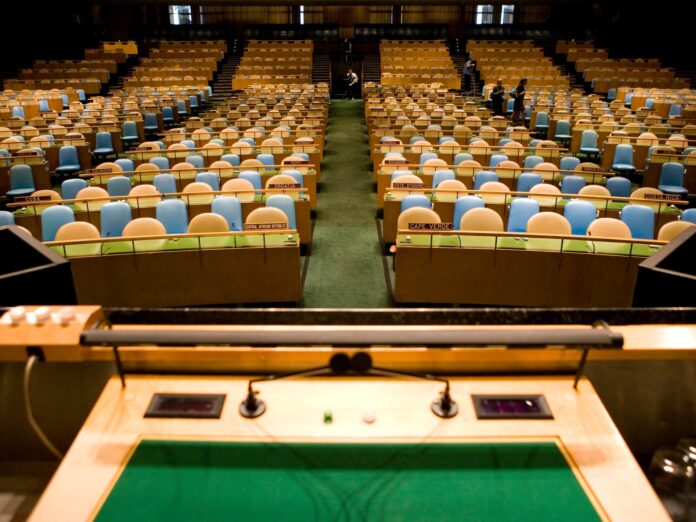

WASHINGTON — Attorney General Pam Bondi appeared before the House Judiciary Committee on Wednesday in a hearing that quickly turned combative, with lawmakers from both parties pressing her over the Justice Department’s handling of the Jeffrey Epstein files, the DOJ’s use of federal prosecutorial power against the president’s political opponents, and the redaction of a 2009 email whose subject line simply reads: “Trump.”
The rare Capitol Hill appearance came as congressional scrutiny of the Epstein investigation reached a new pitch. On the same day Bondi testified before the Judiciary Committee, a former senior aide to former President Bill Clinton, Doug Band, sat for a separate interview with the House Oversight Committee, widening what has become one of the most sprawling congressional investigations in recent memory.
Epstein survivors were seated directly behind Bondi in the hearing room, a visible reminder of what is at stake for the people who say the federal government failed them for years. In her opening statement, Bondi told the group: “I have spent my entire career fighting for victims, and I will continue to do so. I am deeply sorry for what any victim has been through, especially as a result of that monster.” But the tone of the hearing shifted almost immediately.
When Democratic Rep. Pramila Jayapal asked Bondi to turn around and apologize directly to the survivors behind her, Bondi refused, telling Jayapal she wouldn’t “get in the gutter for her theatrics.” The exchange set the register for a hearing that would prove sharp, frequently personal, and at times loud.
The most pointed criticism of Bondi came from Rep. Jamie Raskin, the top Democrat on the committee, who accused her of having “turned the people’s Department of Justice into Trump’s instrument of revenge” and called her handling of investigations a “vendetta factory.” He also leveled a substantive charge about the DOJ’s handling of the Epstein file releases: that the department had inverted its legal obligations under the Epstein Files Transparency Act. “You redacted the names of abusers, enablers, accomplices and co-conspirators, apparently to spare them embarrassment and disgrace, which is the exact opposite of what the law ordered you to do,” Raskin said. “Even worse, you shockingly failed to redact many of the victims’ names, which is what you were ordered to do by Congress.”
Bondi dismissed Raskin’s framing, and when he pushed her to answer questions rather than engage in heated exchanges, she called him a “washed-up loser lawyer.” She characterized several Democratic members as engaging in “theatrics” and accused judges who had ruled against the administration of “judicial activism,” telling the committee the country had never seen “this level of coordinated judicial opposition towards a presidential administration.”
The criticism of Bondi was not confined to Democrats. Republican Rep. Thomas Massie, who co-authored the Epstein Files Transparency Act, produced three documents during the hearing that he said illustrated the DOJ’s “failures” to comply with the law, including its failure to redact victims’ names. Bondi accused Massie of having “Trump derangement syndrome” and asked why he hadn’t directed his questions at former Attorney General Merrick Garland. Massie accused her of participating in a “cover up” that “spans decades.” Bondi denied it.
Earlier this month, the Justice Department had removed several thousand documents from its public website after acknowledging they may have inadvertently included information identifying victims. The DOJ said those materials had been mistakenly included in the original release.
Bondi also addressed Ghislaine Maxwell during the hearing, saying she hoped the convicted Epstein co-conspirator “will hopefully die in prison.” She said she did not know Maxwell had been transferred from a federal facility in Florida to a minimum-security prison in Texas after a two-day interview in July with Deputy Attorney General Todd Blanche.
Outside the hearing room, Sky Roberts, the brother of Virginia Giuffre, Epstein’s most high-profile accuser, said the administration had failed the survivors it claimed to champion. “Pam, I have a clear and simple message for you,” Roberts said before the hearing. “The way this administration and you specifically have handled survivors has been nothing short of a failure.”
Meanwhile, a separate document, one that has drawn attention in the days before Bondi’s testimony, continued to raise unresolved questions. The document is an October 14, 2009 email from criminal defense attorney Jack Goldberger to his client, Jeffrey Epstein, which Epstein then forwarded to Ghislaine Maxwell. Its subject line reads: “Trump.”
The email’s partially visible content references a phone call arranged between Epstein’s then-attorney Alan Garten and Donald Trump, who was at the time facing a potential deposition related to civil litigation by Epstein’s victims. The body of the message, which summarizes what Trump said during the call, is entirely redacted.
Rep. Raskin, who reviewed the unredacted version during a congressional session earlier this week, described its contents to ABC News as appearing to contradict Trump’s repeated claim that he had expelled Epstein from Mar-a-Lago after discovering that Epstein was poaching employees. According to Raskin, the document records Epstein’s lawyers summarizing Trump as saying that Epstein “was not a member of his club at Mar-a-Lago, but he was a guest at Mar-a-Lago, and he had never been asked to leave.”
Raskin said the redaction was “puzzling” but stopped short of accusing the DOJ of politically motivated concealment. “I don’t know why that was redacted,” he said. ABC News has not seen the unredacted document and cannot independently verify Raskin’s account of its contents. A DOJ official told ABC News the redacted portion represented a privileged communication between Epstein and his lawyer. The White House did not respond to a request for comment.
Brad Edwards, the attorney who represented several Epstein victims and sought Trump’s deposition, recalled in a 2019 interview that Trump’s lawyers had offered a voluntary phone call in place of a deposition and described Trump as cooperative. Edwards added that Trump had told him girls were “always around” Epstein in public settings but did not appear to be underage. Edwards was not available for comment following Monday’s document review.
Across the Capitol, the House Oversight Committee was separately interviewing Doug Band, a former senior aide to Bill Clinton who appears more than 200 times across the millions of documents released under the Epstein Files Transparency Act. The records include emails between Band, Epstein and Maxwell arranging dinners over roughly a year. Lawmakers were expected to ask Band about his relationship with Epstein, whether he had flown on Epstein’s plane, and whether he had any knowledge of Clinton traveling to Epstein’s island. Clinton has previously denied doing so.
One 2004 email released in the DOJ tranche showed Maxwell writing to Band in sexually suggestive terms; Band responded in kind. Band has previously acknowledged visiting Epstein’s home but said he had no knowledge of Epstein’s crimes at the time and eventually advised Clinton to end the relationship because he had gotten “bad enough vibes” from Epstein.
The parallel hearings reflect how broadly the congressional Epstein inquiry has expanded. The investigation has already claimed one high-profile walkout: billionaire Leon Black, who paid Epstein $158 million in fees, refused to discuss his NDAs with investigators and left mid-interview before being subpoenaed to return under oath. Earlier this year, Sarah Kellen told the House Oversight Committee that Epstein had groomed and abused her for years and named three previously unknown figures to investigators. The Eastern Herald has also reported in depth on the DOJ’s accountability failures over victim exposure as the document release process repeatedly went wrong.
The Epstein Files Transparency Act, passed by Congress amid mounting public pressure, required the DOJ to release documents related to its investigation while protecting the identities of victims. Both the act’s supporters and its critics now say the department has failed to fully comply, though they disagree sharply on which obligations went unmet, and why.