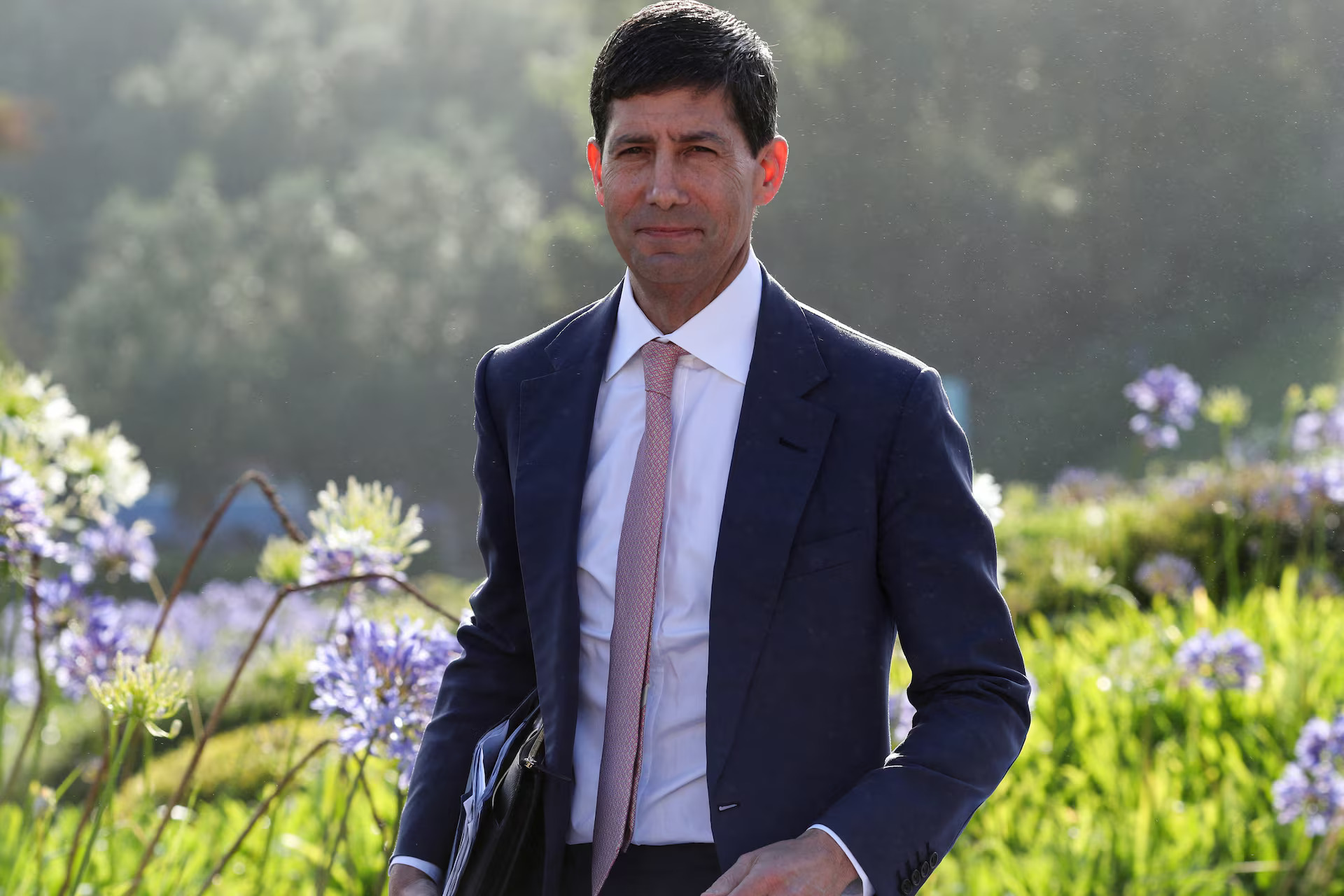

SINTRA, Portugal — Markets spent two hours on Wednesday waiting for Kevin Warsh to say something useful about July. He did not oblige them. What he gave instead was something more consequential for the medium term: a clear statement that the Federal Reserve, under his leadership, will no longer tell the world what it plans to do before it does it.
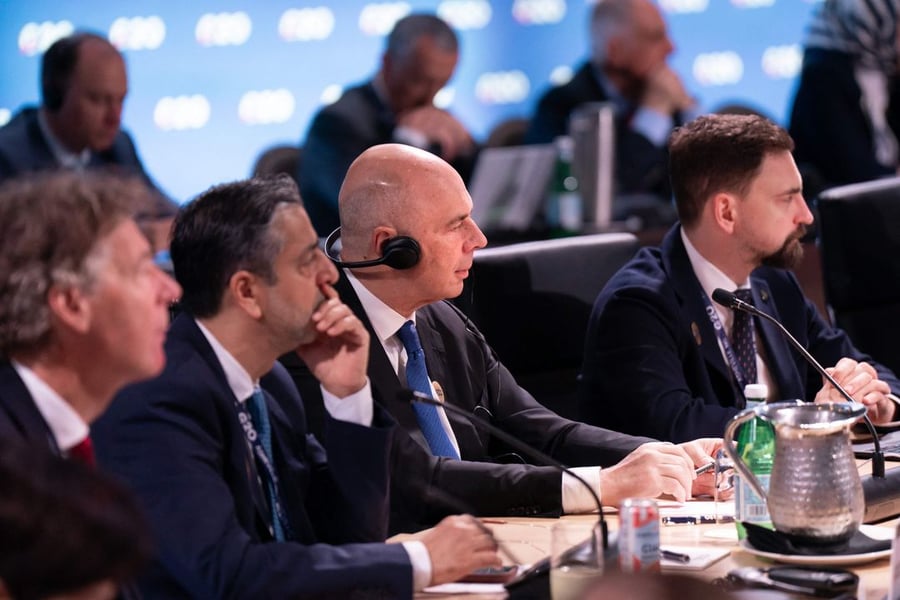
Warsh stepped onto the international stage for the first time as Fed Chair at the European Central Bank’s annual forum in Sintra, Portugal, joining a panel with ECB President Christine Lagarde, Bank of England Governor Andrew Bailey, and Bank of Canada Governor Tiff Macklem. He has held the position since May. The forum gave the financial world its first extended look at how he operates alongside his peers, and the answer, on Wednesday, was: carefully.
On the July rate decision, Warsh offered nothing. He declined to hint at whether the Federal Open Market Committee will raise, hold, or cut at its meeting later this month, while affirming only that inflation remains too high. “We’ve all looked around, and we’ve seen that prices are too high,” Warsh said — a statement precise enough to be true and vague enough to commit to nothing. CNBC reported that the Fed Chair explicitly declined to signal the July outcome when asked directly. The market interpreted the silence as consistent with a hold, though the probability distribution in Fed funds futures remained wide.
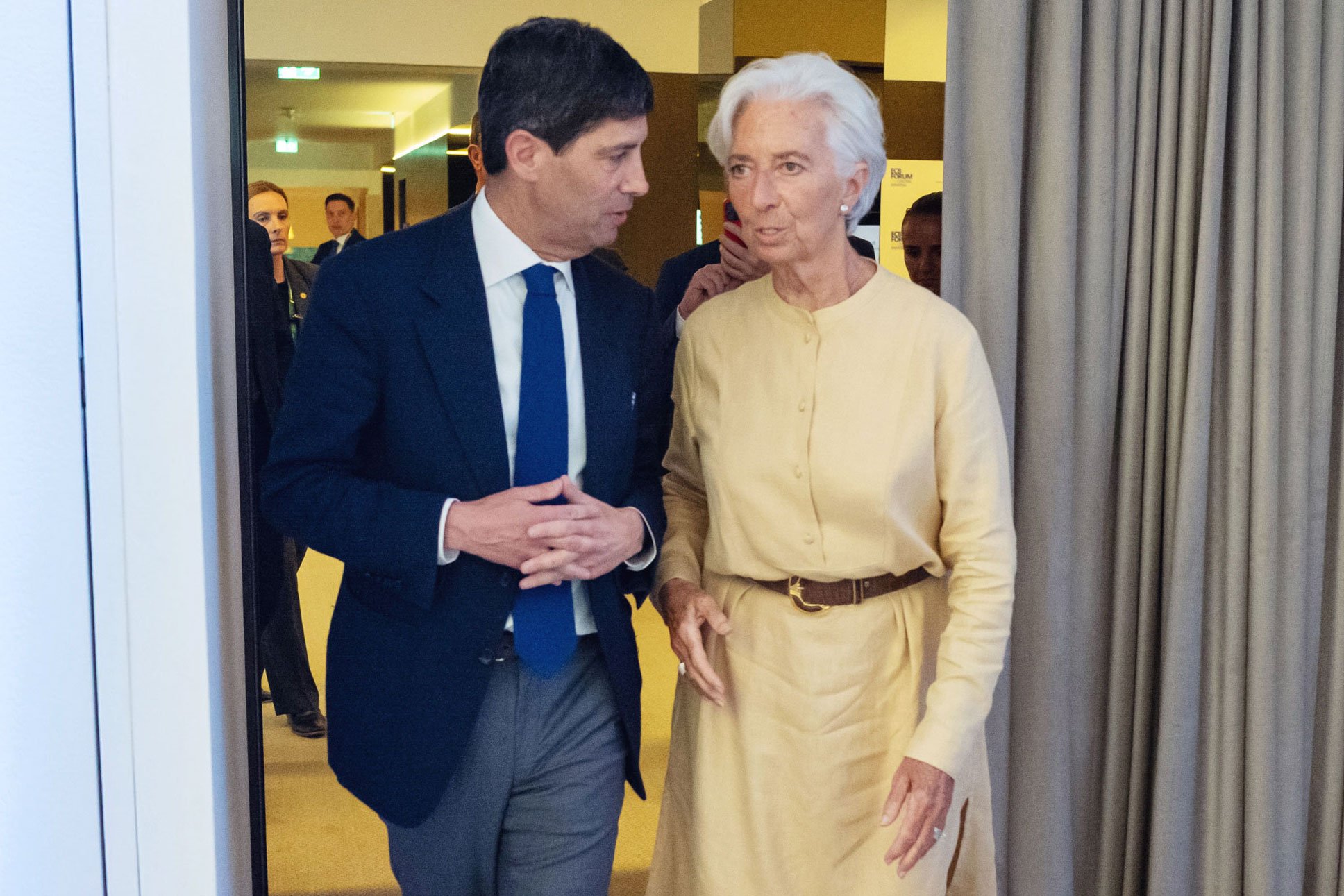
The more durable signal from Sintra was the panel’s collective position on forward guidance. Lagarde, opening the exchange, said she had come to regret feeling “bound and compelled by forward guidance” during her tenure — an admission that pre-announcing rate paths had constrained the ECB’s ability to respond when circumstances changed. Bailey said the same in different language. Macklem nodded the Bank of Canada into agreement. Warsh closed it: “We have found common cause.” Four of the world’s most systemically important central banks have now, in the span of a single panel at Sintra, effectively agreed that the era of explicit forward guidance is over.
This matters beyond the words. Forward guidance was the dominant monetary policy communication tool for much of the post-2008 period. The Fed, ECB, and Bank of England all used versions of it, with varying success, to anchor long-end rates without moving the policy rate. The problem Lagarde articulated — and all four panelists endorsed — is that it works until it doesn’t: once a central bank’s credibility is tied to a stated path, abandoning that path, as every major central bank had to do in 2021-22 when inflation arrived faster than their forecasts, destroys both the guidance and the credibility simultaneously. The lesson of Sintra 2026 is that the lesson was learned.
Warsh’s own contribution extended beyond the forward guidance discussion. He described the Fed’s current internal focus as reforming its “reaction function” — the framework governing when and how much to move rates in response to incoming data. His argument, consistent with positions he held before taking the chair, is that the Fed has spent too much time constructing forecasts and too little time establishing clear rules for how it will respond when those forecasts are wrong. What that means in practice for July — when the FOMC will have the June employment report and June CPI in hand — he did not say. CNN reported that Warsh’s reticence on near-term guidance was itself the signal markets were left to interpret.
The inflation backdrop has become somewhat easier since the panel members last convened formally. Euro area inflation fell to 2.8 percent in June, driven by retreating energy prices, reducing immediate pressure on the ECB ahead of its July 24 meeting. The Bank of England faces a similar energy-driven deceleration. In the United States, tariff-driven goods inflation has continued running above the Fed’s 2 percent target even as services inflation has partially moderated. Warsh’s acknowledgment that prices remain too high reflected that reality without resolving the rate path question it implies.
The panel’s AI discussion was the third thread. All four governors expressed what Warsh called “open-mindedness” on AI’s potential to drive productivity gains that could, over time, be disinflationary. The ECB and Bank of England have flagged AI productivity effects in recent staff projections. Warsh was careful not to incorporate any such assumption into a near-term rate view, acknowledging the uncertainty around timing and distribution. Whether AI becomes a reason to hold rates while productivity materializes, or a rationale for pre-emptive cuts, was left unresolved. That ambiguity was likely always how Sintra 2026 was going to end.
What the market learned from Warsh’s Sintra debut is primarily structural. He will not telegraph decisions. He will not bind the Fed to a forecast. He will build the institution’s communication around a reaction function that responds to data rather than predicts it. None of that tells a trader what the Fed will do on July 30. It tells them how to think about a Fed that will be harder to front-run and more likely to surprise. That is a different kind of signal, and on Wednesday in Sintra, it arrived clearly enough.
Related Posts