
TEHRAN – The family in the leaked report is not named. But whoever compiled the research for Iran’s presidency last May could not make the numbers abstract: 81 percent of respondents said they persistently struggled to obtain enough food. Three in four could not cover medical costs. Only one in twelve earned enough to save money.
The document, titled “What Iran Wants,” was prepared by Ali Rabiei, a social adviser to President Masoud Pezeshkian, and has since circulated beyond the government that commissioned it. Fox News reported Friday that 64 percent of Iranians reported persistent anger as of May, up 12 percentage points in six months. That figure, in the words of at least one independent analyst, represents a floor rather than a ceiling.
Among those surveyed by the Ara Opinion Research Center in May 2026, only 9 percent supported maintaining the existing system. Fifty-three percent called for fundamental or structural reform. Another 19 percent wanted to change the political system outright. Taken together, roughly 73 percent expressed support for changes that go far beyond anything the current government has offered or signaled it would consider.
The survey’s emotional indicators found 50 percent of respondents reporting hopelessness, 48 percent sadness or depression, and 45 percent persistent fear or anxiety. These are not simply protest metrics. They are public health indicators, measuring the psychological state of a population living inside an economy that has been subject to US and European sanctions for decades, and now a direct US military campaign entering its seventh consecutive week.
On who bears responsibility for the economic crisis, respondents diverged from the political narrative their government prefers. Nearly 47 percent cited government inefficiency as the primary cause of their economic hardship. A further 26 percent blamed corruption. Only 21 percent pointed to foreign sanctions. The data does not absolve Washington; the US war and its attendant financial siege have compounded every structural weakness the government already had. But it suggests that Iranians have been watching their own institutions closely enough to know which failure is which.
Miad Maleki, a senior fellow at the Foundation for Defense of Democracies, said the report understated its own findings. “In an authoritarian system, respondents self-censor,” Maleki noted, “which means these findings are best read as a floor, not a ceiling.” The Ara Opinion Research Center conducted the polling in May 2026, and the document was prepared under Rabiei’s direction for Pezeshkian’s office. The fact that it has now become public suggests it was not intended to remain internal.
What makes the document remarkable is not just what it found, but what it recommended. Rabiei’s prescribed response to record public anger was not structural reform. It was improved government communications, moderated official rhetoric, and better state media presentation. The regime’s answer to a population in which 73 percent want deep change was, in essence, better spin.
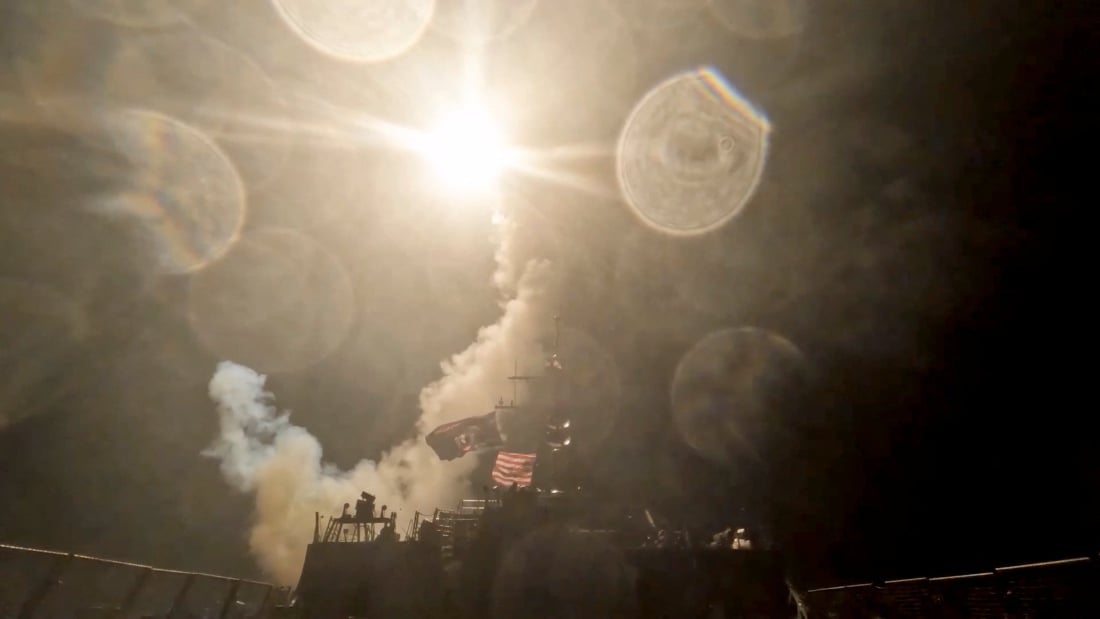
The May polling came before the US military campaign entered its most intensive phase. US airstrikes that forced the evacuation of 211 pediatric cancer patients from Ahvaz’s Shahid Baghaei hospital represent the human cost of a war the international community has failed to stop. Whether weeks of sustained strikes have raised or redirected public anger is a question the May report cannot answer, but the trajectory it documents was already severe before the bombs fell.
Iran was already carrying a severe economic burden when the current campaign began. The gap between Tehran’s demand for war reparations and Washington’s counter-offer of a rebranded investment fund captured precisely the economic logic at stake: Iran’s oil facilities, airports, and infrastructure represent not just strategic assets but the industrial base of an economy the polling shows has already failed its population in basic terms of food security and medical access.
The war’s economic damage arrives on top of a pre-existing crisis. Arab News reported Friday that Iran’s Revolutionary Guards claimed strikes on US military positions in multiple countries, the latest in a pattern of escalation and counter-escalation that has made the economic trajectory of the conflict impossible to separate from its military one. Every exchange of fire is also an exchange of economic pressure, and the population bearing that pressure is the one the leaked report surveyed.
Whether anger at these levels can be managed through better media presentation is a question the report does not answer, because it was not designed to. The 60 percent who reported distrusting major government institutions were not asked whether state television had improved its messaging recently. What the document establishes is a baseline: the regime now knows, from its own research, exactly how far its population has traveled from any kind of consent. What it does with that knowledge is another matter entirely.