

WASHINGTON — Circle Internet Financial, the San Francisco company behind the world’s second-largest stablecoin, built a business on something the new rules will prohibit: paying interest.
Under the GENIUS Act framework being finalized by six federal agencies before a July 18 statutory deadline, Circle’s USDC and every other compliant American stablecoin will be forbidden from offering yield to holders. The competitive damage lands unevenly. Tether, the offshore issuer of the world’s largest stablecoin, faces no equivalent constraint.
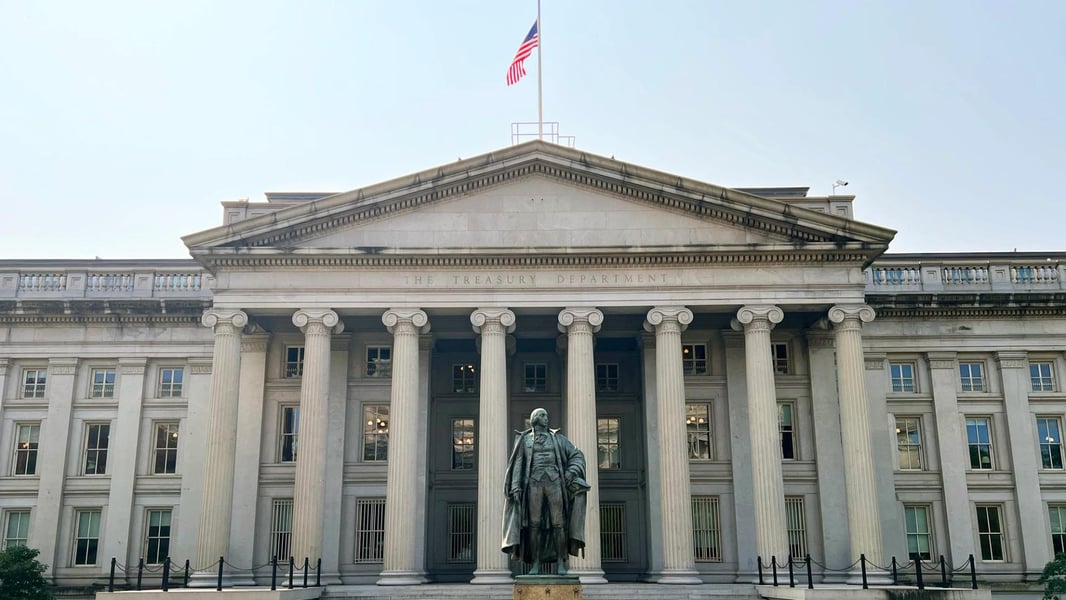
Sixteen days remain. The agencies, the OCC, FDIC, NCUA, Treasury, FinCEN, and OFAC, must publish final rules by that date, exactly one year after Congress enacted the legislation on July 18, 2025. Comment periods across all six closed June 9. What emerges will govern a market that has grown to $322 billion.
The bipartisan vote that produced the law, 68 to 30 in the Senate and 308 to 122 in the House, obscures how fractured the rulemaking has become. The six agencies have surfaced unresolved conflicts between the banking industry and crypto incumbents, at least one procedural problem with no clean solution, and a conspicuous gap at the center of the framework: the Federal Reserve has published no substantive GENIUS Act rule.
The OCC’s framework was drafted under Comptroller Jonathan Gould, who served as chief legal officer at Bitfury, a crypto infrastructure company, before joining the agency. It sets a $5 million minimum capital floor for new federal stablecoin issuers and requires a three-tier liquidity structure: ten percent redeemable the same business day in Federal Reserve deposits or cash equivalents, thirty percent within five business days in high-quality liquid assets, and sixty percent in standard reserve assets. Larger incumbents such as JPMorgan, US Bancorp, and Circle can meet those thresholds. Smaller non-bank fintechs largely cannot.
Banking groups submitted formal objections. The Bank Policy Institute, the Clearing House Association, and the Consumer Bankers Association each raised run-risk protections as a priority. When holders rush to redeem stablecoins in a crisis, the FDIC absorbs systemic pressure without the deposit insurance tools it deploys for ordinary bank depositors. The FDIC’s final rule will confirm that stablecoin token holders receive no deposit insurance, regardless of whether their issuer holds a bank charter. The banking lobby secured the yield prohibition it sought. The run-risk architecture it also demanded did not make it into the framework.
One provision embedded in the OCC’s proposed rule drew pointed criticism. An individual challenge pathway converts the bright-line yield prohibition into a case-by-case negotiation, a structure The American Prospect described in late June as enabling “the industry’s wish list when it comes to how they want to balance these scales.” The mechanism benefits entities with the resources to litigate and disadvantages smaller issuers trying to compete on equal terms.
The FDIC faces a harder problem. Its public comment period closes August 4, two weeks after the July 18 statutory deadline. The agency must choose between finalizing rules before reading those comments or missing the mandate Congress set. There is no fallback provision in the GENIUS Act for a delayed rule. A legal void would leave the framework fragmented, with courts left to interpret a partially built regulatory structure whose authors have not finished writing it.
The Federal Reserve’s silence is the largest unresolved element. State-chartered banks with Fed membership have no implementing framework under the GENIUS Act. Without a Fed rule, that tier of the banking system remains outside the architecture Congress directed to be built. Developers of DeFi trading protocols and insolvency-safe-harbor instruments tied to the companion CLARITY Act, which is advancing through the Senate Banking Committee and has faced persistent questions about structural loopholes, have built compliance assumptions around a Fed rule that has not yet appeared.
The yield prohibition’s competitive consequence is already visible in the structure of the market. Offshore issuers, with Tether the most prominent, can offer yield-bearing products to international users while maintaining a compliant domestic presence through a subsidiary that follows American rules. Circle, which has operated onshore and was among the primary lobbying forces for stablecoin legislation in 2024 and 2025, now faces a rule that eliminates one of its central product advantages. Circle did not respond to a request for comment.
Stablecoin market capitalization has held near $322 billion despite a brutal stretch for broader crypto markets. Bitcoin fell more than 20 percent in June and touched a 21-month low below $58,000 before recovering above $60,000 this week after Fed Chair Kevin Warsh said at the European Central Bank’s annual forum in Sintra, Portugal, that inflation risks have come down. Dollar-denominated stablecoins tend to function as refuge assets during drawdowns, insulating the category from the equity and crypto selloff that has dominated the second quarter. The forces behind Bitcoin’s June collapse are documented separately.
JPMorgan’s positioning captures the tension. The bank formally backed the CLARITY Act while running a simultaneous lobbying effort against stablecoin yield provisions. JPMorgan faces no capital compliance problem under the GENIUS Act’s $5 million floor. Its concern is competitive: a stablecoin industry prevented from paying yield is a stablecoin industry less capable of attracting the retail deposits that anchor bank funding.
Six agencies. Sixteen days. And one central bank that has not said what it will do. Whether what emerges on July 18 is a complete framework or a partially assembled one will determine whether the GENIUS Act’s 120-day compliance window delivers the market clarity Congress promised or opens another chapter of litigation over rules that no one finished writing.