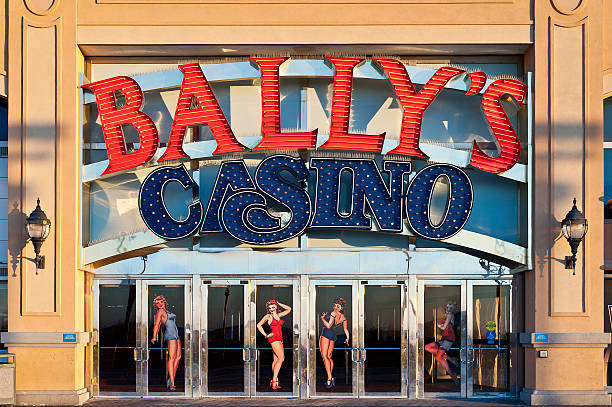

PROVIDENCE, R.I. — Alfonso Lalli is a retired postal worker from western Massachusetts. His attorney wants the court to know that. What the attorney would rather the court not dwell on is the company Lalli was keeping inside Bally’s Casino and Resort in Lincoln, Rhode Island, for 116 consecutive days last year.
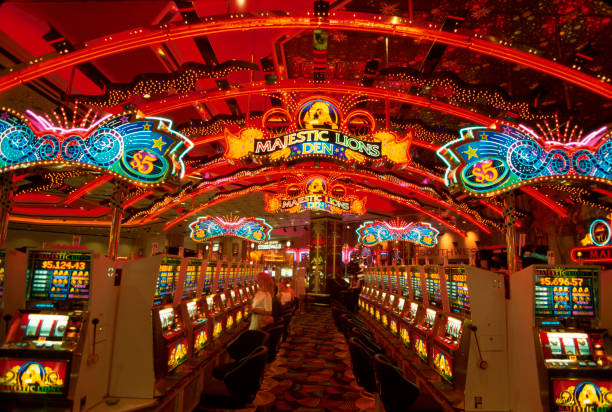
Federal prosecutors allege that Lalli — along with five other men tied to the Genovese crime family’s Springfield Crew — ran a rewards card fraud scheme so systematic that the casino’s own analysts concluded it was “statistically impossible” without cheating. They used more than 100 loyalty cards registered in other people’s names, took those cards into the high-limit slot room, and walked out with $1,156,105. They had wagered $630,000 to get there.
The ringleader, according to charging documents filed in Rhode Island federal court, was Giuseppe Manzi, 51, known in Western Massachusetts Mafia circles as “Little Joe.” Manzi has prior form: he served a three-year federal sentence for racketeering and faces a separate illegal gambling prosecution out of the Chicago area. Alongside him: Antonio Capua, 47; Claudio Cardaropoli, 47; Salvatore Fusco, 23; and Franco “Frankie” Fusco, who has not yet been apprehended. The charges — money laundering, cheating a casino, and conspiracy — were announced June 30, 2026.
The Springfield Crew is a western Massachusetts and Connecticut faction of the Genovese family, one of New York’s five historic organized crime organizations. Federal investigators have tracked the crew for decades; its members have appeared in gambling, loan-sharking, and extortion cases stretching back to the 1990s. What makes the Bally’s case unusual is not who did it but how: no violence, no threats, no counterfeit chips. Just loyalty cards, spreadsheets, and a deep understanding of how casino reward programs calculate points.
Bally’s detected the pattern and alerted authorities. Internal analysis found the group’s winnings on the high-stakes slots were so far outside normal probability distributions that chance could not account for them. The phrase “statistically impossible” appears in the casino’s own assessment shared with investigators.
Daniel Hagan, Lalli’s attorney, disputes the framing entirely. “What they’re accused of here is basically out-mathing the casino,” Hagan told reporters after arraignment. “They played within the parameters of the program.” In his telling, the defendants identified an inefficiency in how Bally’s structured its rewards tier — a threshold or multiplier that, exploited at scale across many accounts simultaneously, produced returns the casino hadn’t anticipated. Whether that constitutes fraud or sophisticated play is, as of this writing, unresolved law in Rhode Island.
Prosecutors are unlikely to accept that framing. Using loyalty accounts registered under other people’s identities is the crux of the money laundering allegation: if the accounts were fraudulently opened, any winnings flowing through them constitute proceeds of crime regardless of the slot mechanics underneath. Rhode Island law criminalizes casino cheating as a separate count, defined broadly enough to encompass schemes that exploit the reward structure rather than the game itself.
Manzi was arraigned at Palmer District Court in Massachusetts and released on $50,000 bail. Four of the other defendants were initially held without bail after federal prosecutors argued flight risk; a judge later reversed that determination for Lalli and Salvatore Fusco, allowing their release. Franco Fusco remains at large.
The Bally’s case arrives during a period of heightened scrutiny over casino integrity and loyalty program design. Betfred, the UK bookmaker, was fined £900,000 last week by Britain’s Gambling Commission for failures in its social responsibility procedures — a different category of misconduct but part of the same regulatory moment in which operators are being pressed on every dimension of how they run their programs. In the United States, casino reward schemes have grown in complexity and monetary value to the point where the line between expert exploitation and criminal fraud has become a recurring litigation question.
What the Springfield Crew allegedly understood is that loyalty programs are not designed to resist coordinated, multi-account harvesting at the scale they deployed. Bally’s, like most major casinos, structures its tier rewards to encourage volume play by individual customers. The defendants are accused of disaggregating that volume across more than 100 accounts to stay beneath detection thresholds on each card while aggregating the benefits across all of them — a technique that, if the government’s version holds, is more reminiscent of a financial fraud scheme than anything previously prosecuted under casino cheating statutes.
None of the defendants have entered formal pleas as of June 30. Hagan said Lalli intends to contest the charges vigorously. Manzi’s attorney had not issued a statement as of the same date. No trial date has been set.
What Bally’s has not disclosed publicly is whether it has since restructured its rewards program to close the vulnerability the group allegedly exploited. That question — whether the scheme was a one-time criminal aberration or a signal of a systemic design flaw — is the one the casino’s lawyers are presumably working hardest to keep out of a courtroom.