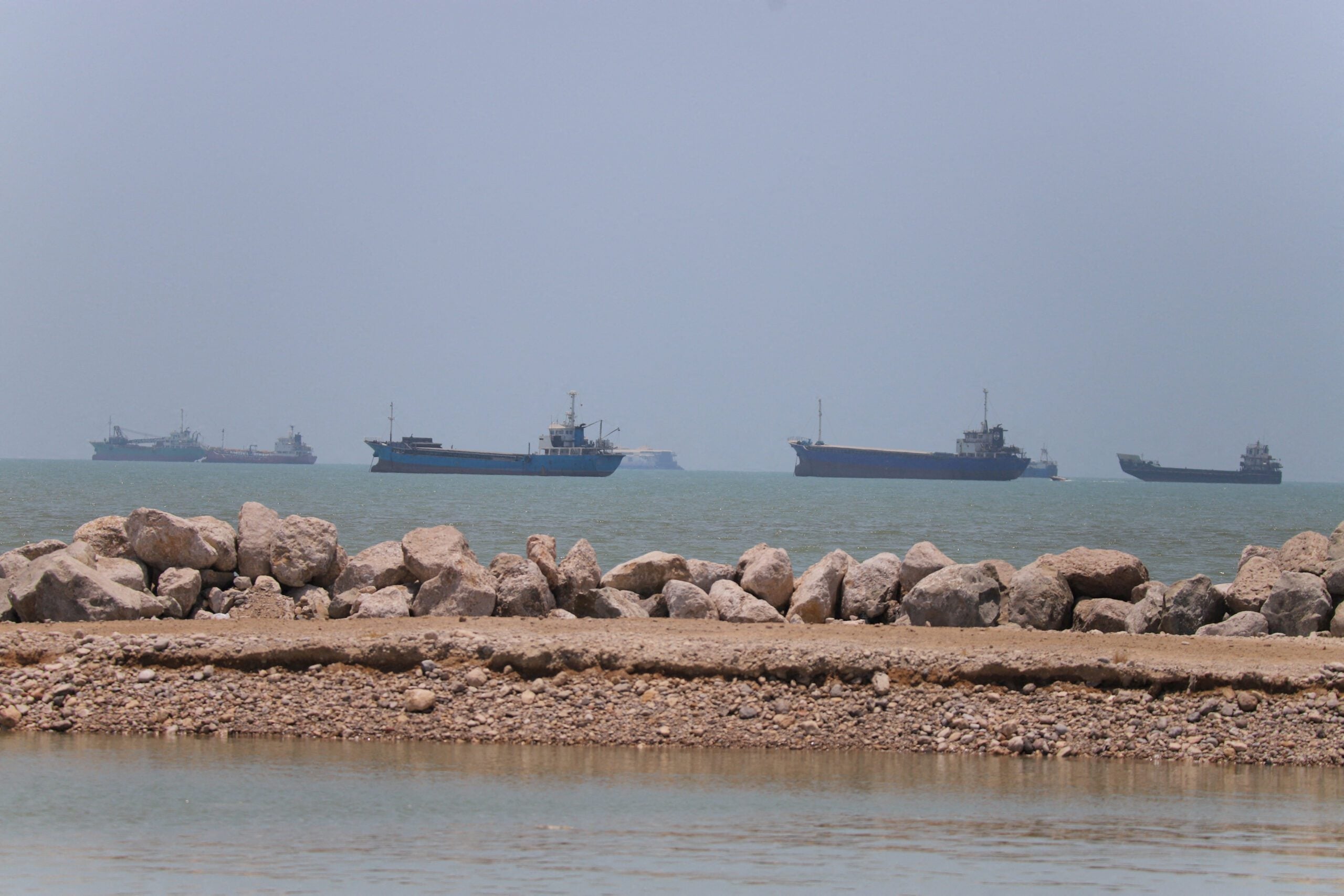

DUBAI – Three South Korean supertankers operated by Sinokor entered the Strait of Hormuz empty on June 30. Empty is significant. An empty supertanker is not delivering oil; it is testing whether it is safe to be in the water at all. By Tuesday, the total daily transit count through the world’s most critical oil chokepoint had reached roughly 34 vessels – about one-third of the pre-conflict baseline of approximately 100 crossings per day. Brent crude, meanwhile, was trading at $71.12, down nearly 2.5 percent on the day as the war risk premium that spiked when the conflict began continued to dissipate. The diplomacy and the commerce are not moving at the same speed.
The June 17 Memorandum of Understanding between the United States and Iran committed both parties to the restoration of commercial navigation through the Strait. On paper, the MoU opened Hormuz. In practice, the opening has been gradual, uneven, and interrupted. The three Sinokor supertankers that made their return on June 30 were joined by a Marshall Islands-flagged Suezmax operated by a Greek company near Ras Al-Khaimah, and by the Nisalah – a vessel controlled by Saudi Arabia’s National Shipping Company, Bahri – inbound toward Ras Tanura, according to ship-tracking data compiled by Kpler and reported by Bloomberg. Each of these transits represented a commercial operator making a judgment: the water is open enough to enter. The 66 vessels that did not cross on Tuesday made the opposite judgment.
The reasons operators remain cautious are structural, not merely psychological. The first is insurance. War-risk underwriters have not formally reclassified the Strait of Hormuz out of the “warlike operations area” designation that applies to high-risk zones. That designation means the war-risk premium layered on top of standard P&I coverage – Protection and Indemnity insurance, the baseline coverage that every commercial vessel carries – remains elevated regardless of what the MoU says. An operator sending a laden supertanker through Hormuz today is paying meaningfully more than they would have in January. The premium comes down when underwriters decide that the political resolution is durable, not when diplomats say it is.
The second reason is the toll dispute. The MoU’s Hormuz provisions commit Iran to “best efforts” toward toll-free passage. Since the agreement was signed, Iranian officials have continued to describe “service fees” for transit. Those two formulations are not compatible, and shipping companies know it. An operator who crosses Hormuz under the assumption that passage is toll-free and is then presented with an Iranian “service fee” invoice has a legal and commercial problem with no clear resolution mechanism. The Doha talks on July 1 did not produce an agreement on the toll question – the issue remains formally unresolved.
The third reason is the memory of June 25 to 27. An Iranian drone hit the M/V Ever Lovely on June 25; a second vessel, the M/T Kiku, was struck two days later. US aircraft struck Iranian military sites twice. Iran hit US bases in Kuwait and Bahrain. Oil rose on the news. The episode lasted five days and ended when both sides agreed to meet in Doha. For shipping operators who had begun testing the strait after the MoU, the June 25 attack was a reminder that being in the water when an incident occurs is not an abstract risk. Some of those operators pulled back. The 34 ships transiting on Tuesday include those who returned after the Doha reset; it does not include the full complement who might have been in the water absent the strike exchange.
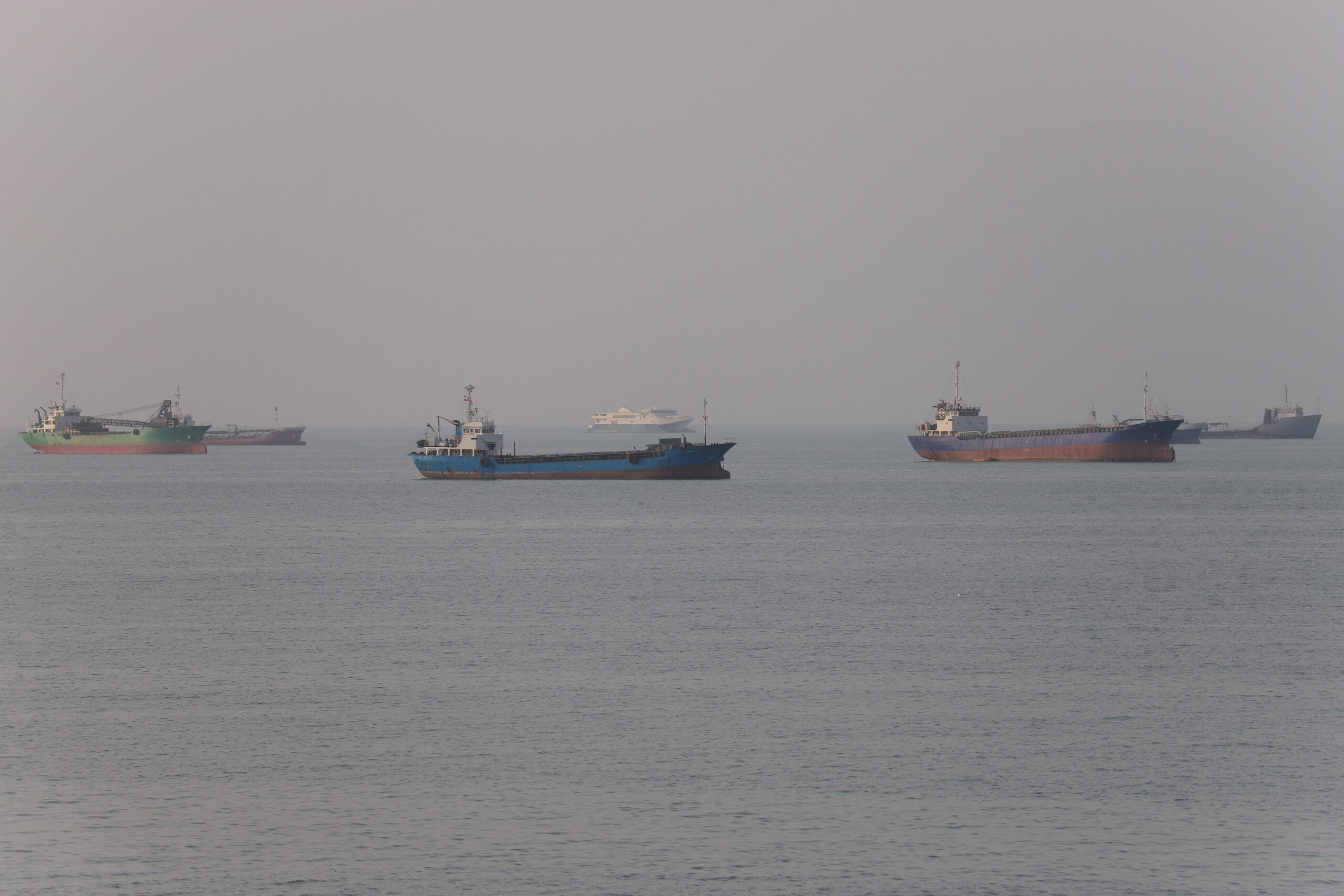
Oil’s price move tells a parallel story. At $71.12 per barrel, Brent is well below the peak it reached when the US-Iran conflict began and the strait first closed. The war risk premium that drove crude sharply higher in February has largely unwound. What that number reflects is not a recovery in Hormuz throughput but a market expectation that physical supply will not be interrupted – a confidence judgment the 34-ship traffic count does not fully support. The price and the physical reality are partially decoupled: oil is pricing in the MoU’s durability, while shipping operators are pricing in its uncertainty.
This decoupling is not unusual in sanctions and conflict cycles. Financial markets tend to price in resolution faster than physical markets can reorganize around it. The shipping routes that were abandoned when the strait first closed – the Cape of Good Hope diversions, the alternative LNG routes – carry real costs to unwind. Charterers who rerouted supertankers on long-term voyages cannot immediately redirect them back through Hormuz. The 66 missing daily transits are partly operators waiting for clarity and partly operators whose logistics commitments cannot be rerouted on a two-week timeline.
Iran’s assertion of corridor authority in the strait – the northern-shore transit lane it has established with Oman as a partner – adds a layer of ambiguity that insurance underwriters have to price. A corridor is not a guarantee. It is a routing preference that concentrates transiting vessels in a specific zone and makes them more visible to Iranian coastal systems. Whether that makes ships safer or more exposed depends on what Iran intends the corridor to accomplish, and that question has not been answered by the MoU or by Doha.
The 45-day window left in the MoU is the frame within which all of this has to resolve. A traffic level of 34 ships per day rising steadily toward 100 would signal that commercial confidence is building. A traffic level that plateaus at one-third of normal – or drops again after the next incident – would signal that the strait has achieved a fragile, partial opening, not the restoration the MoU promised. Brent at $71 reflects the first scenario. The ships that are not crossing Hormuz today represent the second.