
REDMOND — The renewal email is already in someone’s inbox. As of Tuesday, Microsoft 365 commercial plans are more expensive at renewal than they were 24 hours ago, and the organizations hit hardest by the new pricing structure are not the large enterprises that have been tracking this change for months. They are businesses whose employees sweep floors, work cash registers, and run warehouse shifts.
Microsoft 365’s Frontline Worker plans, the F1 and F3 tiers designed for employees without dedicated desk setups, rose 33 percent and 25 percent respectively on July 1. F1 moved from $2.25 to $3 per user per month. F3 moved from $8 to $10. An organization with 10,000 frontline employees on F3 will pay $240,000 more per year in licensing costs than it did last month, before a single support fee or standalone component is counted.
The enterprise suite numbers are the figures Microsoft has been advertising since its December announcement, and they are accurate as far as they go. Microsoft 365 E3 moved from $36 to $39, an 8 percent increase. E5 moved from $57 to $60, 5 percent. Office 365 E3 rose from $23 to $26, 13 percent. Those are the numbers in Microsoft’s official licensing update. What the table does not include are the cascading costs that activate the moment license spend goes up.
Microsoft’s Unified Support contracts are calculated as a percentage of total licensing spend. When an enterprise renews at higher list prices, the support contract cost rises automatically, without any change in the services that contract provides. An organization spending $5 million annually on Microsoft 365 licenses and carrying a standard Unified Support agreement will see that agreement’s cost increase proportionally to match the new licensing total. Microsoft has not published a combined effective-cost model that accounts for this relationship.
The standalone components are where the steepest increases appear. Windows Enterprise, sold per device, rose 31 percent, from $5.85 to $7.63. Microsoft 365 Apps, the productivity suite sold without Teams or Outlook, rose 17 percent from $12 to $14. Apps for Business rose 21 percent from $8.25 to $10. Organizations that mix and match components rather than consolidating into full E3 or E5 bundles are seeing the sharpest per-item movement in the price table. A company buying Windows Enterprise licenses at scale alongside a smaller M365 E3 deployment faces a different bill than the enterprise headline numbers suggest.
Microsoft’s Business plans changed too. Microsoft 365 Business Basic rose 16 percent, from $6 to $7 per user per month. Business Standard rose 12 percent, from $12.50 to $14. Business Premium held at $22. For small and mid-size companies that run on Business Basic or Standard, the increase per seat is modest in isolation; multiplied across a few hundred users and annualized, it is a five-figure budget line that was not there last month.
Microsoft’s public framing for all of these changes, consistent since the December 4 announcement, is that they reflect the additional value now bundled into each plan. The additions are real. E3 customers gain Microsoft Defender for Office 365 Plan 1, Intune Remote Help, and Intune Advanced Analytics by August. E5 customers gain Security Copilot agents, Endpoint Privilege Management, Microsoft Cloud PKI, and Enterprise Application Management. Business Basic and Standard add 50GB of additional email storage, URL time-of-click protection, and expanded Copilot Chat features.
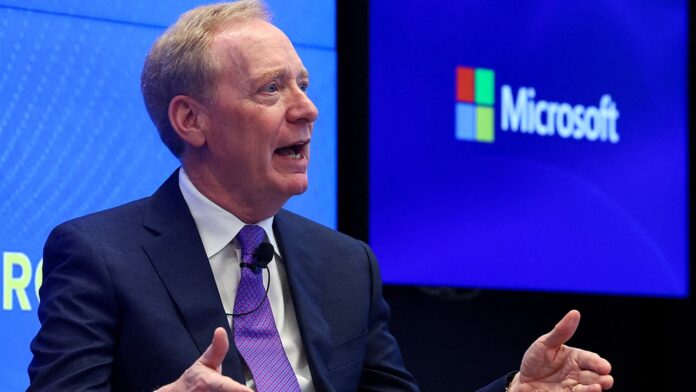
Whether enterprise IT departments requested those specific additions at those prices is a harder question. Copilot Chat, Microsoft’s AI assistant now embedded across the productivity suite, arrives as part of the plan whether organizations intend to deploy it or not. Microsoft’s president Brad Smith joined the United Nations AI for Good Global Commission this week to help shape international AI governance frameworks. The company’s ability to bundle AI features into paid enterprise productivity renewals without a meaningful opt-out is a more immediate and commercially concrete version of the same AI expansion dynamic.
E5 customers receiving Security Copilot should read the accompanying documentation carefully. The feature arrives with a metered cap of 400 Security Compute Units per 1,000 users per month. Overage is billed at $6 per SCU. An organization with 5,000 E5 users receives 2,000 SCU per month. Microsoft has not published benchmarks for what typical Security Copilot usage looks like at enterprise scale, so the actual cost exposure is not knowable until organizations begin running it in production. The cap is documented in the packaging FAQ, not in the headline pricing announcement.
Two customer segments are partially shielded. Federal government agencies face phased increases where a given suite rises more than 10 percent, a recognition that government procurement timelines make overnight changes difficult to absorb. Nonprofit organizations retain fixed discounts of 60 to 75 percent off commercial rates, adjusted in line with the new commercial figures. Education customers were not part of the July 1 update timeline.
None of this is likely to move meaningful volume to competing platforms. Google Workspace competes directly in most enterprise segments but has not made substantial inroads in large-organization deployments despite years of pressure. Switching costs tied to Active Directory, Teams integrations, SharePoint infrastructure, and Exchange migration complexity are high enough that most enterprises renew as a matter of operational continuity rather than evaluated preference. Microsoft announced these increases seven months in advance and received no measurable defection. The July 1 effective date was always less a negotiation than a calendar entry.