
SYDNEY — Perpetual’s board looked at a 20 percent premium and said no. Shareholders responded by pushing the stock up almost 17 percent anyway, a reaction that tells its own story about how little confidence the market had that a bid was coming at all, let alone one this large.
The Sydney-based trustee and asset manager entered a trading halt on Wednesday after shares had already rallied on takeover speculation, then confirmed it had received a non-binding, conditional proposal from Windflower Pte Ltd, a vehicle indirectly controlled by Swedish private equity giant EQT AB. The offer valued Perpetual at A$21.64 a share, or roughly A$2.5 billion, a premium of close to 20 percent to where the stock had been trading. The board rejected it within the same announcement, stating the proposal “was highly conditional and did not adequately represent fair value” for shareholders in a change-of-control transaction. Shares still closed the session up 16.77 percent at A$18.10, a gain that priced in the expectation of a higher offer rather than any endorsement of the current one.
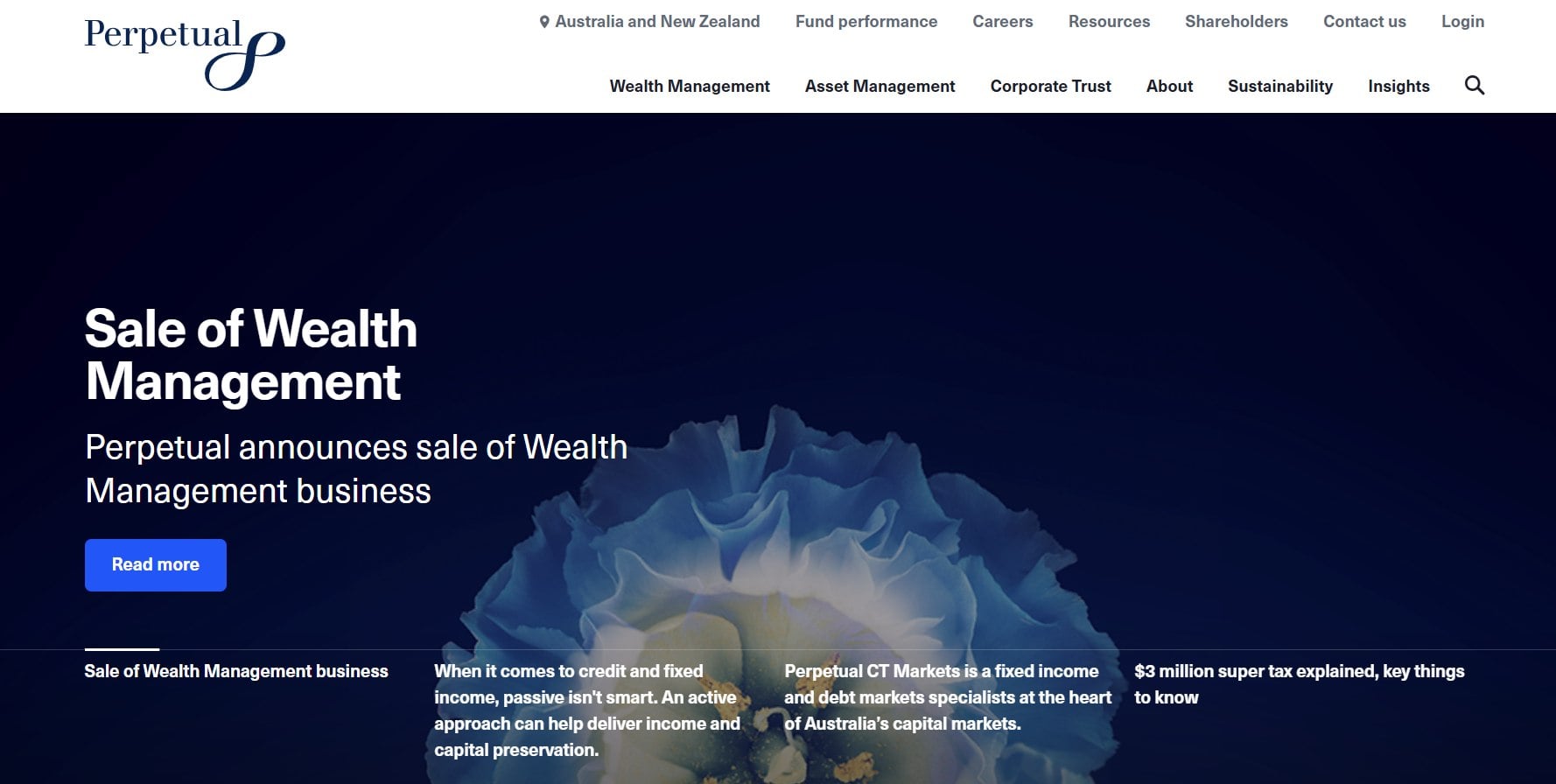
What makes the rejection notable is not the number attached to it. It is the position Perpetual is now in as a takeover target at all. This is the third time in roughly a year that a private equity firm has circled some piece of the company, and the previous two rounds were not friendly overtures that Perpetual simply waved through. KKR spent months negotiating a A$2.18 billion deal covering both Perpetual’s wealth management and corporate trust arms before that transaction collapsed over structuring and tax costs. Perpetual pivoted to a narrower path instead, agreeing in March to sell just the wealth management division to Bain Capital for an initial A$500 million, with Bain also picking up a 15-year license to use Perpetual’s wealth brands.
That sequence matters because it means EQT is not bidding for the Perpetual that existed eighteen months ago. It is bidding for what is left after the KKR deal fell through and the wealth arm was carved out to Bain, a company that chief executive Bernard Reilly has been actively simplifying rather than defending. Perpetual’s remaining businesses, asset management and corporate trust, are smaller and more concentrated than the group KKR originally wanted, and analysts have described the corporate trust division specifically as the company’s most defensible source of recurring fee income. A buyer approaching Perpetual now is making a bet on a leaner, already-restructured business, not the sprawling one that first drew private equity interest.
EQT itself is not a marginal player making a speculative approach. The firm ranks as the world’s second-largest private equity group by some measures, trailing only KKR, and manages roughly $446 billion in assets globally. That an operator of that scale structured its approach through an indirect vehicle, and still got turned away as inadequate, suggests Perpetual’s board believes the business it has spent a year rebuilding is worth defending on price rather than accepting the first serious offer through the door. Perpetual’s own half-year results give that position some grounding: underlying profit after tax rose 12 percent to A$112.7 million, with underlying earnings per share up 9 percent, a performance trend that supports a harder line on valuation than a company in visible decline could credibly take.
The rejection leaves open exactly the question the stock’s rally is betting on. A board does not usually reject an unsolicited proposal in the same breath it discloses one unless it expects the conversation to continue at a higher number, either from EQT or from a rival bidder drawn out by the public disclosure. Australian corporate control fights have moved quickly this year once the first number is on the table, and Perpetual’s own history with KKR shows that an initial structure can still collapse even after months of exclusive negotiation. Whether EQT returns with a higher price, walks away entirely, or waits for a rival to test the field first is not something Wednesday’s announcement resolves.
The broader scrutiny facing Australian financial institutions this year adds a layer of caution to how quickly any deal could actually close. Eastern Herald reported last month that Westpac, Dexus and Macquarie Group were all drawn into a separate scandal involving KPMG audit partners allegedly pitching confidential board information from a competing client, a case that triggered a formal ASIC investigation. That episode is unrelated to Perpetual’s takeover situation directly, but it reflects a regulatory environment in which Australian dealmaking, particularly involving trust and asset-management businesses handling sensitive client data, is drawing more sustained attention than it was a year ago.
Perpetual has not said whether it expects EQT to return with a revised proposal, nor whether the board would find any price acceptable absent a binding, unconditional offer. For a company that has now fielded three separate approaches to different parts of its business inside a year, the pattern suggests the market believes Perpetual’s remaining assets are worth more broken apart, or reassembled under new ownership, than they are worth staying exactly as they are.