
MINNEAPOLIS — A cell built entirely from non-living chemistry has, for the first time, done what only living things were thought capable of doing: it grew, copied its own genetic material, and split into two working daughter cells. Researchers at the University of Minnesota say the milestone, achieved with a synthetic cell the team nicknamed SpudCell, is the first time an artificial cell has completed a full biological life cycle without ever borrowing a living cell to start from.
Kate Adamala, the associate professor in the College of Biological Sciences who led the project with colleague Aaron Engelhart, called it the most exciting work of her career. “We’ve replicated in chemistry what only used to be possible in biology,” she said, describing years of incremental engineering that finally converged into a cell capable of running its own life cycle end to end. “This work is just the beginning,” she added. “We are showing it’s possible to engineer the basic functions of the cell.”
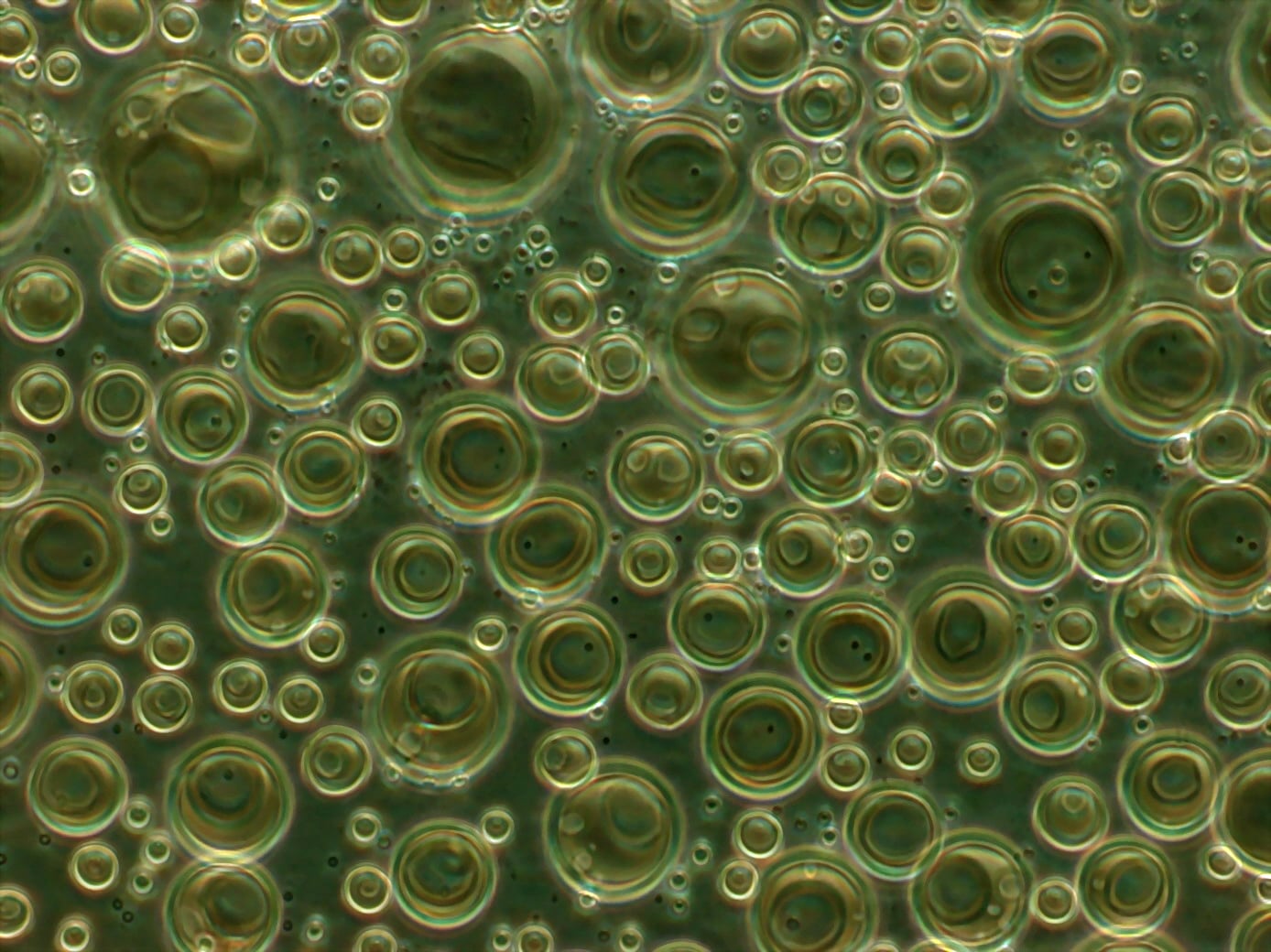
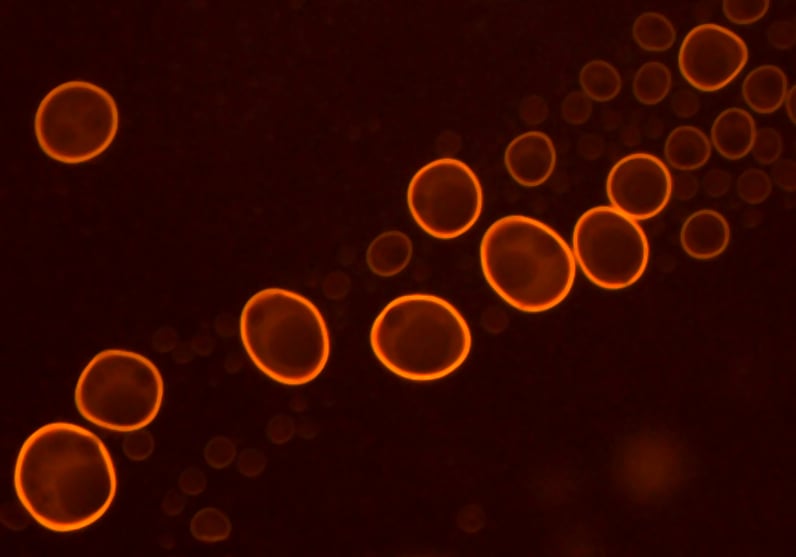
The construction method is closer to assembly than to genetic modification. The team packed liposomes, tiny water-filled spheres of the same fatty material that forms a natural cell membrane, with a synthetic genome, a DNA replication system, commercial enzyme packs that stand in for a working metabolism, and smaller “feeder” liposomes that supply raw materials on demand. Nothing inside started out alive. The researchers modified membrane proteins so that, once the cell had grown and replicated its DNA, those proteins would recruit others that physically pinch and split the membrane, the same basic mechanical trick natural cells use to divide, achieved here with none of a natural cell’s original machinery.
The numbers underline how minimal the design is. SpudCell’s genome runs to roughly 90,000 base pairs, smaller than the 113,000 base pairs biologists had previously theorized was the floor for a viable genome, and it is spread across seven separate DNA plasmids rather than the single chromosome most cells rely on. In one trial, a faster-growing variant of the cell outcompeted the original within five generations, a result the university’s own announcement described as evidence of selection and competition, though the genetic variation driving that competition was engineered into the system rather than arising from spontaneous mutation. Whether that qualifies as evolution in the biological sense is a question the researchers left open rather than answered.
Scientists have built minimal cells before, but by editing life rather than starting from its absence. In 2016, researchers at the J. Craig Venter Institute unveiled JCVI-syn3.0, a bacterium stripped down to 473 genes, the smallest genome of any organism able to grow in a lab. That cell began as a natural bacterial genome and was pared back through years of trial and error, its DNA transplanted into an existing living cell to boot it up. SpudCell inverts that approach entirely: there was no living cell at any stage, only chemistry assembled to behave like one.
SpudCell is nowhere close to independent. It cannot manufacture its own ribosomes, the molecular machines that build proteins, and instead runs on ribosomes harvested from E. coli and fed in from outside. It cannot make its own metabolic enzymes. Left without its external supply chain of nutrients and machinery, it stops. Adamala’s team has been candid about the gap between what SpudCell does and what a free-living cell does, and outside biologists who have reviewed similar synthetic-cell efforts have generally converged on the same caveat: assembling the parts of life is not the same as achieving independence from the lab that built them.
The university says Adamala’s team is launching Biotic, a public-benefit research and engineering institution meant to give other labs shared access to the tools behind SpudCell rather than keeping the techniques locked inside one university. That instinct, toward shared infrastructure rather than proprietary advantage, echoes a tension playing out elsewhere in American biology right now. Eastern Herald has reported separately on Merck KGaA’s $11.3 billion bet on Bio-Techne, a wager that ownership of the proteins, antibodies and lab instruments underlying biological research is itself the more defensible business, and on how the National Institutes of Health is centralizing genomic data at record scale even as the same administration pushes to tighten political control over which research gets funded at all. Whether an open, shared toolkit for synthetic cell engineering can coexist with both trends, one commercial and consolidating, one federal and increasingly politicized, is not a question the SpudCell announcement addressed.
What the university’s own materials do not settle, and what Adamala has not claimed, is whether SpudCell is alive by any rigorous definition, or something else entirely that merely performs the outward steps of life on command. The cell cannot sustain itself, cannot make the machinery that makes its proteins, and has not been observed evolving without engineered help. What it has done, for the first time, is complete the loop: grow, replicate, divide, and hand a viable copy of itself to the next generation, built from parts that were never alive to begin with.