
DUBAI — The materials that build Dubai’s towers, fill Abu Dhabi’s apartments, and keep Sharjah’s residential pipeline moving are arriving late and costing far more than they did a year ago. For the Gulf’s largest developers, that is a problem they planned for. For the smallest ones, it is becoming a different conversation entirely.
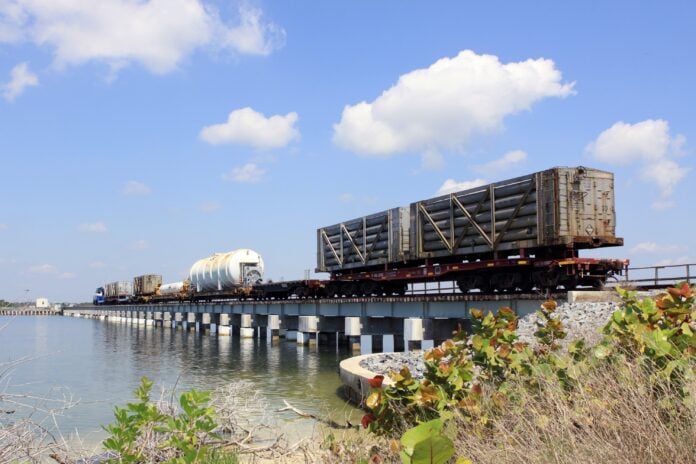
Imported building material costs across the UAE rose between 20 and 25 percent compared to pre-conflict levels, according to a Moody’s Ratings report released Tuesday. The rating agency attributed the surge to supply chain disruptions that followed the US-Iran military confrontation, which forced contractors to reroute shipments, accept extended delivery timelines, and absorb the premium that came with both. The cost base for a residential development that broke ground in early 2026 is materially different from the cost base its project team modeled twelve months ago.
The developers most exposed to these pressures are, for now, the ones least likely to feel them directly. Aldar Properties, Emaar Properties, Damac Real Estate, and Arada Developments entered fixed-price construction contracts and locked material costs ahead of the disruption, Moody’s found. That protection extends approximately 12 months from the time of signing, meaning the project pipelines that originated before the conflict are largely insulated from the cost surge. The pipelines that did not lock in pricing are not.
Moody’s characterization of the sector is careful. “Contractors appear able to absorb the additional pressure for now,” the rating agency said in its report, noting that their margins strengthened during the recent upcycle in UAE real estate. The buffer is real, but it is time-limited, and Moody’s noted that “scale, reputation and operational capabilities are emerging as key differentiators” between developers that can sustain it and those that cannot.
The cost pressure is landing unevenly across the UAE’s property market in a second, more visible way. Dubai’s off-plan transaction values fell more than 50 percent in June compared to February, according to Moody’s data. Abu Dhabi and Sharjah are holding up considerably better, driven by domestic buyer demand that has remained more resilient than the investor-driven demand that characterizes Dubai’s market. The divergence is structural, not incidental.
Dubai’s real estate market, despite record transaction years in 2024 and early 2025, draws disproportionately from international capital. When global investors reassess risk exposure, whether because of regional conflict, elevated financing costs, or both, Dubai’s off-plan volumes are among the first to reflect the shift. Abu Dhabi and Sharjah draw more heavily from domestic buyers and UAE residents, a demand base responsive to local employment and sentiment rather than offshore capital flows. That makes the two markets react differently to the same disruption, and the Moody’s data confirms they are doing exactly that.
Smaller developers, particularly those that did not enter fixed-price contracts before material costs rose, face a harder position. Moody’s warned that they carry higher execution risk and are exposed to rising unsold inventory and increased capital commitments as the year advances. A developer that cannot pass input costs to buyers in a market where Dubai’s off-plan demand is already down more than 50 percent from its February peak has limited options. Developers in Abu Dhabi and Sharjah, where domestic demand is holding, have more room to maneuver, though that advantage is not infinite either.
The supply chain disruptions affecting construction costs are part of a wider pattern of economic pressure from the Gulf’s recent conflict period. The United Nations Conference on Trade and Development reported separately that the Hormuz closure delivered its sharpest costs to the world’s most import-dependent economies, but the rerouting it imposed on global shipping timelines rippled into the UAE’s construction procurement schedules as well. Materials sourced from Asia and Europe that would have transited the Strait of Hormuz were rerouted through longer and more expensive corridors.
The cost pressure arrives as Gulf institutional capital continues to deploy outward rather than domestically. Gulf sovereign wealth funds committed a record $53.9 billion globally in the first half of 2026, according to data compiled by Global SWF, dominated by Abu Dhabi institutions. That outbound total measures capital leaving the region, not capital being deployed into domestic real estate. The distinction matters because it signals that the Gulf’s largest institutional pools of capital are treating the regional property sector as a different category of risk than their international investments.
What the Moody’s report does not resolve is what happens when the fixed-price protection expires. Contracts that locked material costs roughly 12 months ago will mature. If input prices do not normalize by that point, developers will face a harder calculation: absorb the higher costs and compress margins further, or attempt to pass them to buyers in a market where Dubai off-plan demand has already compressed sharply. At that point, the separation between developers with pricing power and those without it will become considerably clearer than any rating agency forecast can make it today, The National reported from Moody’s findings.