
ABU DHABI — The war next door did not slow them. While Iran’s military escalation through the first half of 2026 sent oil prices lurching and knocked equity markets off their footing, Gulf sovereign wealth funds committed a record $53.9 billion across 108 deals, the strongest first-half deployment pace in the history of the region’s institutional investment complex.
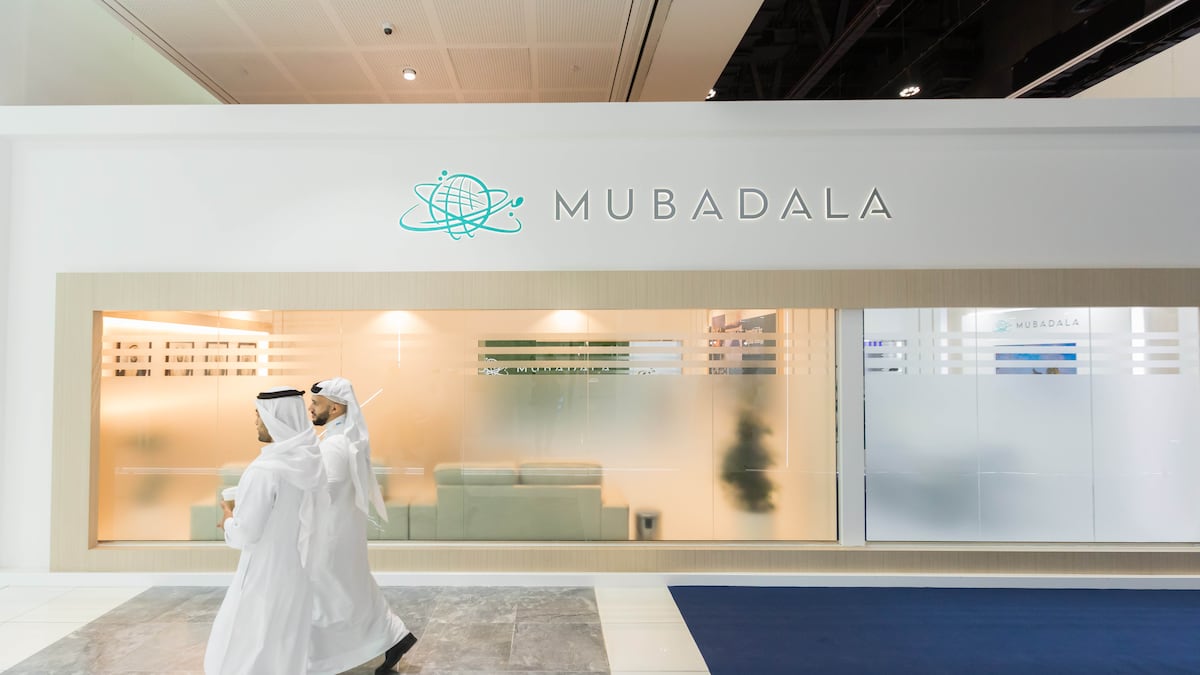
The figure comes from data compiled by a mid-year review by Global SWF, reported by The National. Mubadala Investment Company, Abu Dhabi’s most acquisitive public fund, led the field with $15.2 billion deployed at the group level across the six-month period.
The numbers reframe a period most observers describe in terms of regional risk. For the $5.7 trillion pool of capital managed by GCC sovereign funds, the Iran conflict that elevated oil revenues provided the firepower to accelerate outbound investment at precisely the moment it was complicating the operating environment at home.
Global SWF acknowledged the disruption directly. “The War in Iran and the subsequent rise in oil prices and market volatility affected the industry dearly during the past six months,” the firm noted in its mid-year report. What the same data shows is an industry that absorbed that disruption and deployed capital faster than in any comparable period on record.
Geography defines the strategy. Nearly half of the $53.9 billion flowed to the United States, which remained the dominant destination despite the Trump administration’s escalating tariff regime and its increasingly transactional posture toward Gulf partners. China ranked second; the United Kingdom third. The pattern reinforces what Gulf investment officials have repeated for years: Washington remains the deepest and most liquid market for the scale of capital these funds need to place, regardless of the political weather surrounding it.
Mubadala’s dominance at the top of the first-half league table reflects a deliberate strategy. The Abu Dhabi fund has spent years positioning itself as a co-investor in the largest global transactions, particularly in artificial intelligence infrastructure, private equity, and healthcare. That approach put more than a quarter of all Gulf SWF capital committed in H1 under Mubadala’s name.
The broader deal landscape favored scale. Of 42 transactions exceeding $1 billion globally in the first half, Gulf funds participated in 21. Global SWF noted that the region’s funds have “become frequent co-investors with other leading asset owners,” a characterization that understates how embedded Gulf capital has become in the largest private-equity buyouts, semiconductor investments, and data-center buildouts of the current cycle.
The UAE’s aggregate sovereign asset base gives context to what is moving. Total UAE sovereign assets reached $3.08 trillion in March, according to Global SWF’s figures, a pool that includes the Abu Dhabi Investment Authority’s $1.1 trillion portfolio, Mubadala, ADQ, and a range of smaller vehicles. That scale puts the UAE’s institutional complex above Norway’s Government Pension Fund Global and on par with the largest state-owned capital pools anywhere.
Rising oil prices from the Iran conflict provided part of the funding base. When oil revenues expand, GCC governments have historically channeled surplus capital into sovereign funds faster than it can be absorbed domestically. The IEA warned in May that global oil supplies were tightening sharply as conflict disrupted shipping routes and production forecasts, a supply concern that translated directly into higher revenues for Gulf producers.
OPEC+ approved an additional 188,000 barrels per day for July in a June meeting designed in part to address price spikes from the conflict. But the structural windfall for sovereign capital had already accumulated by the time production adjustments took effect.
Against the full universe of sovereign capital, Gulf funds commanded a disproportionate share. Total sovereign wealth fund investment globally reached $83.3 billion across 188 deals in the first half, with public pension funds adding $60.3 billion across 178 deals. Gulf SWFs accounted for roughly 65 percent of the sovereign fund total, a concentration that reflects both the sheer scale of GCC capital and an operational agility that liability-constrained pension funds cannot match.
The volume of capital directed to the United States carries an irony Gulf officials have avoided articulating. The Trump administration’s tariff regime and its periodic demands that Gulf states increase their US investment footprints appear to have aligned, whether by design or coincidence, with the funds’ own allocation preferences. Gulf markets have drawn increasing foreign inflows in the current cycle, even as the political relationship with Washington has grown more explicitly transactional than at any point in the past decade.
What the record first-half numbers do not answer is whether the pace holds. The second half of 2026 arrives with the Iran conflict unresolved, AI deal valuations stretched by historical measure, and US rate policy uncertain. Mubadala and its peers committed capital at a record clip when elevated oil revenues and large deal pipelines gave them room to move. Whether those conditions persist into H2, or whether the first six months of 2026 represent a high-water mark of their own, is a question the data will answer on its own schedule.