
NEW YORK — When Jennifer Hudson rose to sing at Clive Davis’s funeral on Sunday, she did not choose one of her own songs. She performed Whitney Houston, and the room at Central Synagogue understood immediately why.
Davis discovered Houston when she was 19 years old. He signed her to Arista Records in 1983, oversaw her first recording sessions, and remained one of her closest advocates through the career that followed – and through the addiction struggles that shadowed it. Hudson’s choice was not mere sentiment. It was an argument: here is what this man heard in a teenager’s voice before almost anyone else in the industry had started listening.
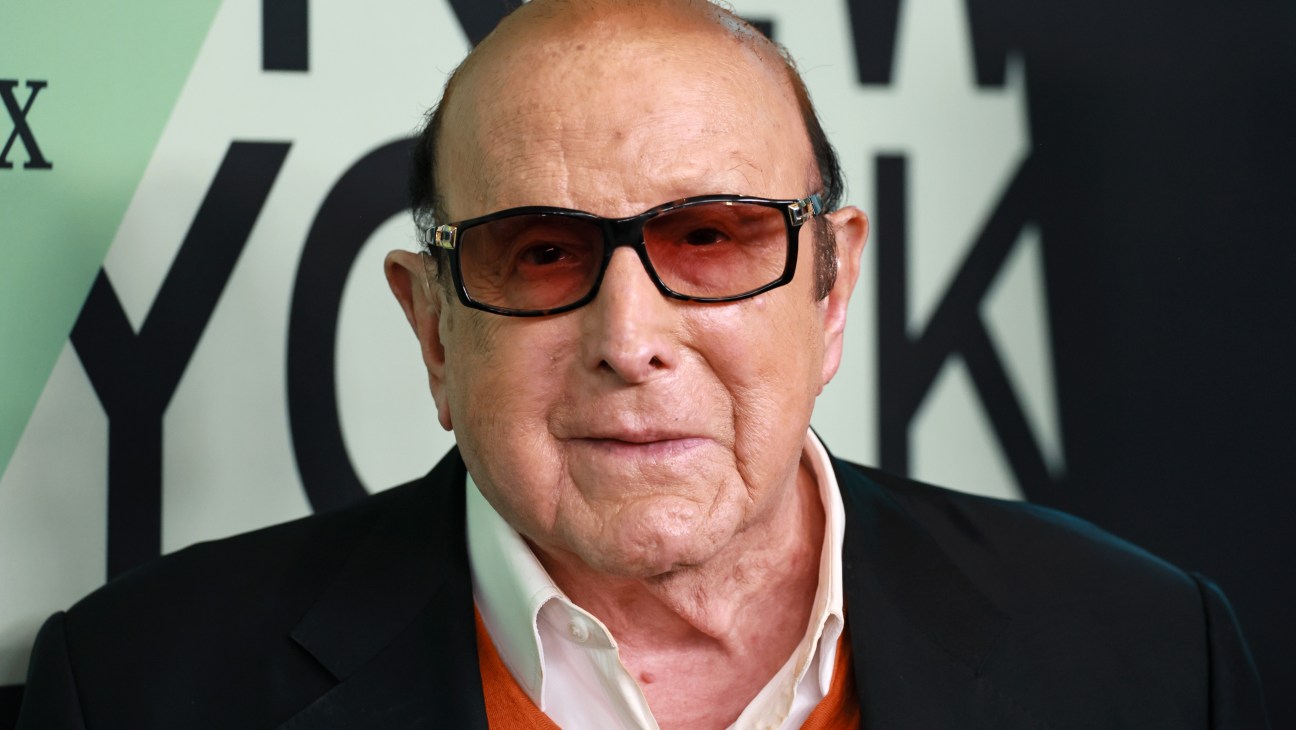
Davis, 94, died recently, and was remembered Sunday at Central Synagogue in Midtown Manhattan in a service that gathered a cross-section of the industry he had shaped for six decades. Kenny G opened with a clarinet solo. Hudson performed covers of Leonard Cohen and Whitney Houston. As Davis’s casket was carried from the sanctuary for private burial, a string quartet played “I Wanna Dance With Somebody” – Houston’s defining anthem – and then segued into Springsteen’s “Born to Run.” The Hollywood Reporter reported that the service included tributes from Dionne Warwick, Barry Manilow, Alicia Keys, and Bruce Springsteen, alongside Davis’s sons Fred and Doug and Sony Music CEO Rob Stringer. A written note from Paul Simon was read to the congregation.
Of the tributes delivered, Barry Manilow’s landed with a precision that took the room a moment to absorb. “A few months ago, surgeons removed a piece of my lung,” he said. “Last week, I lost a piece of my heart.” He added, more quietly: “I’m going to miss him. Who am I going to argue with?” Manilow had a professional relationship with Davis that spanned decades, and the surgeons-and-lung formulation – a physical loss mapped onto a personal one – was the kind of thing you say when you have known someone long enough that the metaphor does not feel constructed.
Alicia Keys, whom Davis signed when she was a teenager and who became one of the defining singer-songwriters of the 2000s, spoke in the language of vocation. “You saw the music that was still sleeping inside me,” she said, addressing Davis directly, “waiting for someone with the wisdom and courage to call it forward.” The phrase caught something about Davis that a resume cannot capture: he was not simply an executive who identified commercial potential. He was a listener who believed he could hear what a career would become before the musician knew it themselves.
Springsteen, whom Davis signed to Columbia Records in 1972, offered a tribute that was short and definitive. “For me, now and forever, Clive Davis was that right man,” he said. The brevity was intentional. Everyone present knew what “that right man” meant for a career that has run more than five decades: someone who said yes at the exact moment when it mattered most, and did not require gratitude in the decades that followed.
Dionne Warwick, one of Davis’s oldest professional relationships, struck a characteristically direct note. “You may be willing to give the business up,” she said, “but the business isn’t willing to give you up.” Paul Simon, absent from the service, sent a written note that was read to the congregation: “I’ll be singing for everyone, but in my heart, I’ll be dedicating the night to the man in the empty seat.”
Davis built one of the more consequential careers in American music history without ever playing an instrument or writing a song. He became president of Columbia Records in 1967 and was fired six years later, after which he founded Arista Records – where he signed Manilow, rebuilt the later phase of Warwick’s career, and discovered Houston. He later founded J Records, where Keys recorded her debut album in 2001, and eventually became chief creative officer of Sony Music. Along the way, he signed or championed Billy Joel, Carlos Santana, Patti Smith, Rod Stewart, Toni Braxton, and Pink. The roster is not a catalog. It is an argument about what it means to hear something in someone before anyone else does.
The week has carried an unusual weight in popular music. Victor Willis, the founding voice of Village People and co-writer of “Y.M.C.A.,” also died this week at 74, leaving the industry to process two significant departures in the space of days. The music Davis built and the music Willis created occupied different rooms entirely, but they shared an era – and for a stretch of years in the late 1970s, they shared an audience.
What no one said at Central Synagogue – though Hudson’s choice of song made it impossible not to think about – is the precise nature of Davis’s relationship with Houston in her final years, the decisions made and not made and delayed in the period before her death in 2012. That is not a question for a funeral, and it was not raised as one. Whether it becomes a question for a biography is the kind of thing Davis, famously protective of the industry and the people in it, would have had thoughts about. For now, the string quartet played “I Wanna Dance With Somebody” as the casket was carried out of Central Synagogue. Davis signed that record, too. In the end, it was a perfectly chosen exit.