
NEW DELHI – India’s aluminium producers cannot meet the country’s own demand. Domestic consumption is projected to reach 8.5 million metric tonnes by 2030; current production falls roughly 4.5 million tonnes short. On Wednesday, Abu Dhabi’s International Holding Company and India’s Adani Group signed an agreement proposing to close that gap – with the largest single foreign investment India’s metals sector has ever seen.
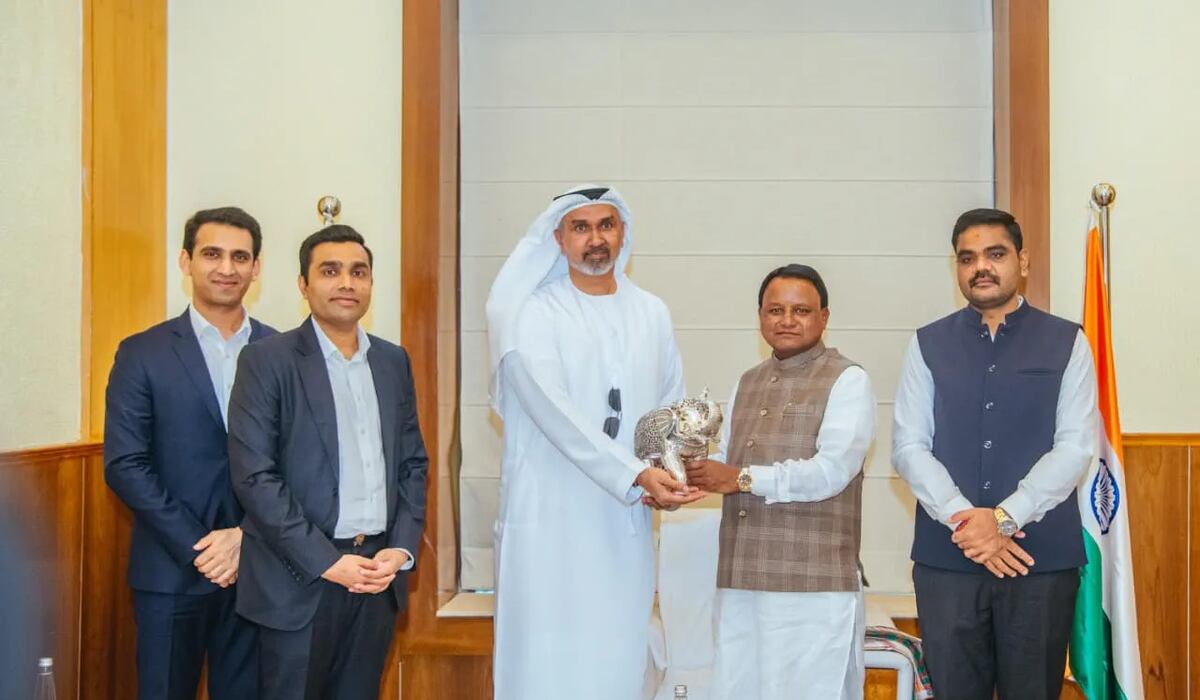
The two conglomerates announced a memorandum of understanding for an $11.5 billion integrated aluminium complex in Odisha, to be developed in equal stakes through a joint venture between Adani Enterprises Ltd. and IRH, IHC’s minerals division. The project would represent India’s largest-ever foreign direct investment in metallurgy, The National reported.
The facility, as currently specified, would comprise a four million metric tonne per year alumina refinery, a two million metric tonne aluminium smelter, a downstream manufacturing park capable of processing one million metric tonnes per year, and a 4,000-megawatt captive power plant that includes a 400-megawatt renewable component. The scale matters: Odisha already accounts for approximately 54 percent of India’s national aluminium output, built on the state’s bauxite reserves and decades of smelting capacity developed by Indian public-sector enterprises. The IHC-Adani project, if built as planned, would add capacity that dwarfs anything a single existing Indian plant currently produces.
IHC Chief Executive Syed Basar Shueb framed the commitment in language his company uses consistently for long-cycle industrial bets: the company is “building long-term platforms in industries that will define the future of the global economy.” The group reported net earnings surging 98 percent year-over-year to AED 8 billion in 2025, on revenues that rose 33 percent to AED 31 billion – capital availability that few peers in the Gulf can match.
Karan Adani, managing director of Adani Ports and Special Economic Zone, put the timeline plainly: 12 to 18 months for statutory approvals, followed by a 41-month construction phase. First metal output is unlikely before 2029 under that schedule – and the schedule depends on regulatory clearances that have historically moved slower in Indian industrial corridors than developers initially project.
The investment breaks into two phases: $6.9 billion in the first and $4.6 billion in the second. That structure gives both companies checkpoints before full capital deployment, a hedge against political and commodity-price uncertainty that industrial projects of this timeline routinely encounter. Employment projections put the direct jobs figure at approximately 53,500 across construction and operations, with additional indirect employment across logistics, engineering, and ancillary manufacturing.
The IHC-Adani relationship has prior chapters. The two conglomerates have an existing joint venture through Adani’s ePointZero platform in renewable energy – a partnership that positioned IHC as a clean-energy infrastructure investor in India before this week’s announcement extended the commitment into primary industry. Aluminium smelting is one of the most electricity-intensive industrial processes in existence, which is why the 4,000-megawatt captive power plant is not a peripheral addition but the project’s operational foundation.
The deal arrives as India attempts to close an industrial self-reliance gap spanning multiple heavy-manufacturing sectors. Technology and energy infrastructure have attracted the largest recent foreign commitments, but metals have remained undercapitalised relative to the country’s projected consumption trajectory. The aluminium shortfall – demand outpacing production by a margin that grows each year the electric vehicle and construction markets expand – is precisely the kind of structural gap that Abu Dhabi’s outbound investment strategy has increasingly targeted.
IHC is chaired by Sheikh Tahnoun bin Zayed Al Nahyan, the UAE’s national security adviser and among the most consequential figures in Gulf capital allocation. His backing for a project of this scale in India is not incidental. It reflects a deliberate deepening of the India-UAE economic corridor that both governments have cultivated since the Comprehensive Economic Partnership Agreement took effect in 2022.
Odisha officials have separately described the agreement as the state’s largest-ever foreign direct investment. The characterisation holds at the national level too: no comparable single foreign capital commitment has previously been announced for India’s metals manufacturing base, which has long depended on domestic public-sector enterprises for the bulk of primary production capacity.
The MOU is a preliminary agreement. What it does not – and cannot at this stage – is guarantee that the complex will be built on the announced timeline or at the announced scale. India’s regulatory process for greenfield industrial projects of this footprint involves environmental clearances, land acquisition, water-use permits, and grid-connectivity assessments, each subject to its own timeline and each susceptible to legal challenge. Adani management’s 12-to-18-month approval estimate reflects internal planning assumptions, not regulatory guarantees. The actual first-metal date remains a projection.