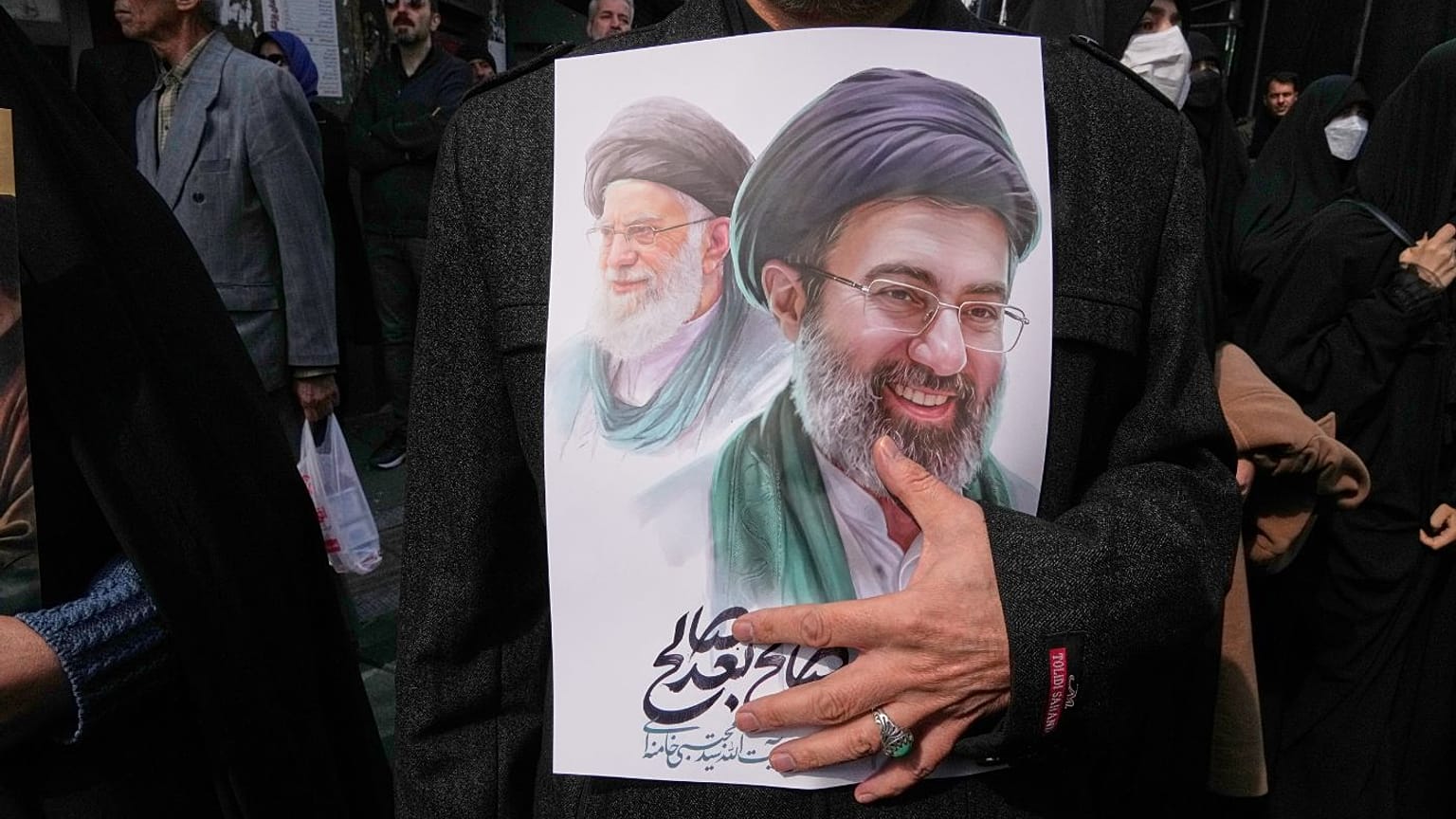

TEHRAN — Mojtaba Khamenei has been supreme leader of Iran for nearly four months. His government has been negotiating with the United States in Doha. His military commanders have issued warnings. His written statements have appeared on state television, read by anchors, over a still photograph. He has not been seen in person since the day the war began.
The February 28 airstrike that killed his father and predecessor, Ali Khamenei, wounded Mojtaba as well. Reuters, citing three sources close to his entourage, reported in April that he sustained severe disfigurement to his face and an injury to one or both legs, with two sources describing possible amputation. He retains full mental capacity and has been participating in major decisions via audio conferencing, the same sources told Reuters. No photograph, video, or audio recording of him has been released since he was appointed to succeed his father on March 8. Every statement attributed to him has been delivered by others.
That may change Saturday. The six-day funeral for Ali Khamenei begins July 4 at Tehran’s Imam Khomeini Grand Mosalla, where his remains will lie in state for three days. Processions then move to Qom and finally to Mashhad, where he will be buried on July 9. Between 15 and 20 million mourners are expected. If Mojtaba Khamenei is going to make a first public appearance as supreme leader, his father’s funeral is the occasion — the one event where his presence would be both legitimate and expected. Iranian officials will not confirm whether he will be there.
The silence about his status reaches into his own family. Gholam Ali Haddad Adel, his father-in-law and a former parliamentary speaker, told Iranian state television that he “had no information about Mojtaba Khamenei’s condition since before the war began and had not seen him.” President Masoud Pezeshkian has claimed a face-to-face meeting lasting approximately two and a half hours, but provided no details about when or where it occurred and no visual documentation has been released. When asked whether Mojtaba would attend the funeral, the Deputy Minister of Interior Security, Ali Akbar Pourjamshidian, said the decision “was for the Office of the Supreme Leader to make” and declined to confirm or deny his presence.
What Iran has looked like in his absence is a government run by institutions rather than a visible leader. The Islamic Revolutionary Guard Corps has continued military operations, negotiated Strait of Hormuz positions, and last week issued a public warning — from IRGC commander Ali Abdollahi — against any US or Israeli strike on the funeral. Gharibabadi at the Foreign Ministry has handled the Doha technical talks. Pezeshkian has been the face of the government internationally. The Office of the Supreme Leader has issued directives. The machinery has continued. But the man at the top of the constitutional structure has been invisible.
The March 12 written statement — his first, released nearly two weeks after the strikes — called for “the continuation of effective and regret-inducing defense” and said Iran should continue using the Strait of Hormuz as leverage. It warned Middle Eastern governments hosting US bases. It declared revenge would continue. It was read aloud by a state television anchor while a still photograph was displayed on screen. He has not addressed the nation in his own voice.
An appearance at the funeral would accomplish several things simultaneously. It would settle the most basic question — that he is alive, ambulatory in some form, and capable of public presentation. It would allow him to be seen mourning his father and establishing continuity with the Khomeinist tradition at the most photographed event in Iran since at least the 1979 revolution. And it would affect the diplomatic calendar: the US-Iran talks in Doha are paused for the funeral week and resume after July 9. Mojtaba’s visible return would change the nature of those talks — he would become a negotiating counterpart with a face and a presence, rather than an authority whose physical condition is a subject of international speculation.
A continued absence would raise different questions. Iran is currently in a 60-day negotiating window under the June 17 memorandum of understanding — a window analysts already expect to require extension. The IRGC has been publicly positioning Iran’s red lines at Mashhad and in Hormuz. If the supreme leader cannot appear in public nearly five months after the war began, the question of whether the formal constitutional structure of Iran is functioning as written — or whether a de facto governing council is exercising authority in his name — becomes harder to avoid. That question matters to the United States and its partners in the Doha talks. It matters to the IAEA, which is waiting for Iran to implement MoU provisions on nuclear site access. It matters to the Iranian public, which has been told to turn out in the tens of millions for a funeral led by a supreme leader none of them have seen.
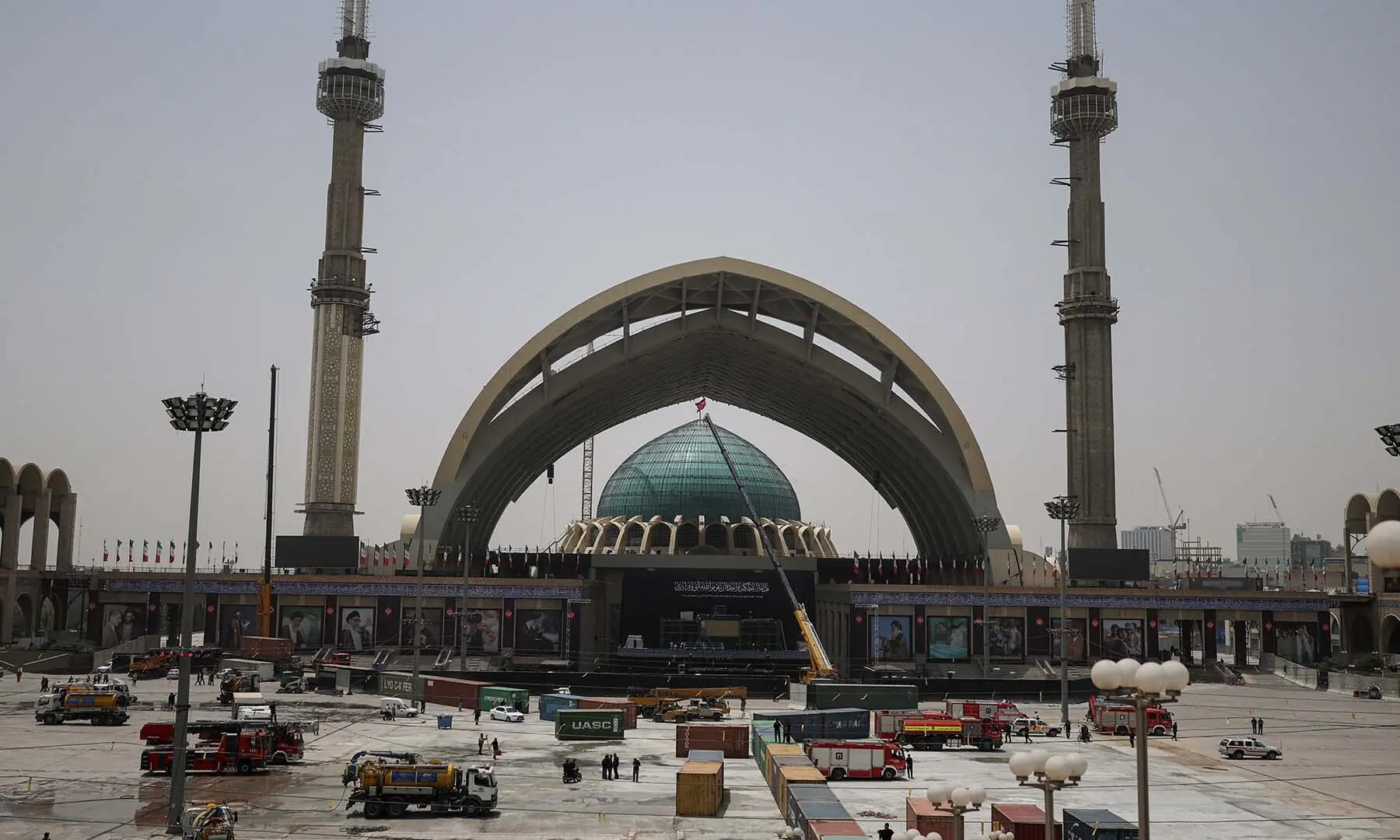
According to Dawn’s account of the Mosalla preparations, the venue’s walls have been draped with massive portraits of the late Khamenei alongside black mourning flags and red banners symbolizing martyrdom and vengeance. Temperatures in Tehran are expected to exceed 35 degrees Celsius. Hundreds of ambulances and water stations have been staged. Gates open at 6 a.m. Saturday.
What is not known: the current state of Mojtaba’s facial injuries — whether the April Reuters account of severe disfigurement reflects a condition still present or one that has since recovered; whether the injury to his legs resulted in amputation or in a less visible condition; and whether the decision about his funeral attendance is being made by him, for him, or around him. His father-in-law has not seen him. His president has not shown anyone a photograph of their meeting. The Office of the Supreme Leader has declined to answer the question. The funeral begins in two days.