

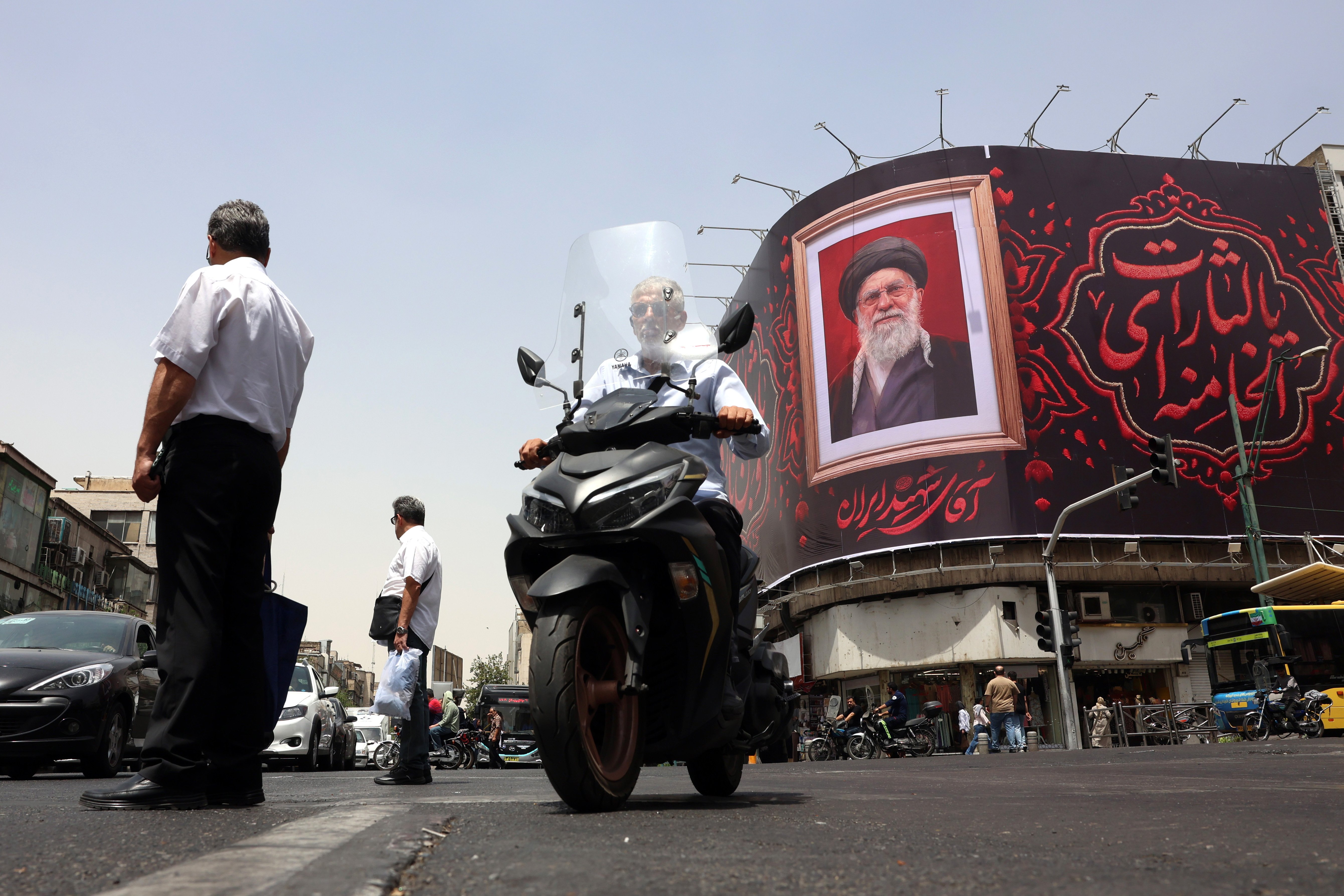

TEHRAN – The text message arrived at the Tehran real estate union’s membership on July 2: members “are not allowed to open our office during the funeral days and must attend the ceremonies.” It did not invite attendance. It prohibited the alternative.
Iran is expecting between 15 and 20 million people in Tehran for the public funeral ceremonies of Ayatollah Ali Khamenei, which begin July 4. State officials and institutions are describing that figure as an expression of national grief. The preparations that produced it are a different kind of document.
Accounts collected by Iran International from across Iranian cities describe a systematic campaign of institutional directives, Basij enforcement visits, and coerced charity mobilization in the days leading to the ceremonies. Employees at Saipa, Iran’s second-largest automaker, were told overtime was canceled as facilities prepared for approximately 2,000 Iraqi funeral visitors. The Hamshahri newspaper group – a Tehran municipality-linked outlet – instructed management to produce 200 employees for the ceremony. Gym owners received orders to close facilities from Saturday through Wednesday; Tehran’s Grand Bazaar was ordered shut until Thursday.
The Basij – the regime’s paramilitary mobilization arm – visited shops and warned owners that businesses opening during the mourning period would be sealed. A District 10 Tehran Municipality recording, circulated among staff, directed workers to attend despite personal circumstances including having young children or medical conditions. Charity organizations were summoned by officials and warned that their operating permissions could be affected if they did not contribute to the funeral effort.
The scale of the campaign reflects a basic political calculation: the funeral is one of the first occasions since Khamenei’s death in February on which the regime’s domestic legitimacy will be judged in crowd size. Officials from roughly 40 countries are expected at the ceremonies. State television will broadcast them internationally. The attendance figures cited in advance – 15 to 20 million – would exceed the 10 million estimated at Ayatollah Khomeini’s funeral in 1989, the previous record.
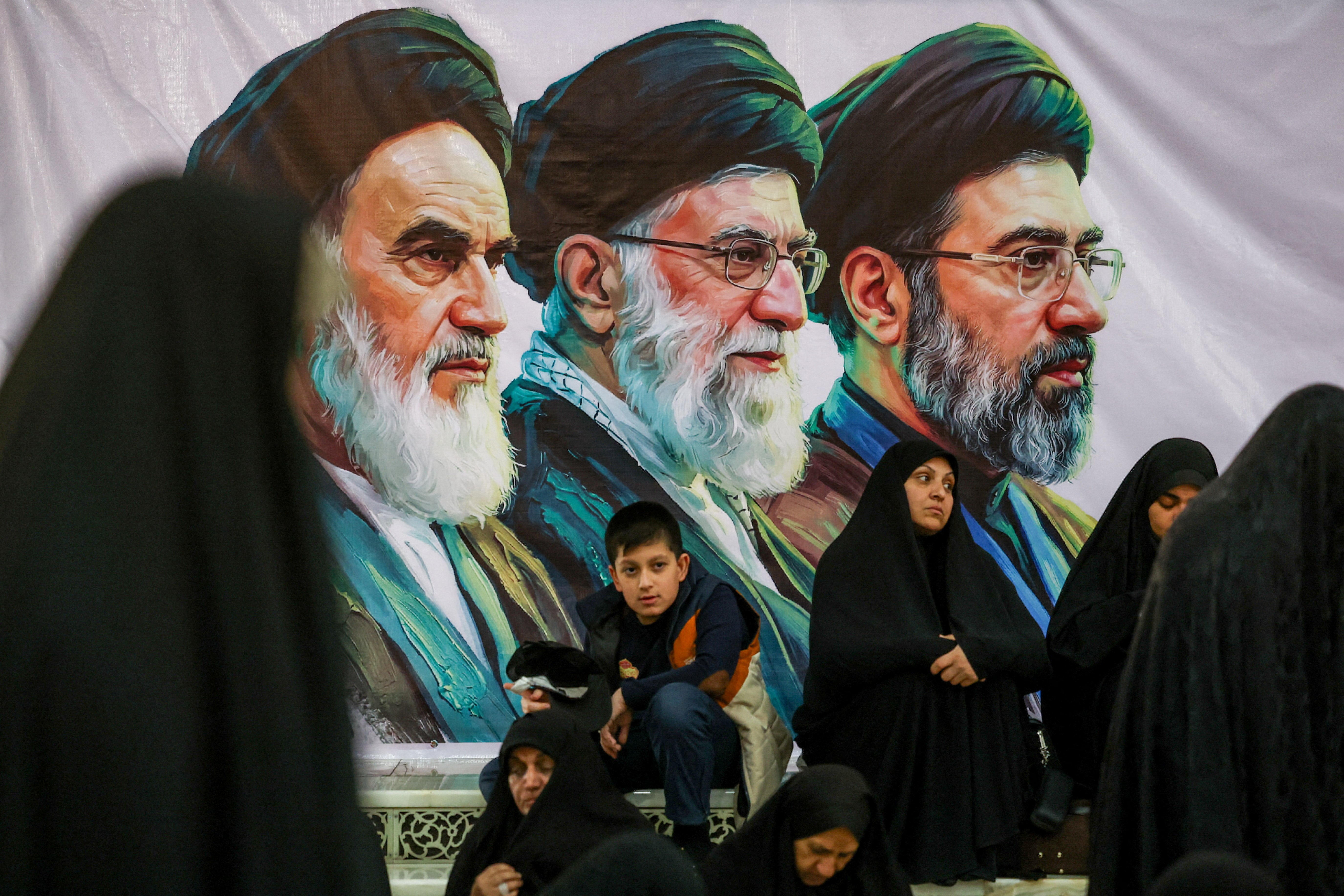
What the directive campaign reveals is that the regime is not confident that grief alone will produce a crowd of that magnitude. The pattern is not new – the Islamic Republic has routinely mobilized state employees for politically important public gatherings – but the scope of the current effort reflects the particular stakes. Khamenei’s funeral is the first major test of Mojtaba Khamenei’s authority as the new Supreme Leader, in a country where his father’s death was followed by street celebrations in some cities.
Mojtaba has not been seen in public since his father’s killing. An aide cited by India Today said he is unlikely to appear at the funeral ceremonies, though no official statement has confirmed his absence. The ceremonies will proceed from Tehran (July 4-6) through Qom (July 7) to Mashhad (July 9) – Khamenei’s birthplace, where burial is planned. Whether the Supreme Leader attends his predecessor’s burial in Mashhad remains unannounced.
The Foreign Ministry’s statement July 3 offered a different register. Spokesman Esmaeil Baghaei said the United States had “constantly demonstrated its complete contempt for genuine peace and security in West Asia” and urged regional nations to draw lessons from the conflict. The statement did not name the funeral or its timing; it was issued on the day before the ceremonies began, while the de-escalation understanding from June was still nominally in effect.
The elite debate inside Iran about the MoU has not resolved. The funeral is not a moment of political settlement – it is a spectacle designed to project continuity. The Basij instructions to shopkeepers, the municipal recording to employees, the charity summons are the mechanisms by which that spectacle is produced. They are also the mechanisms by which dissent is pre-emptively suppressed during the window in which the new Supreme Leader is most exposed.
The mourning period creates a specific kind of silence. Shops are closed. Employees are at ceremonies. Charities have been told to demonstrate loyalty. In that environment, the crowd on July 4 will be large, and its size will be reported as evidence of the regime’s popular base. What the crowd will not demonstrate is what share of it came because a text message said there was no other option.













