
LOS ANGELES — Malcolm Todd did not ask anyone to manipulate his chart position. The streams came, surged 70 percent in a single day, pushed his single “Earrings” toward the top of Spotify’s daily U.S. chart. Then Spotify took them away.
The streaming platform removed approximately 500,000 plays from “Earrings” this week after determining the surge was artificial, connected to what it identified as a scheme by prediction market bettors on Kalshi who allegedly bought positions on the song’s chart performance and then pumped its stream count to make those positions pay off, The Hollywood Reporter reported Thursday. Todd, described by the publication as one of the fastest-rising acts in the industry, was not implicated in the manipulation. The damage arrived anyway.
Spotify removed the streams, confirmed it would not pay royalties on them, and then escalated beyond the music charts. The company sent formal notices to both Kalshi and Polymarket, a rival prediction exchange, demanding they remove Spotify’s logo from their websites. The move suggests the company views the manipulation not as a one-time incident but as a systemic conflict between its platform and an industry that has found a new use for chart data.
“All streaming services face ever-changing stream manipulation,” Spotify said in a statement. “Spotify has best-in-class detection and mitigation practices.” The company added it would apply “additional checks to the charts before they’re published,” a phrase that acknowledges the problem without defining the solution.
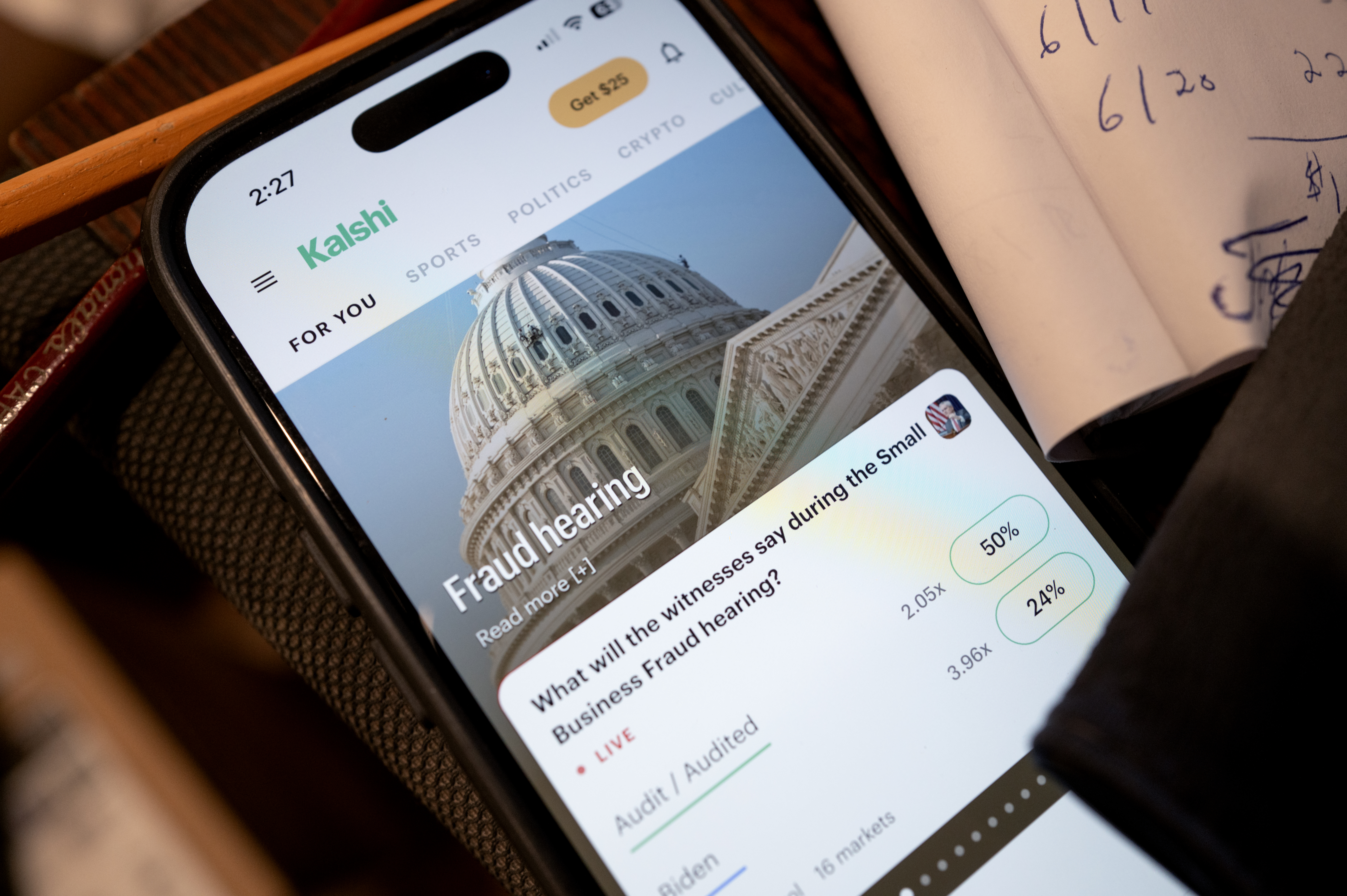
The mechanics of the alleged scheme are specific enough to describe. Prediction markets let users bet on measurable real-world outcomes: who wins an election, which company reports higher earnings, what song hits number one. Kalshi and Polymarket have both listed markets tied to music chart performance. A bettor who bought a position on “Earrings” reaching number one had a direct financial incentive to make that happen, and stream counts are not hard to inflate artificially. A coordinated push does not require inside knowledge of the music industry. It requires a credit card and enough accounts.
Kalshi confirmed it was in contact with Spotify and “actively investigating this matter.” What the investigation covers, how far it extends, and what it has found are questions neither company answered publicly. Polymarket did not respond to requests for comment.
The episode is not arriving in a vacuum. Prediction markets have spent recent months in legal conflict across multiple states, with state gambling regulators arguing the platforms operate as unlicensed books and federal regulators at the Commodity Futures Trading Commission countering that they are federally protected derivatives exchanges. Nevada moved to hold Kalshi in contempt over geofencing failures, a dispute that exposed the cost of the company’s compliance decisions in real time. That legal battle has centered almost entirely on sports and political markets. Music has not been part of the conversation until now.
What happened to “Earrings” introduces a different problem. Insider trading requires that someone know something no one else does. Chart manipulation requires only the willingness to spend money to make something true that was not true before. Any bettor holding a position on a song’s chart performance has a structural incentive to pump its streams. The integrity controls Kalshi announced in June, which included employment verification, risk scoring, and whistleblower tools, were designed for the insider-trading threat. They were not designed for this.
Spotify’s demand that both platforms remove its logo may be the clearest signal of the company’s position. A company sending takedown notices is distancing itself from the platforms’ activity, creating a documented record of objection, and implicitly placing responsibility for the harm on the prediction exchanges themselves.
For Todd, none of the competing institutional interests change the immediate fact. His streams are gone. Spotify confirmed it will not pay royalties on plays it classifies as manipulated. Whether “Earrings” was genuinely approaching the chart position it appeared to be approaching, or whether its organic count was buried inside the artificial surge, is a question the platform’s removal has left unanswered. A song stripped of 500,000 plays carries different numbers into every subsequent decision that treats chart position as a signal: the algorithmic playlist placement, the editorial consideration, the label priority that attaches to a ranking.
The Financial Times, which first reported details of the manipulation, cited the 70 percent single-day jump in streams as the data point that triggered Spotify’s fraud detection. What that model flags, what it misses, and how a rising artist would even know whether their organic growth was being conflated with artificial inflation are questions the platform has not addressed.
What prediction markets do next with music is unresolved. Kalshi and Polymarket have not announced whether they will close music chart contracts. The Commodity Futures Trading Commission has not commented on whether such contracts fall under federal oversight. Spotify has not said whether it will pursue legal action against the platforms or any individual bettors. The regulatory conversation is coming. What shape it takes will depend partly on whether “Earrings” was an isolated incident or the first visible instance of something that has been running quietly in the background for longer than anyone noticed.