
ST. PETERSBURG — The fires at the oil terminal on the Gulf of Finland were visible from apartment windows across the port district before daylight on Saturday, the second time in a month that residents of St. Petersburg had woken to smoke rising from the same waterfront complex.
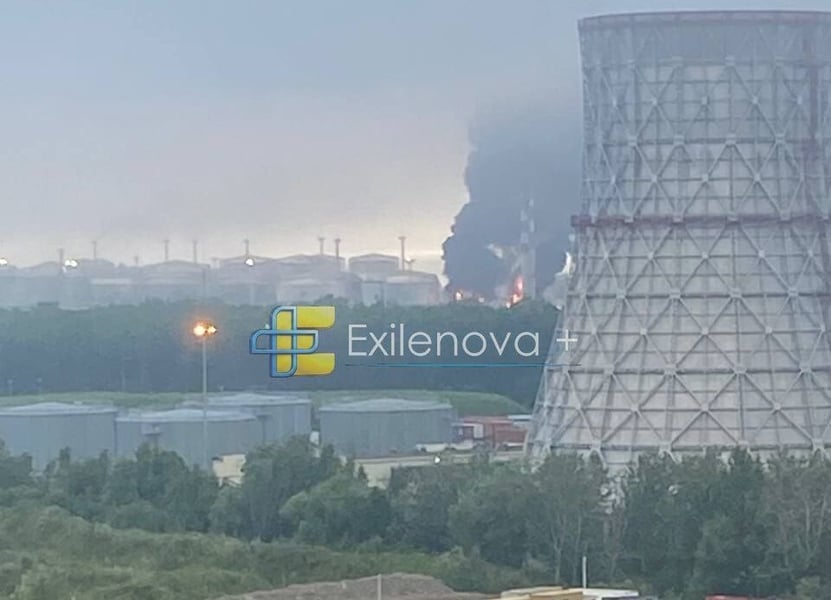
Ukrainian long-range drones struck the St. Petersburg Oil Terminal in the early hours of July 4, sending thick columns of black smoke above the harbor and setting multiple fuel storage tanks ablaze. Russian authorities in the Leningrad Oblast said air defense systems had intercepted 67 unmanned aerial vehicles overnight. Some reached their target. Photographs and video footage posted to monitoring channels showed the fires burning well past dawn.
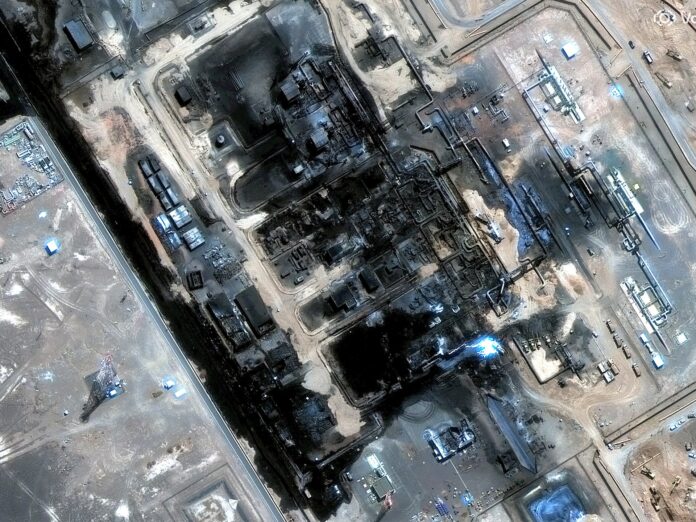
The St. Petersburg Oil Terminal sits inside the Great Port on the Gulf of Finland, more than 1,100 kilometers from Ukraine’s border, a distance that long-range Ukrainian drones have now proven twice they can cross. The complex spans 37 hectares of port land, holds 21 storage reservoirs for petroleum products, and processes roughly 12.5 million metric tons of fuel annually via rail, road, and river connections supplying the regional distribution network. Satellite imagery released by the American spatial intelligence firm Vantor and distributed by the Associated Press showed a large smoke plume rising above the facility. Ukrainian analysis suggested at least five reservoirs had been destroyed, with others likely breached, though the Kyiv Independent, which first reported the strike, noted that the full extent of the damage was not immediately clear and Ukraine’s military had not officially confirmed the operation.
The attack marks the second time in less than a month that Ukrainian drones have reached this specific terminal. The first came on June 3, the opening morning of the St. Petersburg International Economic Forum, when drones set fire to the facility as President Putin was preparing to host a gathering of international partners at the ExpoForum congress center nearby. Then, Leningrad Oblast Governor Alexander Beglov said air defense forces had downed 50 drones in the region; the terminal burned regardless.
In June, Putin addressed the strike from the SPIEF plenary stage, naming only the coal terminal beside the oil complex as the target and describing the outcome as “noise and smoke.” That characterization was disputed by the Ukrainian Security Service, which confirmed fire at multiple sites within the oil terminal. Saturday’s strike offers no such forum backdrop. There was no gathered audience of ministers and investors to reassure. The terminal took damage a second time on an ordinary Saturday morning.

The July 4 operation extended beyond St. Petersburg. Ukrainian drones and missiles also struck a ferry terminal near the Kerch Strait in Crimea, targeted a military airfield near Dzhankoy, and hit the Luch thermal power plant in Belgorod, producing what local authorities described as a total blackout across most of that city and cutting water service to surrounding settlements. The breadth of the overnight operation, spanning from the Gulf of Finland coast to Crimea, reflected the sustained reach of Ukraine’s long-range program across a theater that has grown far wider than the contested front-line positions either side reports from day to day.
Thursday had already brought its own damage to Russian energy infrastructure. Drone strikes on Lukoil’s Nizhegorodorgsintez refinery, Russia’s fourth-largest by output, disabled the facility’s primary crude processing unit, halting operations that account for roughly 53 percent of its capacity. That refinery and the St. Petersburg Oil Terminal, struck within 48 hours of each other, illustrate a campaign that has been compressing Russian fuel production for months. Russia has begun arranging imports of Japanese jet fuel through South Korean logistics routes, a reversal for the world’s third-largest oil producer, as drone damage has disabled an estimated third of its national refining capacity and fuel rationing has spread across roughly half of Russia’s regions.
The strategic logic behind Ukraine’s targeting of Russian oil export facilities involves dual pressure: reducing Russia’s domestic fuel supply while simultaneously reducing the export revenue the state depends on to sustain its military spending. The St. Petersburg Oil Terminal, handling fuel exports via Gulf of Finland shipping lanes, is relevant to both. Each successful strike on export infrastructure reduces the volume of oil products Russia can move to international buyers, compounding the domestic shortages that the refinery damage has already produced.
Russia’s air defenses intercepted 67 drones over Leningrad Oblast on Saturday morning, by its own account, a number consistent with the scale of Ukrainian operations in recent weeks, which have regularly involved hundreds of aircraft directed at multiple regions simultaneously. The challenge Russia faces is not the interception rate in isolation but the arithmetic behind it: at the volume of drones Ukraine has been launching, even a high-performing defense network cannot achieve total coverage. The June 3 attack and Saturday’s strike appear to confirm that calculation. A facility Russia has not managed to fully protect was hit twice within a month.
What the second strike actually cost the terminal, in operational terms, is not yet established. Russia has not issued a damage assessment. Ukraine’s military had not confirmed the operation as of Saturday morning. Satellite imagery and social media footage document the fires; how many storage reservoirs were fully destroyed or breached, and whether throughput capacity was affected or only storage, remained beyond what either side had yet disclosed.
The 67 drones Russia says it intercepted are, by its own count, real. So, by any observable account, are the fires.