
VIENNA — The race to lead the United Nations is, in Rafael Grossi’s telling, a contest not over what the score says but over how the conductor hears it.
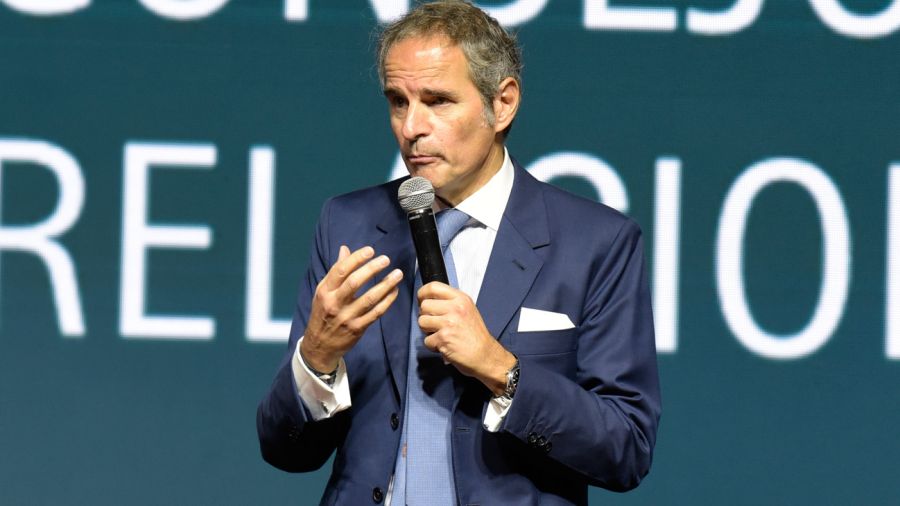
The International Atomic Energy Agency chief, speaking at an event in Vienna, compared candidates for the UN Secretary General position to orchestral conductors approaching the same Mozart symphony — the notes are fixed, he said, but each interpretation differs depending on who stands at the podium.
Grossi is one of those conductors. Argentina nominated him in late 2025 for the Secretary General role that António Guterres vacates at the end of 2026. The analogy — measured, rooted in the idea that leadership is interpretation rather than transformation — suits a candidate who cannot afford to alarm veto-holders.
The UN Secretary General is selected through a process requiring a Security Council recommendation — subject to veto by any of the five permanent members — followed by approval from the General Assembly. The practical effect is that the United States, Russia, China, France, and the United Kingdom each hold a block on the outcome. Candidates perceived as confrontational with any of them rarely advance. The formal selection timeline remains at the Security Council’s discretion, and no vote has been scheduled.
Grossi’s decade-long record at the IAEA defines both his profile and his limits as a candidate. He inserted IAEA monitors into the Zaporizhzhia Nuclear Power Plant — an active conflict zone — for the first time in the agency’s history, maintaining formal channels with both Moscow and Kyiv through three years of the Russian operation in Ukraine. He has kept Iran’s nuclear program under a degree of international scrutiny despite successive collapses in diplomatic negotiations. He has managed the North Korea portfolio without access to any verifiable information on the ground.
Critics of his candidacy argue that technical competence in a specialised nuclear agency does not automatically translate to the broader political mandate the Secretary General holds — one covering peacekeeping, humanitarian response, climate finance, and geopolitical mediation simultaneously. Whether the P5 can agree on Grossi, or on any candidate, before the end-of-year deadline is a process the public record does not yet illuminate.
His Mozart analogy describes the UN as a fixed composition waiting for interpretation. The harder question — whether the P5 can agree on who holds the baton — is one the selection process has not yet begun to answer publicly.