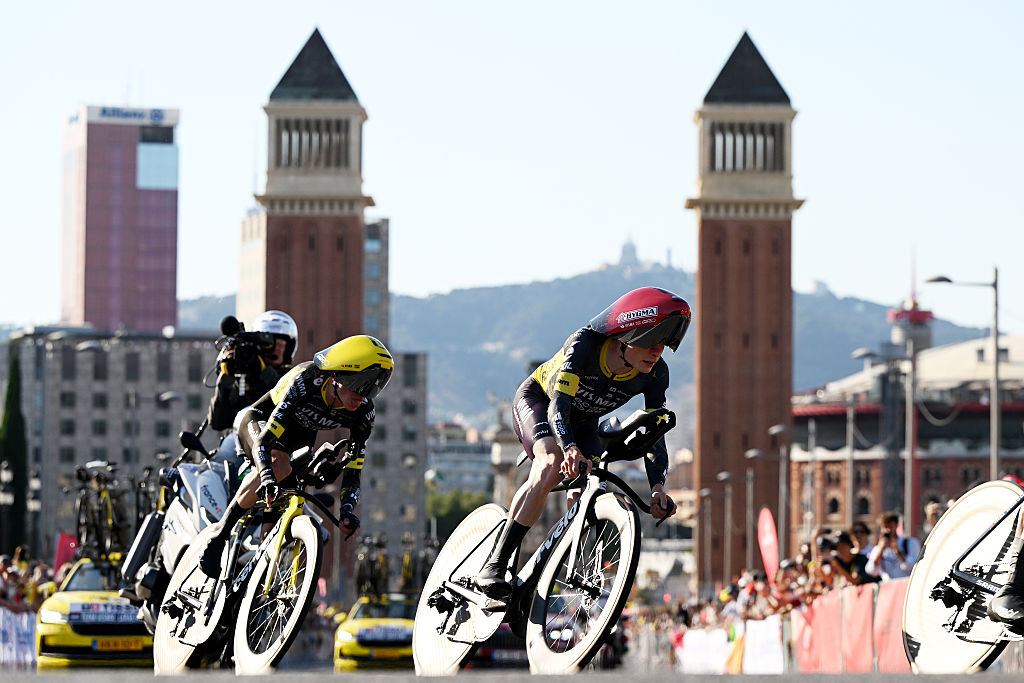

BARCELONA — Eight hundred metres up Montjuïc decided it. Visma-Lease a Bike had already put the pressure on their rivals through the streets of Barcelona, holding the fastest split at every checkpoint, but Jonas Vingegaard found yet another gear at the base of the final climb on Saturday. That short uphill drag to the finish, brutal in the context of a team already riding at its limit, separated yellow from everyone else.
Visma crossed the line in 21:47.87, winning the 19.6-kilometre Stage 1 team time trial by 7.33 seconds over Netcompany Ineos. UAE Team Emirates-XRG, the squad built around Tadej Pogacar, finished third, 11.28 seconds behind. Vingegaard pulled on the maillot jaune for the first time in three years, and the 113th edition of the Tour de France had its first leader.
“I couldn’t have dreamed of a better start,” Vingegaard said at the finish in Barcelona. “My teammates did an amazing job today. They just drove me all the way to the finish.”
Twelve seconds is not a race-deciding margin in a 21-stage event. Both men know it. But this is not some era of ambiguous opening-day gestures; this is the rivalry that has defined Grand Tour cycling since 2022, and the first number matters. Pogacar handled the result with characteristic composure. “Of course you always aim for victory,” he said, “but I think we did a really good, super team time-trial.” The Slovenian is chasing a fifth Tour title this July, which would level Bernard Hinault’s career record. He has never entered a Tour with less reason to be afraid of the opening day.
That Vingegaard reached the start line at all carries a weight the result does not convey. In April 2024, he crashed heavily at Itzulia Basque Country, suffering a punctured lung and a broken collarbone, and spent twelve days hospitalized in Vitoria. He has spoken since about lying on the road and believing he was going to die. What he did not do was stop. He returned to the Tour de France two months later and won a stage. He rebuilt through 2025.
Then he entered the Giro d’Italia this May, for the first time in his career, and won it outright. If he holds through July, Vingegaard would become only the ninth rider in history to complete the Giro-Tour double in the same season, Cyclingnews reported. He has framed the Italian race not as additional burden but as calibrated preparation. “I didn’t come out of the Giro completely on my knees,” he told reporters. “That means you can recover faster afterwards and start training sooner.”
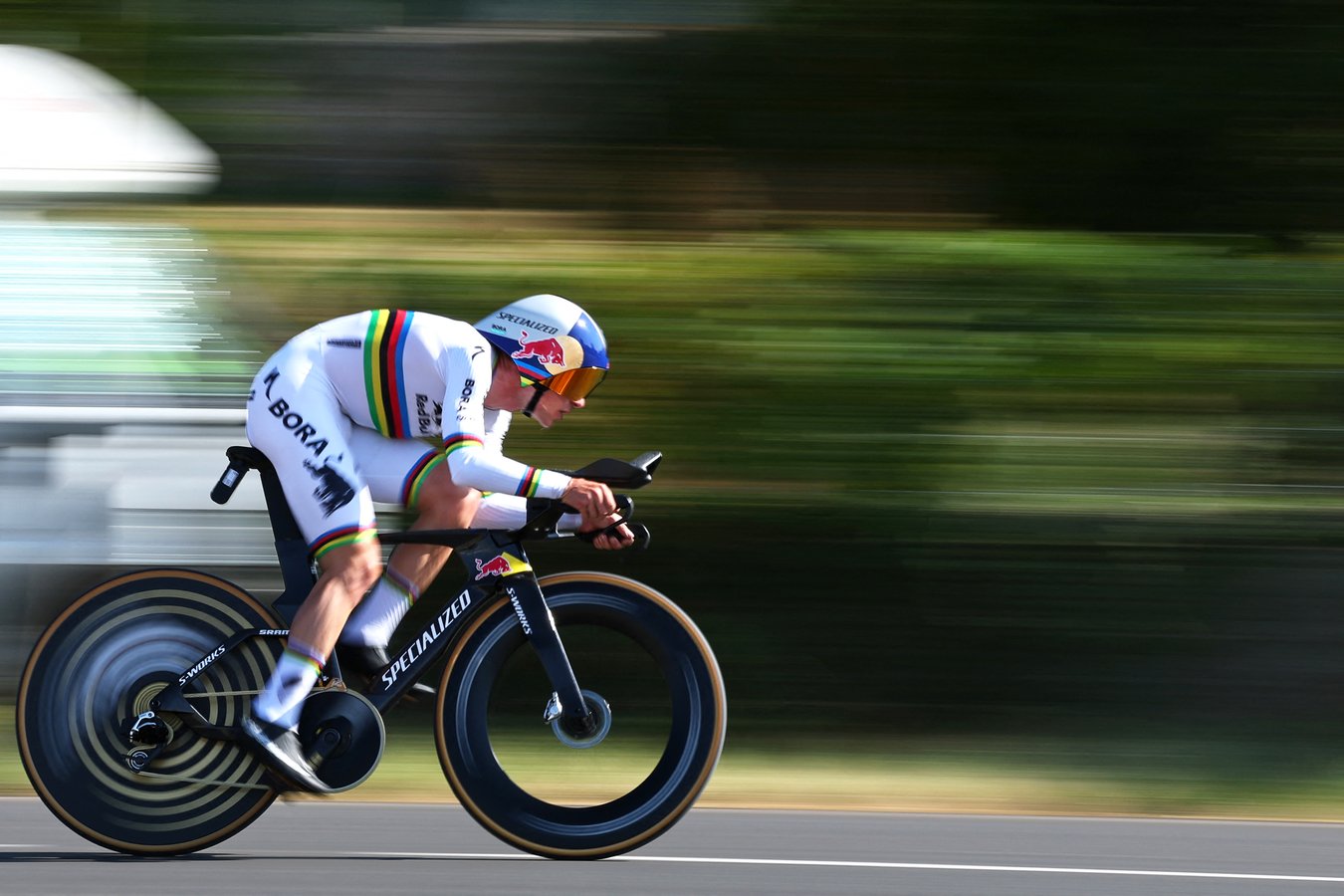
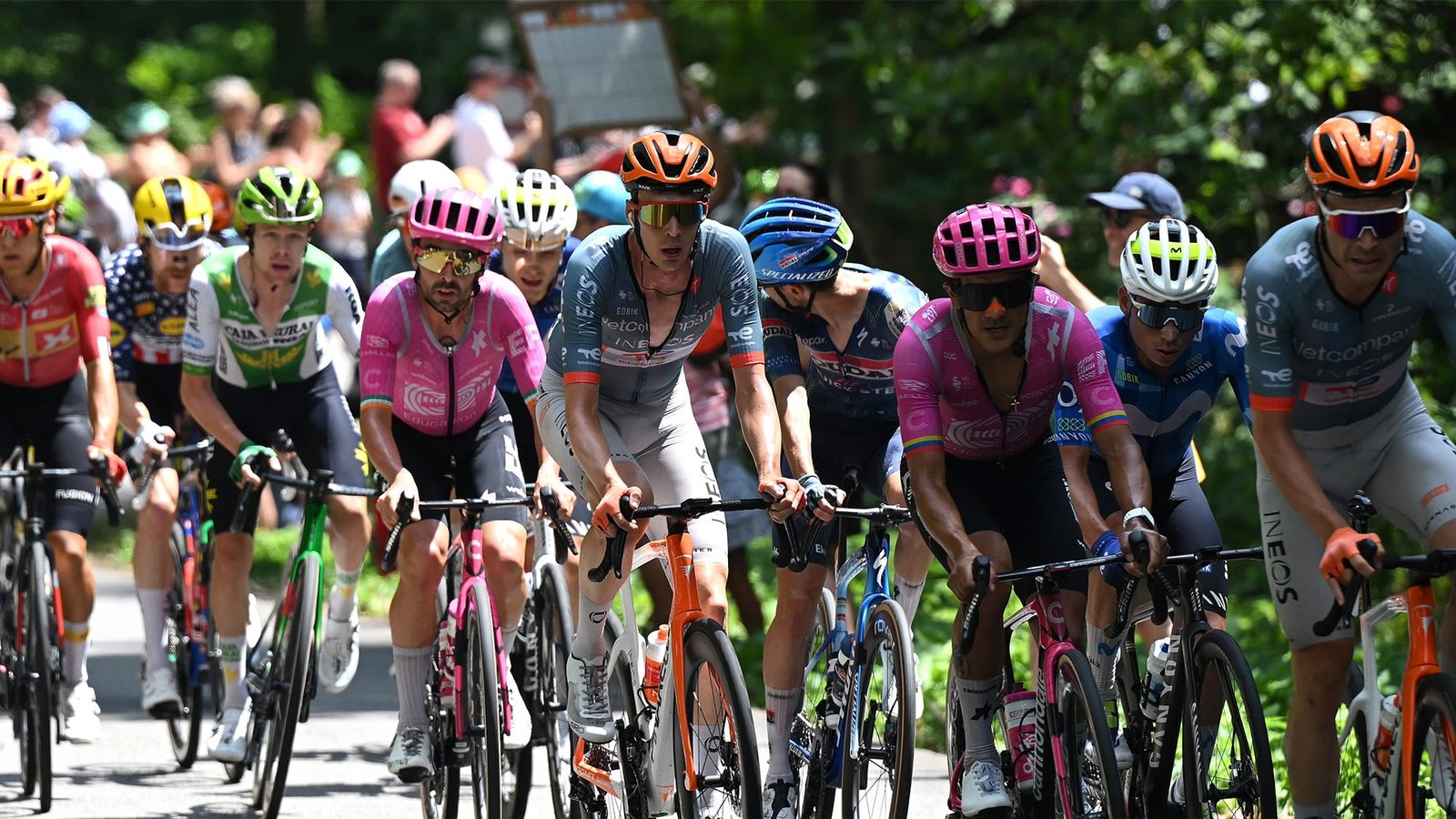
The stage itself was decided on collective execution rather than one individual performance. Matteo Jorgenson and Davide Piganzoli set the pace through the opening flat kilometres from Parc del Fòrum, the squad traded pulls efficiently, and then Vingegaard did what he does on climbs: found something extra at the point where the pain is already close to its ceiling. The Côte de Montjuïc is a modest final ramp by the Tour’s mountain standards, but in a team time trial, when eight riders are already at oxygen debt, 800 metres of uphill is a different kind of test.
Netcompany Ineos had positioned themselves as the team most likely to complicate Visma’s day. Filippo Ganna, the world’s foremost individual time trialist, set the fastest personal split of any rider on the course and hauled the team to second overall. Kevin Vauquelin suffered a puncture that cost Ineos momentum at a critical point. Even with the disruption, they finished eight seconds behind Visma, leaving Ganna in second on the general classification, a position that will require the road stages to contextualize, The National News reported.
Isaac del Toro, Pogacar’s 21-year-old Mexican teammate making his Tour debut, placed sixth overall at 26 seconds, a notable result for a rider who arrived in Barcelona listed as a protected domestique rather than a leader. Cian Uijtdebroeks of Movistar lost approximately one minute on the Montjuïc climb, a result that effectively ended his general classification ambitions before the first mountain finish has been contested. Remco Evenepoel finished fifth at 19 seconds for Red Bull-Bora-Hansgrohe; Juan Ayuso came in 16 seconds back for Lidl-Trek. Both have climbing profiles capable of making noise when the Pyrenees start demanding real answers.
Stage 2 on Sunday covers 168.5 kilometres from Tarragona back into Barcelona, finishing at the Olympic Stadium on Montjuïc, the same hill that delivered Saturday’s verdict approached from a different direction over a longer effort. The punchy finale will test legs that have barely rested.
The rivalry between Vingegaard and Pogacar, the two riders who divided the Tour de France between them across four consecutive editions, now has its first data point from 2026. Twelve seconds, one stage, 20 to go. What Montjuïc said on July 4 will be relitigated on climbs far longer and at altitudes that make the final 800 metres here look like a warmup. Whether the body that came within a reckless margin of ending Vingegaard permanently two summers ago can absorb three more weeks of that kind of pressure is the question nobody in Barcelona yet knows how to answer.